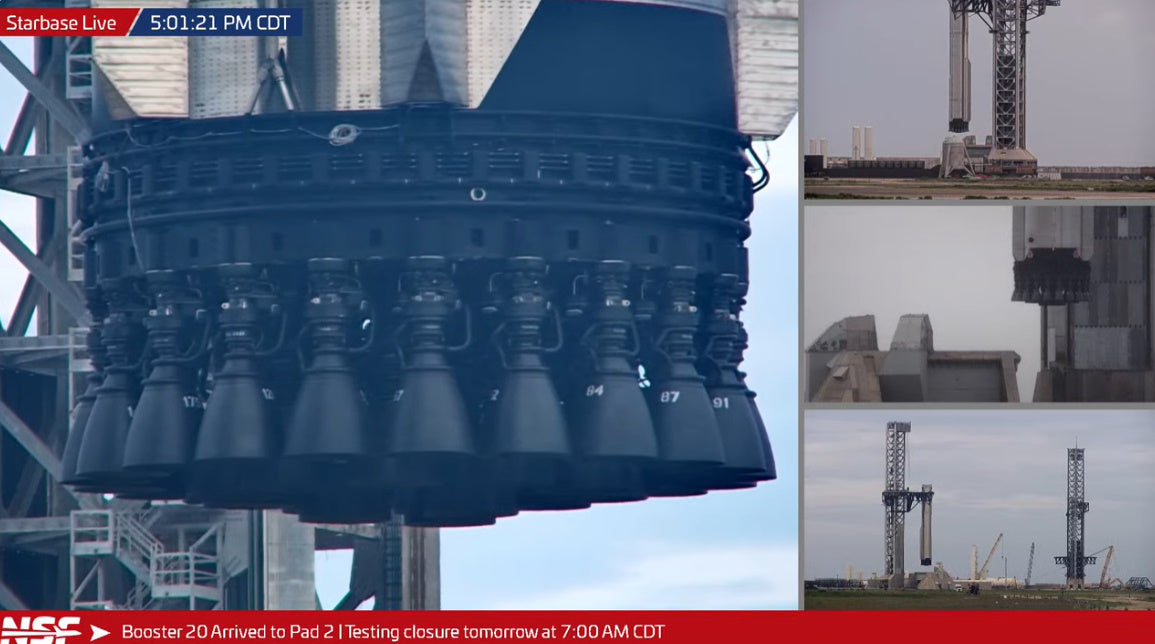
SpaceX Rolls Booster 20 to the Pad for Starship Flight 13

SpaceX has moved the Super Heavy booster for Starship Flight 13 onto Orbital Launch Pad 2, kicking off the pre-flight test campaign ahead of a targeted July 14 liftoff.

3 min read
SpaceX Rolls Booster 20 to the Pad for Starship Flight 13

BOCA CHICA, Texas — SpaceX has lifted Booster 20 vertical on Orbital Launch Pad 2 at Starbase, officially opening the pre-flight test campaign for Starship Flight 13 and putting the world's most powerful rocket back on the clock. The company confirmed the move on July 9, and it clears the way for a targeted liftoff on July 14.

The rollout is the latest sign that SpaceX is compressing the gap between Starship flights at a pace that looked implausible only a couple of years ago. With Flight 12 already in the books this year, the program is now chasing a roughly monthly cadence — and the vehicle for the flight after this one is already being tested in parallel.

Where Things Stand

Booster 20, the Super Heavy for this mission, rolled out of Megabay 1 in early June and completed its cryogenic proof test on June 7. The upper stage, Ship 40, cleared a 60-second static fire of all six Raptor engines on July 1, knocking out a major milestone on the vehicle side. With the booster now on the pad, the last big gate is a static fire of its 33 Raptor engines — a test that generates close to 20 million pounds of thrust and gives engineers the data they need to certify the stack for flight.

The Federal Aviation Administration has issued advisories reflecting a No-Earlier-Than launch date of July 14, with a backup window the following day. As always, both dates hinge on the static fire going cleanly and on weather cooperating at Starbase, a cadence SpaceX first signaled when it locked in the July 14 target.
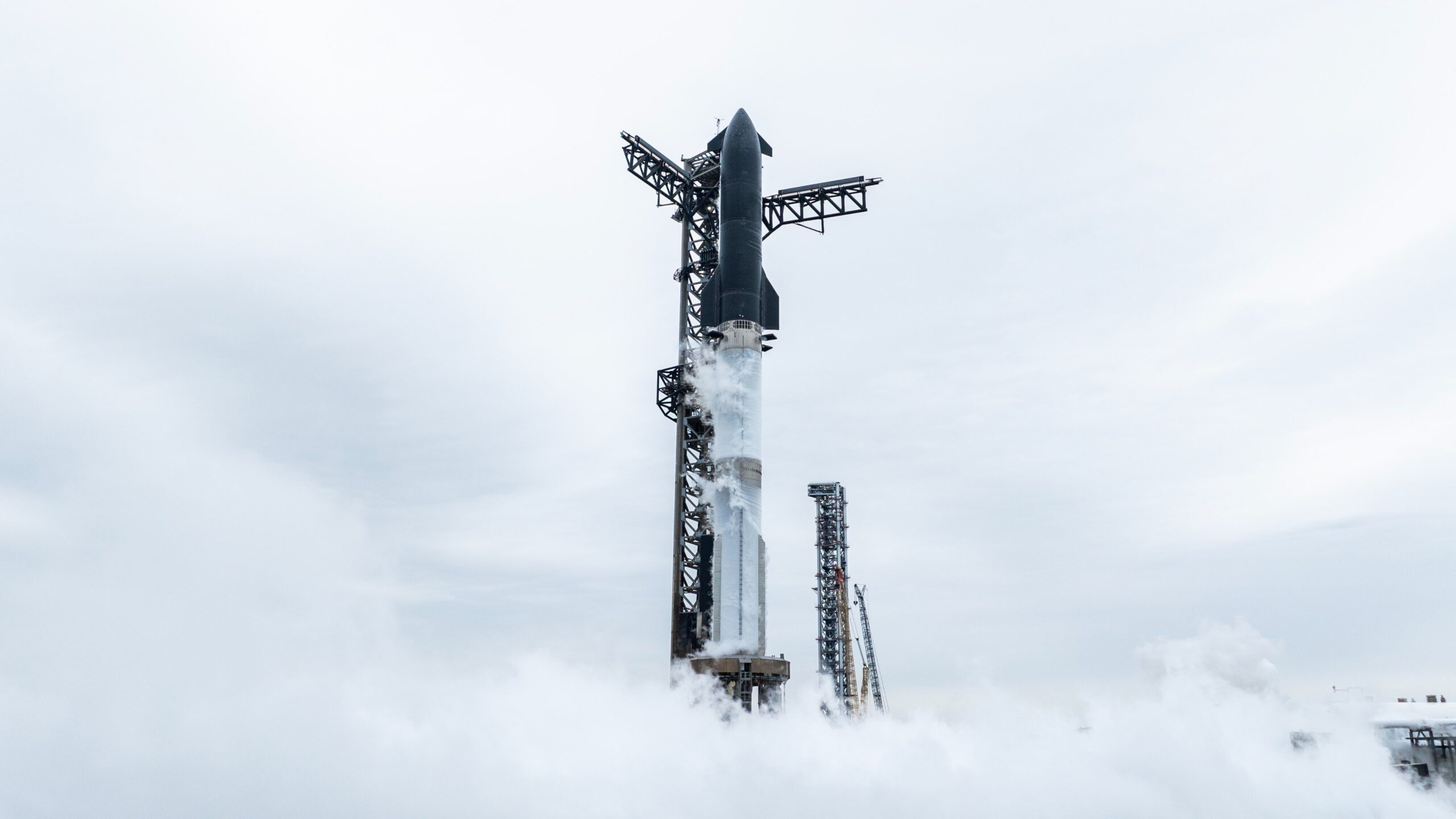
SpaceX Rolls Booster 20 to the Pad for Starship Flight 13 — additional image

A More Capable Starship

Flight 13 will be the second flight of Starship Version 3, the taller, more capable iteration of the upper stage that stands 408 feet — about five feet taller than V2. Booster 20 itself is the second Block 3 Super Heavy to fly, upgraded with Raptor 3 engines, an integrated interstage, and three grid fins instead of four.

The mission profile is expected to closely mirror Flight 12, including a Raptor relight in space and a planned soft ocean splashdown of the upper stage. SpaceX President Gwynne Shotwell has framed the flight as another test, with the company aiming for full orbital injection on Flight 14 and eventually expanding launches to a second pad at Florida's LC-39A. The refueling and reuse ambitions behind that plan echo the orbital-refueling goals SpaceX has tied to this stretch of the program.

Why The Pace Matters

Each successive Starship flight adds to the operational data SpaceX needs to certify the vehicle for commercial payloads and, eventually, NASA's Artemis lunar landing. The booster static fire — and how quickly the team can process the results — will be the real tell for whether July 14 holds or slips a few days, according to SpaceX's own updates.

Either way, the fact that Ship 41 for Flight 14 is already in testing tells the story: SpaceX is no longer building rockets one at a time, but running a production line aimed squarely at Mars.