AUSTIN, Texas — A veteran Wall Street analyst believes Tesla's Full Self-Driving suite is closing in on an "inflection point" that could reshape how the public sees the entire product, drawing a direct comparison to the moment the iPhone stopped being just a phone.
Pierre Ferragu of New Street Research, who has covered Tesla for years, argued in a new commentary that FSD is the clearest evidence that a Tesla is "not a car, the same way an iPhone was not a phone." His point: the technology is quietly crossing from novelty into necessity, and the market has not fully priced that shift.
The iPhone Parallel
Ferragu recalled how the iPhone once looked expensive for a phone, with an addressable market some estimated at just 10 million units. Then people realized it was far more than a calling device, and roughly 250 million are now sold every year. He sees a similar arc ahead for Tesla, where a Model 3 that looks pricey as "just a car" becomes obviously worth it once owners experience it as a tool that "gets you to work peacefully every morning."
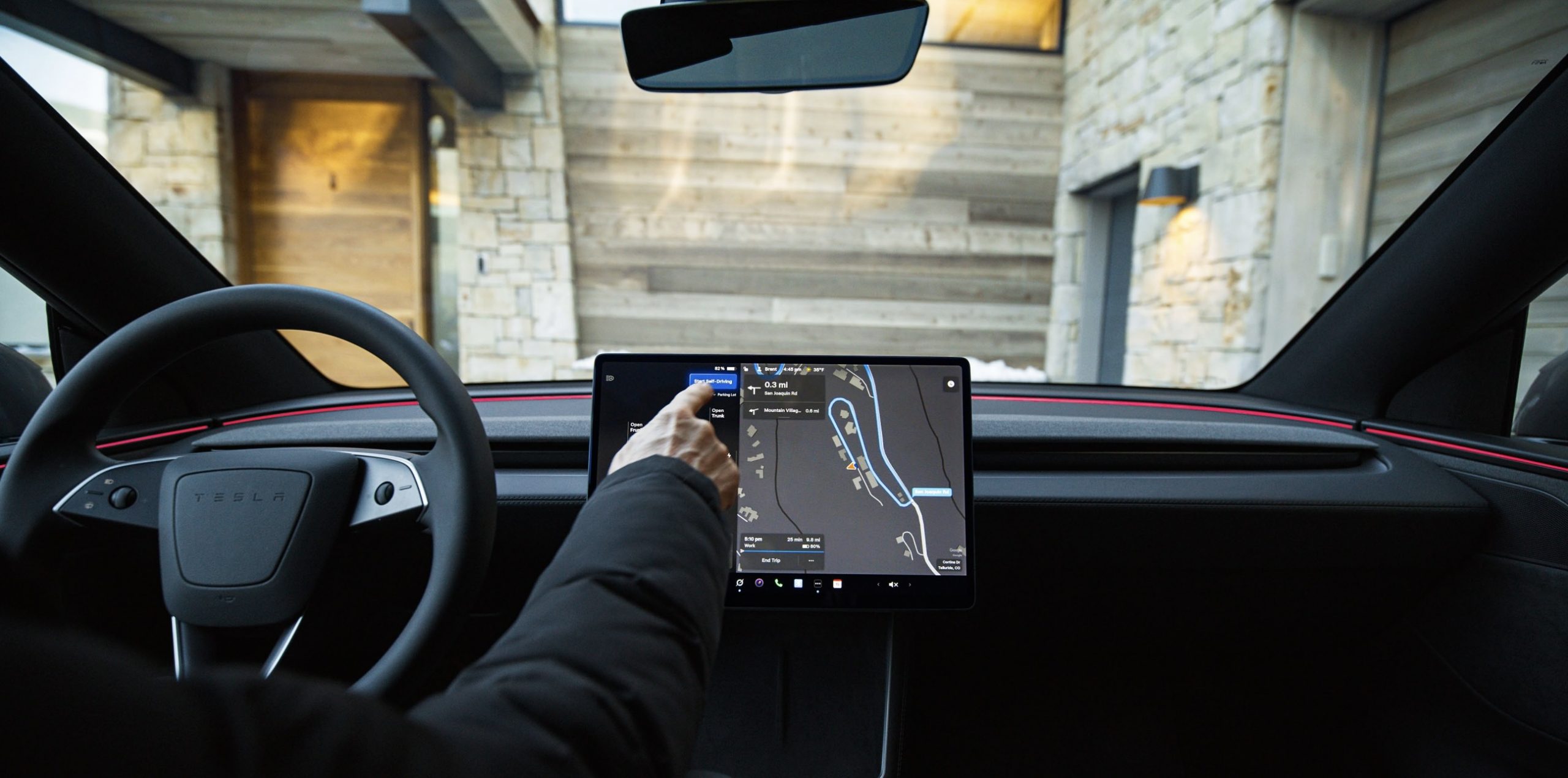
That framing lands as Tesla pushes autonomy deeper into its lineup. The company has been steadily widening FSD access and features, including the Grok voice controls it has confirmed are coming to FSD, which promise to make the system feel more like a conversational co-pilot than a driver-assist toggle.
From Driver Aid to Daily Habit
Ferragu's thesis is that FSD converts skeptics through direct experience. Once a driver rides with the system on a commute or a long highway stretch, he argues, it becomes difficult to consider any other vehicle. That word-of-mouth conversion is a core reason many bulls believe Tesla can keep expanding its share of the auto market even without traditional advertising.
The analyst said Tesla likely needs about two more quarters of development before the shift becomes obvious to the broader public. He did not spell out a single catalyst, but framed the coming months as the window in which "where this is heading" comes into focus. The optimism tracks with Tesla's real-world momentum, including a driverless robotaxi service that has expanded to fully unsupervised operation across multiple markets.
Why It Matters for Tesla's Valuation
The stakes are large. If FSD is truly nearing a mainstream tipping point, then Tesla's value proposition stops being about horsepower or range and starts being about time returned to the driver, a benefit far harder for rivals to match. Ferragu's broader argument, detailed by Teslarati, is that the company is positioned to "infiltrate" the auto market the way Apple infiltrated mobile, first as a premium option and then as the default.
For a company increasingly valued as an AI and autonomy play rather than a carmaker, that reframing carries weight. If experiencing FSD becomes the moment buyers reconsider their next vehicle, Tesla's software could prove to be the single most important reason its cars command attention, and its most durable competitive advantage in the years ahead.