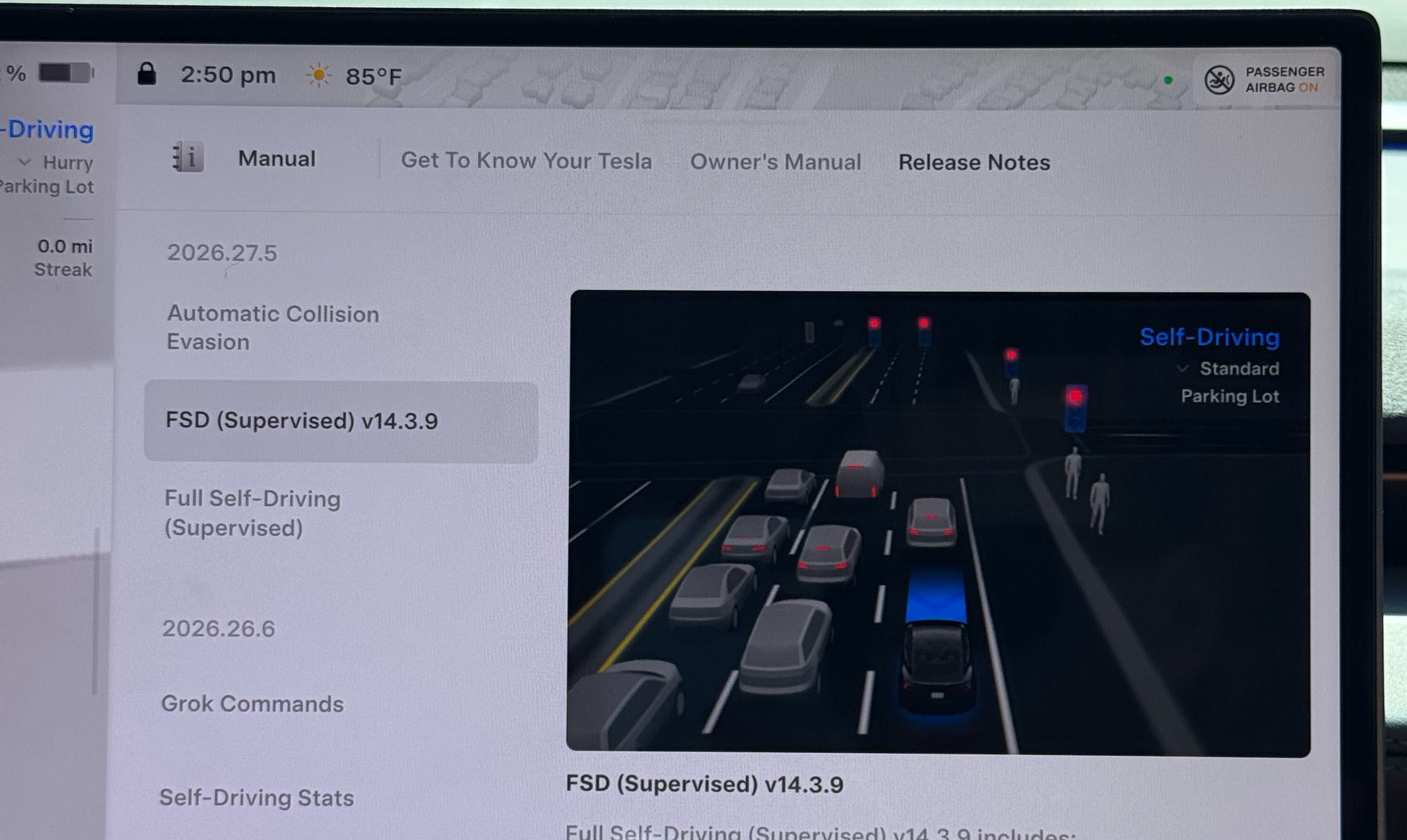
AUSTIN, Texas — Tesla has released its first localized snapshot of Full Self-Driving (Supervised) safety data in Europe, and the numbers from the Netherlands make a forceful case for the technology: over the past two months, FSD has been more than three times safer than manual driving on Dutch roads.
The data, shared by Tesla Europe on June 9, arrives exactly two months after the Dutch vehicle authority RDW granted FSD its landmark type approval — the green light that opened the door to the wave of European approvals now rolling across the continent.
Inside the Dutch Numbers
The headline figure: FSD (Supervised) recorded 3.5 times fewer collisions overall than manual driving in the Netherlands. On highways the system was 3.4 times safer, logging zero total collisions across 16.6 million kilometers driven.
The smoothness data is just as striking. With FSD engaged, Tesla's Dutch fleet recorded 14.9 times fewer automatic emergency braking events, an 8.8 times drop in harsh acceleration, a 7.3 times decrease in harsh braking, and 8 times fewer hard swerves — evidence the software anticipates surrounding traffic rather than merely reacting to it.
Crucially, these results came from dense Dutch urban environments full of cyclists, narrow streets, and complex roundabouts — conditions far less forgiving than the wide, grid-based roads where FSD built its North American track record.
Mirroring the North American Trend
The Dutch results echo what Tesla publishes globally in its Full Self-Driving Vehicle Safety Report. In the United States, vehicles with FSD engaged travel roughly 5.5 million miles before a major collision event, versus 2.2 million miles for manually driven Teslas with active safety features and just 660,000 miles for the average U.S. driver — making FSD up to 7 times safer than the national average. Globally, the platform has now surpassed nearly 11 billion publicly driven miles.
The consistency matters. Regulators evaluating FSD no longer have to extrapolate from American highway data; they can now point to regulator-verified European results gathered under EU traffic law.
Fuel for the European Domino Effect
The timing could hardly be better for Tesla's regulatory push. Denmark and Belgium both approved FSD this month, joining the Netherlands, Lithuania, and Estonia, and Tesla AI chief Ashok Elluswamy has shared a map targeting the entire European Union for public rollout. Hard data showing a 3.5 times lower collision rate in live European traffic gives every remaining regulator a concrete reason to move faster.
The momentum is being noticed beyond Europe, too — Piper Sandler analysts recently concluded that Tesla has effectively reached Level 4 autonomy. For now FSD in Europe runs on Hardware 4 vehicles, but the upcoming v14 Lite release is built to bring the same capabilities to older Hardware 3 cars internationally later this summer — meaning the fleet generating these safety numbers is about to get much, much larger.