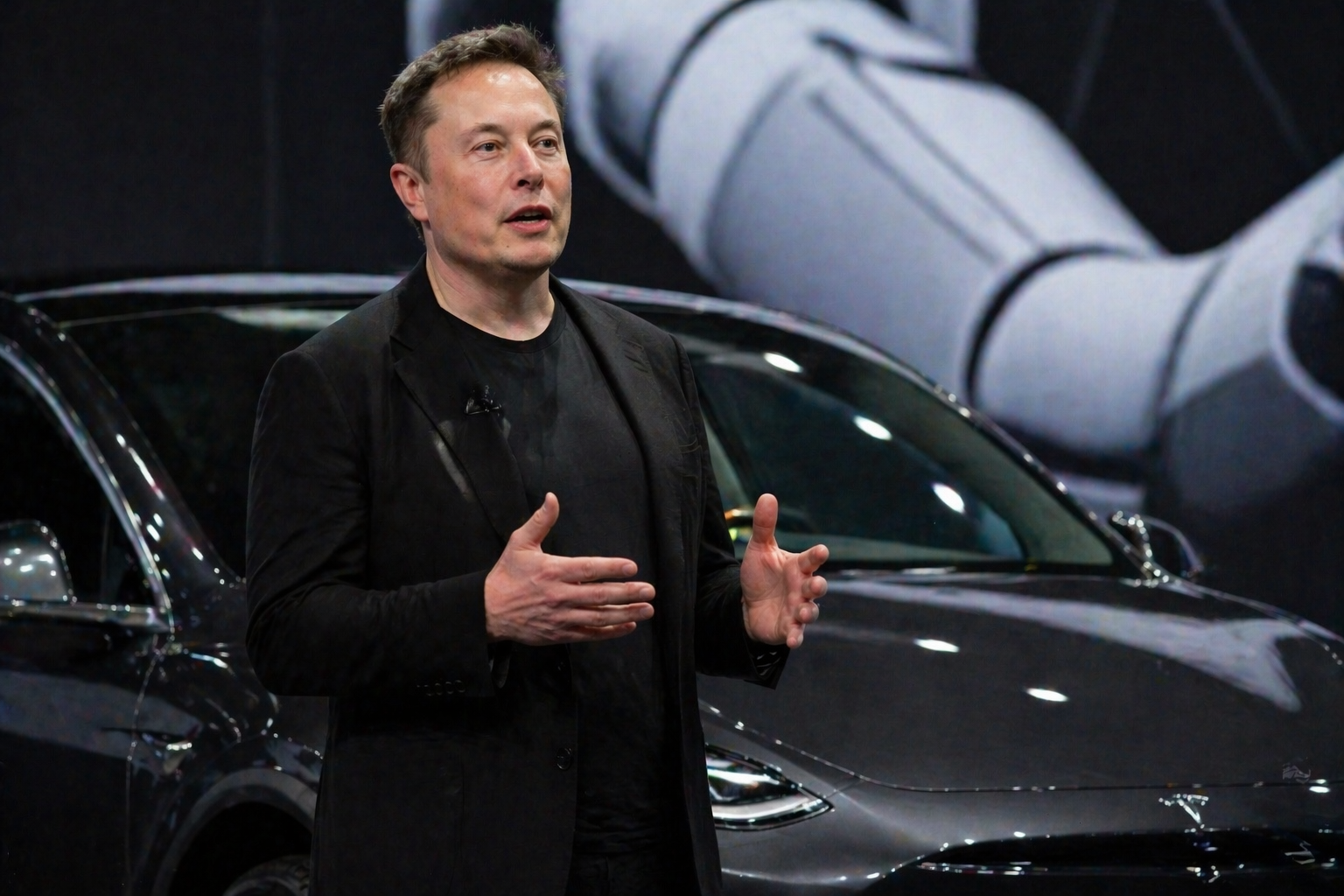
HAWTHORNE, Calif. — SpaceX's blockbuster public debut has fundamentally changed the math behind one of the most talked-about ideas in the Musk universe: a combination of SpaceX and Tesla. In a research note this week, JPMorgan analyst Rajat Gupta called such a merger "strategically coherent on paper," arguing that SpaceX's newly public, richly valued stock now gives Elon Musk the acquisition currency to put Tesla squarely within reach.
Why the IPO Changes the Equation
The key shift is valuation. Following its record IPO, SpaceX carries a roughly $2.2 trillion market capitalization that now eclipses Tesla's roughly $1.4 trillion. That gap makes a SpaceX-led acquisition more feasible than a traditional merger of equals, with an all-stock structure the preferred route because it would avoid writing enormous checks. As Benzinga reported, SpaceX's $1.77 trillion IPO valuation handed Musk a powerful currency that simply did not exist while the rocket company was private.
The strategic case, JPMorgan noted, largely exists already. Tesla and SpaceX share engineering talent, AI infrastructure and the massive Terafab chip facility in Texas. SpaceX has purchased Tesla Megapack batteries and Cybertrucks, while Tesla invested $2 billion into xAI, which now sits inside SpaceX after the two AI and space operations were combined. Both companies are spending aggressively on AI, robotics and custom chips, forming what the bank described as a single ecosystem spanning transportation, energy, robotics, AI and space.
The Real Hurdles Are Not Financial
Gupta was candid about the obstacles, and they sit mostly on the regulatory and governance side rather than the balance sheet. Combining SpaceX's defense and government businesses with Tesla's large manufacturing footprint in China could invite scrutiny across multiple jurisdictions. Governance adds another wrinkle: Musk controls roughly 85% of SpaceX's voting power but only about 20% of Tesla's, an imbalance that would need careful structuring to protect Tesla's minority shareholders. JPMorgan sketched several possible paths — an all-stock acquisition, a new holding company, a cash-and-stock hybrid or a phased combination.