SpaceX Files With FCC for 100,000 Gen3 Starlink Satellites

SpaceX has asked the FCC to authorize a next-generation Starlink network of up to 100,000 Gen3 satellites, a leap that would multiply its orbital footprint and be built for the AI era.

3 min read
SpaceX Files With FCC for 100,000 Gen3 Starlink Satellites

HAWTHORNE, Calif. — SpaceX has filed an application with the U.S. Federal Communications Commission seeking authority to build and operate a next-generation Starlink constellation of up to 100,000 satellites, a plan that would dramatically expand the world's largest broadband network and lay the groundwork for AI-scale connectivity across the planet.

The filing, surfaced on July 9 by astronomer and satellite tracker Jonathan McDowell and reported by Space.com, describes a "Gen3 NGSO" system spread across two very low Earth orbit shells at altitudes between roughly 320 and 480 kilometers. Multiple outlets, including Via Satellite and SatNews, confirmed the application in the following hours.

A Much Bigger Bird

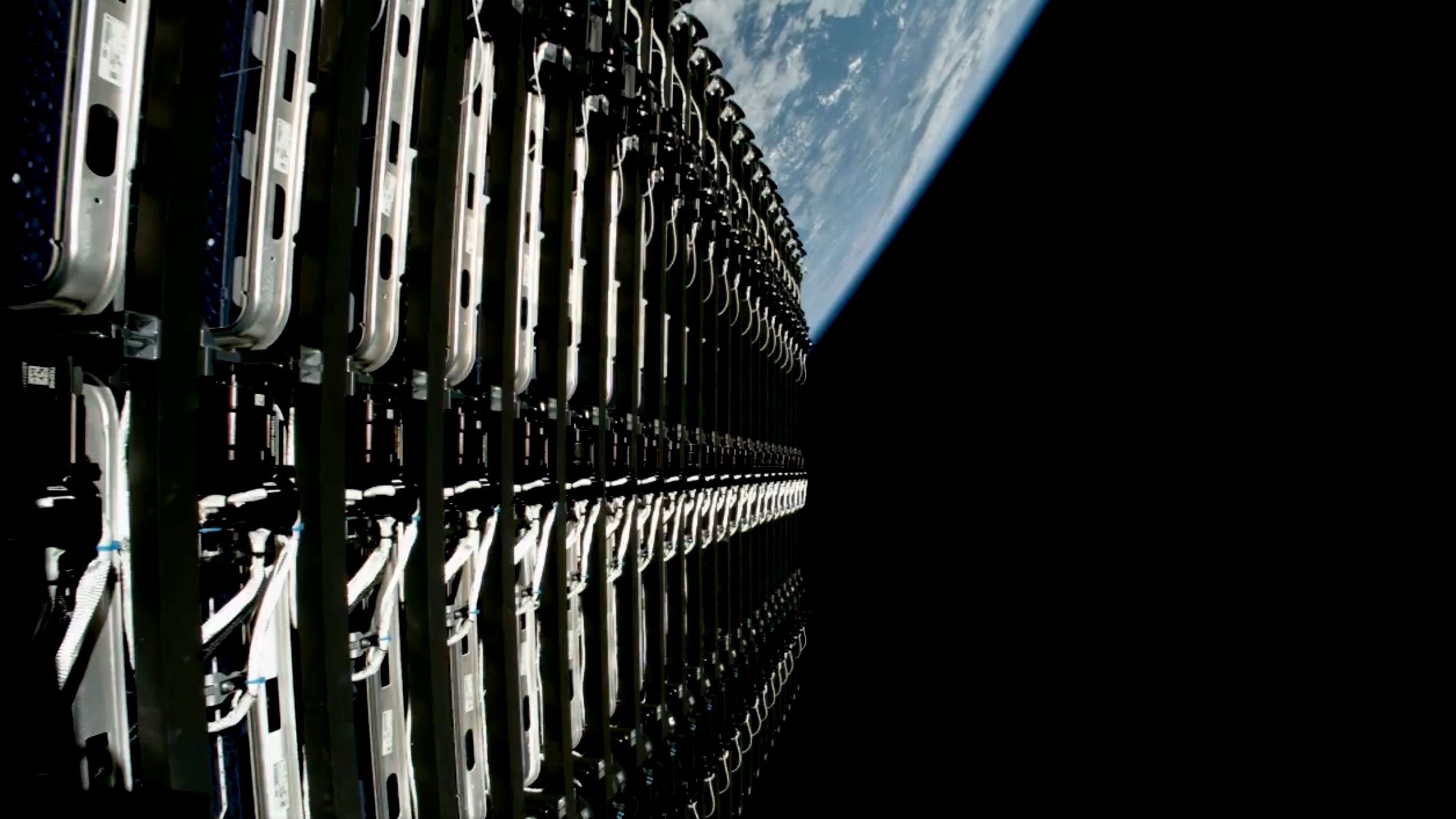
Each Gen3 spacecraft is a substantial step up from today's hardware. According to the filing, individual satellites will weigh between 4,400 and 5,500 pounds and unfurl solar arrays covering 3,230 to 4,300 square feet. By comparison, the V2 Mini satellites SpaceX launches now weigh about 1,760 pounds.

That size jump is deliberate. The Gen3 birds are engineered to deliver low-latency, multi-gigabit symmetrical throughput, and they are large enough that they will fly primarily on Starship, the fully reusable super-heavy rocket that is moving steadily toward routine flight. Starlink already operates nearly 10,800 satellites in orbit, and this filing charts a path well beyond that, building on the same relentless deployment pace that saw SpaceX loft orbital chip-factory test beds alongside Starlink batches earlier this summer.

SpaceX Files With FCC for 100,000 Gen3 Starlink Satellites — additional image

Built for the AI Era

The application frames the expansion around a national priority: keeping the United States ahead in artificial intelligence. SpaceX argues that AI systems increasingly need massive uplink capacity to move high-definition spatial and auditory data for real-time decision-making and industrial automation, and that a dense, high-capacity orbital layer is the way to deliver it. The filing signals plans to move into higher-frequency W- and D-band spectrum to expand backhaul.

The Gen3 request is separate from SpaceX's earlier, even more ambitious concept for a million-satellite orbital data-center constellation. Together, the filings underscore how quickly the company is turning its launch dominance into an infrastructure business, a transformation that has accelerated since SpaceX became a public company and joined the Nasdaq-100 in a historic first.

What Comes Next

Regulatory review of a constellation this large will take time, and SpaceX will need Starship flying at cadence to deploy it. But the direction is unmistakable. With Starship testing advancing and Starlink revenue climbing, SpaceX is positioning Gen3 as the backbone of a global network designed not just to connect people, but to feed the compute-hungry AI economy of the coming decade. If approved, it would cement Starlink as the connective tissue of both everyday internet access and the machine intelligence revolution taking shape overhead.