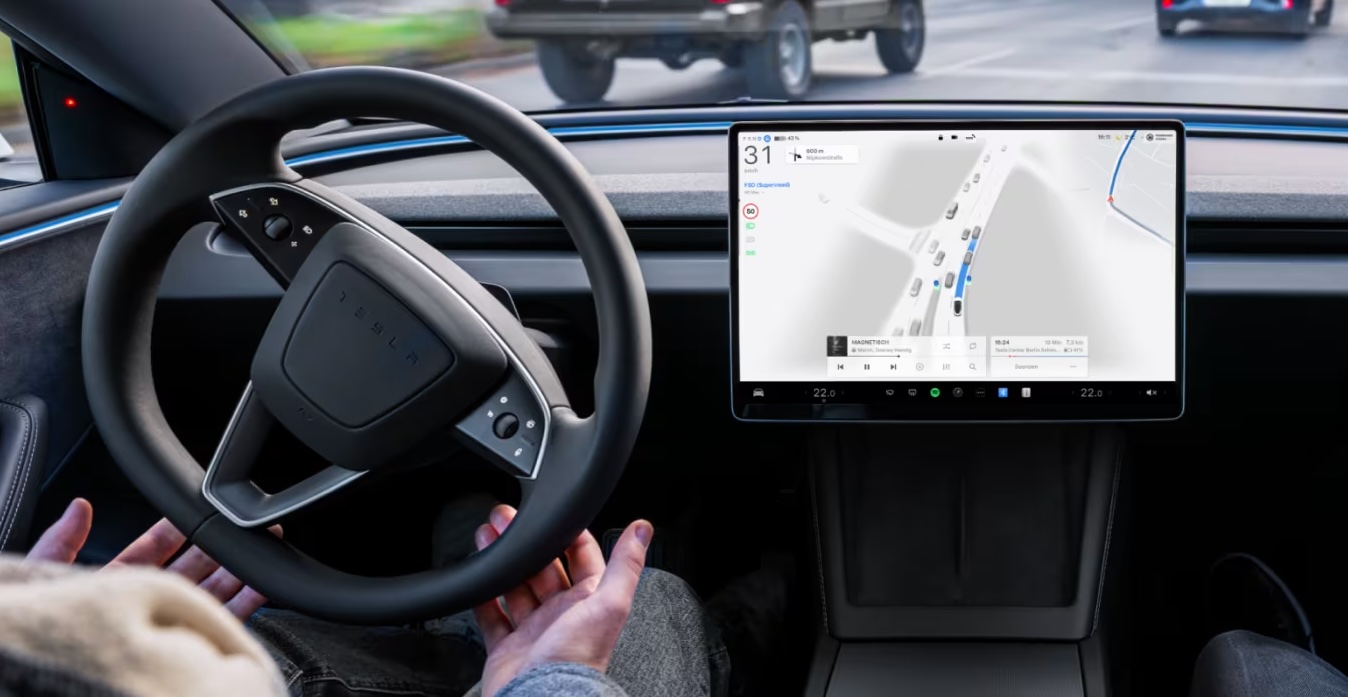

AUSTIN, Texas — Tesla's driverless ride-hailing service has quietly crossed a major threshold: the company now runs fully unsupervised robotaxi trips, with no human safety monitor in the vehicle, across three of its five active markets, a sign of how fast its autonomy program is maturing.
The clearest marker came with Tesla's Miami launch, where the service went live without the in-car safety-monitor phase the company used in every prior city. Tesla's vice president of AI software, Ashok Elluswamy, confirmed the cars operate with no one in the front seat, a detail corroborated by rider videos, and InsideEVs and other outlets reported the milestone as Tesla expanded beyond its home base of Texas and California.
Three of Five, and Counting
By early July, Tesla was offering unsupervised rides in Miami, Dallas, and Houston, while Austin ran a mixed fleet with some fully driverless vehicles alongside monitored ones, and the San Francisco Bay Area still kept a monitor aboard every car. The geographic spread shows Tesla scaling its camera-only Full Self-Driving approach across very different driving environments, from Florida's sudden downpours to dense Texas interchanges.
Florida's regulatory environment, which does not require a state-specific permit for autonomous vehicles, helped Tesla reach unsupervised operation there quickly. The Miami service runs in a geofenced zone of roughly 10 to 14 square miles covering West Miami, Doral, and Coral Gables. Tesla has been steadily widening its footprint, having only recently begun robotaxi testing in New Orleans as it scouts additional cities.