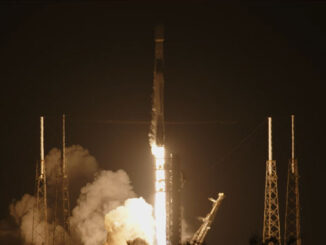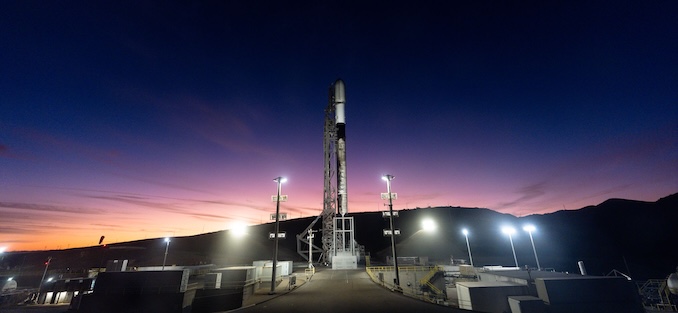
HAWTHORNE, Calif. — SpaceX closed out the first half of 2026 the way it spent most of it: with a Falcon 9 climbing off the pad. A Sunday morning launch from Vandenberg Space Force Base carried 24 more Starlink satellites to low Earth orbit and pushed the company to 75 Falcon family launches since January 1, an operating cadence no launch provider in history has matched.
A Methodical Sunday Climb
Liftoff of the Starlink 17-40 mission came at 7:36 a.m. PDT from Space Launch Complex 4 East, with the rocket arcing on a south-southwesterly track over the Pacific. The mission added another two dozen broadband satellites to a constellation that now numbers more than 10,700 spacecraft in orbit, according to tracking by astronomer Jonathan McDowell.
The first stage, booster B1088, was making its 17th flight after a resume that already includes NASA's SPHEREx observatory, the Transporter-12 rideshare and the NROL-126 national security mission. About eight minutes after launch, B1088 touched down on the drone ship Of Course I Still Love You in the Pacific — the 206th landing on that vessel and the 630th booster recovery in SpaceX history. The reuse story has become so routine it barely rates a mention, which is itself the point.
75 in Six Months
With Sunday's flight on the board, SpaceX has flown 75 Falcon missions in the first half of 2026, 59 of them dedicated to building out Starlink. The monthly rhythm has been remarkably steady: nine launches in January, 11 in February, 13 in March, nine in April, eight in May and 10 in June. That pace builds directly on milestones the company has been stacking all year, including the 74th Falcon 9 of 2026 it logged from Vandenberg earlier in the week.