SpaceX Flies Orbital Chip-Factory Test Beds With Starlink

A SpaceX Falcon 9 carried two orbital semiconductor "Fabship" test beds to space alongside 29 Starlink satellites from Cape Canaveral.

3 min read
SpaceX Flies Orbital Chip-Factory Test Beds With Starlink

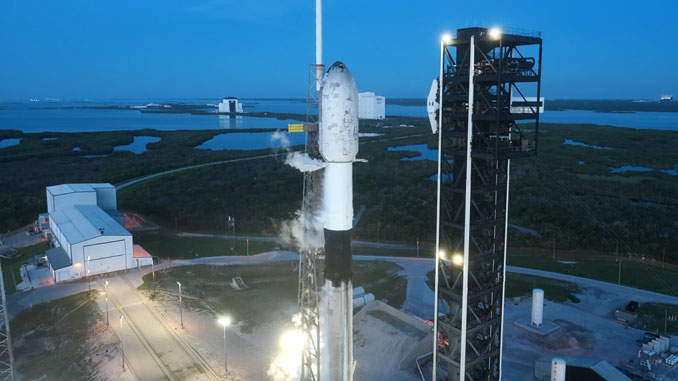
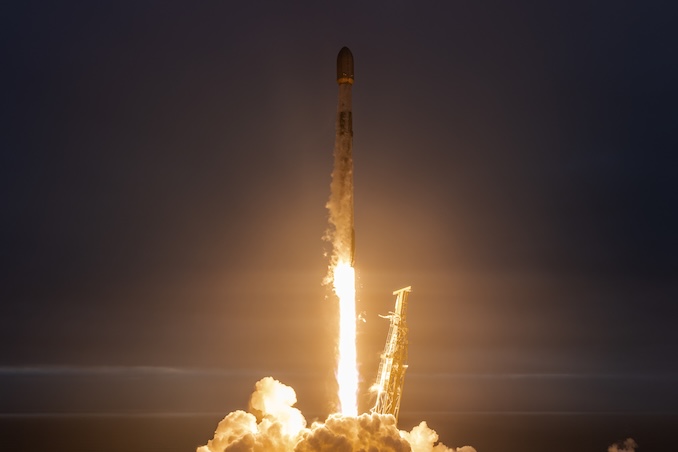
CAPE CANAVERAL, Fla. — SpaceX turned a routine Starlink launch into a glimpse of a new industry this weekend, carrying two orbital semiconductor-manufacturing test beds to space aboard the first stage of a Falcon 9 rocket. The vehicle lifted off from Space Launch Complex 40 shortly after sunrise, boosting 29 Starlink satellites toward orbit while giving a Washington, D.C. startup a ride to the edge of space and back.

The manufacturing pods belong to Besxar Space Industries, which calls its space-based fabrication plants "Fabships." The company has booked 12 Falcon 9 flights to test the concept and aims to use the vacuum of space to produce ultra-pure substrates and precursor materials for the next generation of semiconductors. The flight was SpaceX's 62nd Starlink delivery mission of the year, a cadence that reflects the company's 140-plus Falcon launch pace for 2026.

An "egg drop" for chip wafers

Besxar's early "Clipper Class" test beds are about the size of a microwave oven and ride the booster on a short, sub-orbital arc above the 100-kilometer Karman line before returning for a drone-ship landing. On these first flights, the pods carry Earth-made semiconductor wafers to see how they survive the violent forces of launch and reentry.

"You can think of this similar to the ultimate egg drop challenge," said founder and CEO Ashley Pilipiszyn, a former early OpenAI staffer, describing the goal of returning wafers without cracking or damage. The company argues that terrestrial fabs are running into hard limits on power, cooling and the vacuum quality that next-generation materials demand.
SpaceX Flies Orbital Chip-Factory Test Beds With Starlink — additional image

SpaceX as the enabling platform

The mission underscores how SpaceX's launch cadence and reusability are becoming infrastructure for entirely new markets. Besxar has drawn support from Nvidia's Inception program for startups, and SpaceX itself is listed among its investors. Frequent, rapid-turnaround flights let the startup iterate faster than any standalone company could — the same platform advantage that powers SpaceX's Colossus AI compute business.

Two missions in one

For SpaceX, the flight did double duty: expanding the Starlink broadband network with another 29 satellites while proving out a business model in which its rockets become test platforms for orbital manufacturing. Spaceflight Now's coverage of the launch noted the Starlink stack was set to deploy about an hour after liftoff.

If Besxar's Fabships prove that wafers can survive the round trip, the implications reach well beyond a single startup. Space-based manufacturing of pharmaceuticals, optical fiber and semiconductors has long been theorized; what has been missing is cheap, frequent, reliable access to orbit. That is exactly what SpaceX now provides — and this weekend's launch showed how the company is quietly positioning itself at the center of the next frontier in advanced manufacturing.