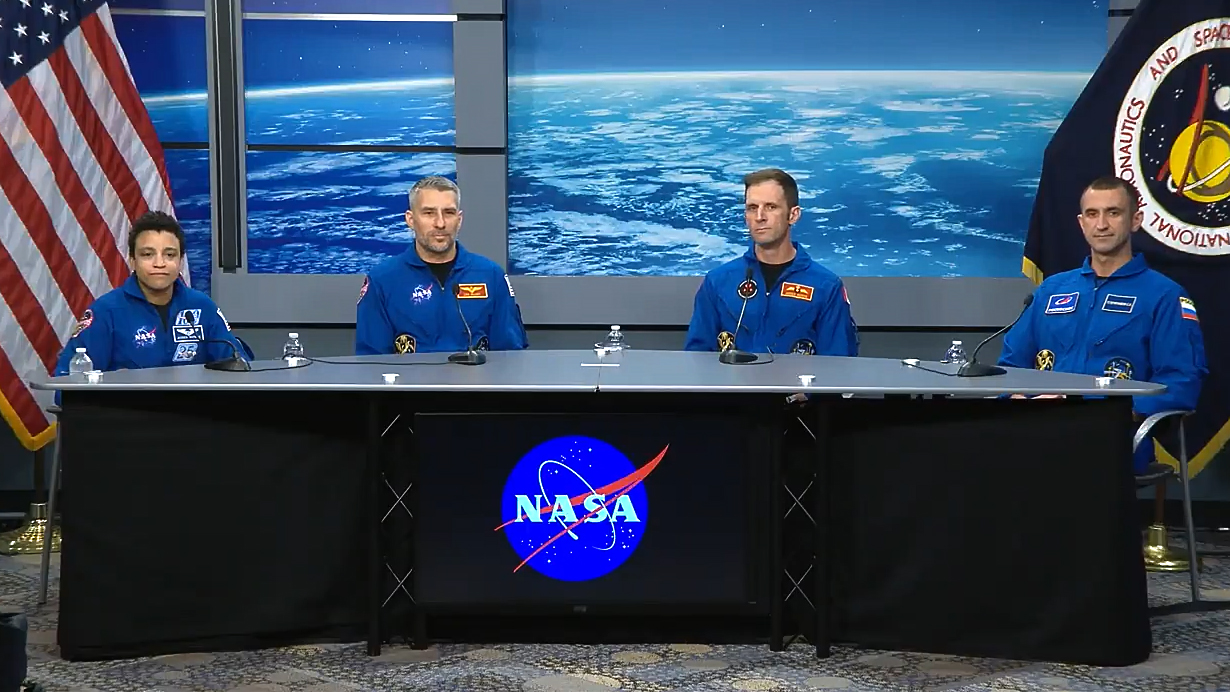
HAWTHORNE, Calif. — NASA and SpaceX are targeting no earlier than Sept. 12 for the launch of Crew-13, the next crew rotation flight to the International Space Station aboard a Crew Dragon spacecraft, the agency said as the four astronauts introduced themselves at a news conference this week.
The mission, part of NASA's Commercial Crew Program, will send a diverse international team to the orbiting laboratory for a months-long expedition. It marks another step in a steady cadence of SpaceX human spaceflights that have made Dragon the workhorse of American crew access to orbit, alongside a packed August manifest of launches.
Meet the Crew-13 Astronauts
Commander Jessica Watkins of NASA will lead the flight, becoming the first NASA astronaut to launch aboard a SpaceX Dragon twice after her 2022 Crew-4 mission. She will be joined by Pilot Luke Delaney of NASA, along with mission specialists Joshua Kutryk of the Canadian Space Agency and Sergey Teteryatnikov of Roscosmos, both making their first trips to space.
The blend of first-time flyers and a returning commander reflects the maturity of the Commercial Crew partnership, which has turned routine, reliable crew rotations into the new normal. NASA moved Crew-13 up from an original November target to September to increase the overall pace of launches.
A Reliable Ride to Orbit
Crew Dragon has become the backbone of station staffing, ferrying astronauts and cosmonauts on regular rotations while Boeing works to bring its own vehicle into service. SpaceX's reusable Falcon 9 will loft the capsule, drawing on the same booster fleet that has been flying at a record cadence through 2026.
Once docked, the Crew-13 team will join the Expedition 75 crew, taking over a full slate of scientific research and station maintenance. Current crew members have spent recent days preparing for spacewalks and running health experiments, the kind of continuous work that Dragon's dependable schedule makes possible.
Building Toward a Busier Cadence
The September target fits SpaceX's broader push to launch more often across every part of its business, from Starlink deployments to national-security missions and now crewed flights. Each successful rotation strengthens the case that commercial providers can sustain human access to low Earth orbit affordably and on schedule.
NASA said the Sept. 12 date could shift based on launch readiness and range availability, as is standard for crewed missions. Details on the flight and its crew were laid out in NASA's mission update following the Johnson Space Center news conference. With Crew-13 on the calendar and a heavy launch schedule ahead, SpaceX heads into the fall with momentum on the pad and a growing track record of getting people safely to orbit and home again.