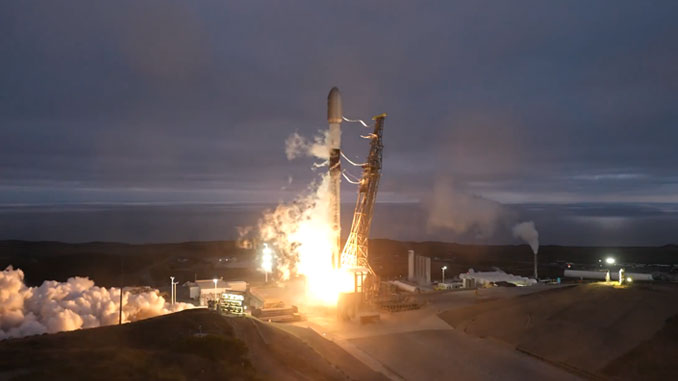

HAWTHORNE, Calif. — A day after its automated safety systems cleanly halted a Falcon 9 at the moment of ignition, SpaceX was back on the pad Tuesday to press ahead with another Starlink mission, underscoring the reliability and quick turnaround that have made the workhorse rocket the busiest launcher in the world.
The Starlink 17-39 mission lifted off from Space Launch Complex 4 East at Vandenberg Space Force Base, carrying two dozen Starlink V2 Mini broadband satellites toward low Earth orbit. It followed a Monday attempt that was stopped in the final second when an issue appeared as the nine Merlin engines began to light. Rather than force the launch, the rocket's flight computer triggered a hold and safely stood down.
Safety systems working as designed
Post-ignition aborts are rare, and that is exactly the point. The Falcon 9's onboard software is built to catch anomalies in the fraction of a second before liftoff and protect the vehicle and payload, which is precisely what it did on Monday. SpaceX offloaded propellant, inspected the vehicle overnight and cleared it to fly the very next morning, a turnaround that would be unthinkable for most rockets. That rapid recycle reflects the same disciplined operations SpaceX has demonstrated across its record-setting cadence of Starlink launches.
A veteran booster adds to its record
The mission flew on first-stage booster B1082, notching its 23rd flight after a career that has included national-security missions like NROL-145 and USSF-62. Following stage separation, B1082 targeted a landing on the droneship Of Course I Still Love You in the Pacific, aiming to become the 640th booster recovery in SpaceX history. Spaceflight Now, which covered the launch attempt live, noted the flight was the company's 85th Falcon 9 launch of the year, with 67 of those dedicated to building out the Starlink constellation.