HAWTHORNE, Calif. — A spent SpaceX Falcon 9 upper stage completed one last, unplanned mission early Wednesday, colliding with the far western edge of the Moon at roughly 5,400 miles per hour and giving astronomers a rare, real-time look at how a human-made object gouges a fresh lunar crater.
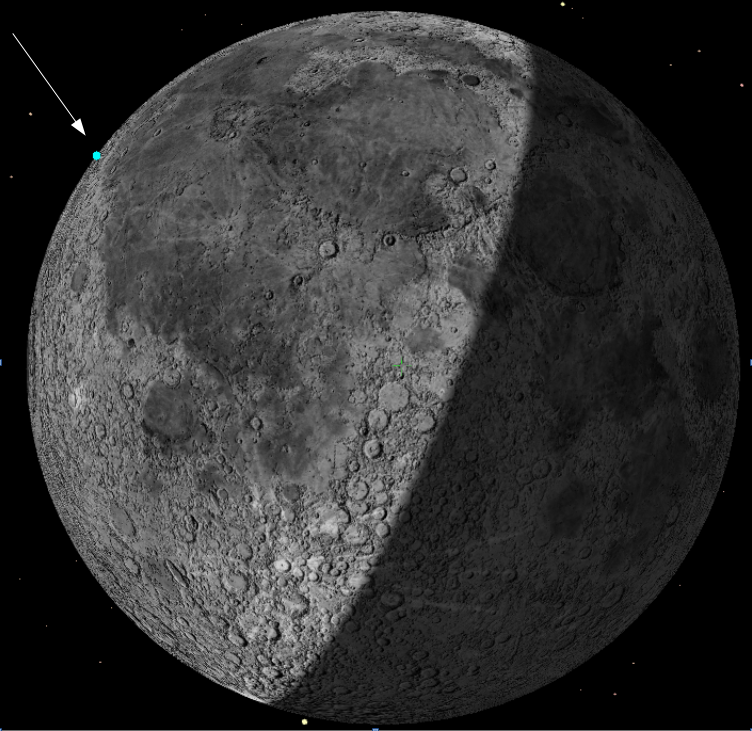
The impact occurred at 6:35 UTC (1:35 a.m. CDT) on August 5, near Einstein crater along the Moon's western limb as seen from Earth. Because the Moon has no atmosphere to slow it down, the roughly 8,800-pound stage struck the surface at about 1.51 miles per second, kicking up a plume of dusty lunar soil miles above the site.
A Piece of Space History Comes Home
The rocket stage had been drifting through space since January 15, 2025, when a Falcon 9 sent Firefly Aerospace's Blue Ghost lander and Japan's ispace Hakuto-R mission toward the Moon. After boosting both spacecraft on their way, the upper stage became a quiet piece of space hardware in a distant, Moon-crossing orbit. Independent tracker Bill Gray, who computes orbits for high-altitude objects the military does not monitor, had flagged the stage as a likely lunar impactor as far back as September 2025.
That it came from a Moon-bound launch is a fitting coda: the same prolific launch cadence that has made SpaceX the world's busiest rocket operator — including its 90th Falcon 9 flight of the year — is precisely what put a spent stage on a trajectory to the Moon in the first place.
Scientists Turn a Rocket Into a Laboratory

Researchers treated the collision as a gift. A University of Texas at Austin team led by William Jo modeled the debris plume in a new paper, predicting a central ejecta spike reaching 75 to 100 kilometers in altitude, a surrounding curtain of 15 to 20 kilometers, and lateral spread of roughly 183 kilometers near the sunlit limb. The group expects the crater itself to measure about 20 to 30 meters across — smaller than an asteroid strike would produce, because the hollow rocket body carries far less mass than solid rock.
The event matters beyond novelty. As Bloomberg reported, spent rocket stages produce very different plumes than natural impactors, and there are almost no models calibrated against real events. Watching this one gives scientists a chance to refine ejecta-plume science that will inform every future payload humanity delivers to the Moon. NASA's Lunar Reconnaissance Orbiter may photograph the new crater in the weeks ahead, as it did after a 2022 rocket impact near Hertzsprung crater.
Another Milestone in a Record Year
For SpaceX, the impact is a curious footnote to a breakneck 2026. The company is launching at a pace that would have been unthinkable a few years ago, with an ambitious August manifest that includes NASA's Roman Space Telescope and a crewed mission still ahead. Every booster that returns to Earth for reuse keeps hardware out of orbit — but the occasional deep-space stage, like this one, reminds the world just how far SpaceX's rockets travel.
As Starship prepares to take over the heaviest lifting, the era of expendable upper stages drifting toward the Moon is fading. For now, this small collision offered a bright flash of science — and one more mark of a company reshaping how often, and how far, humanity reaches into space.