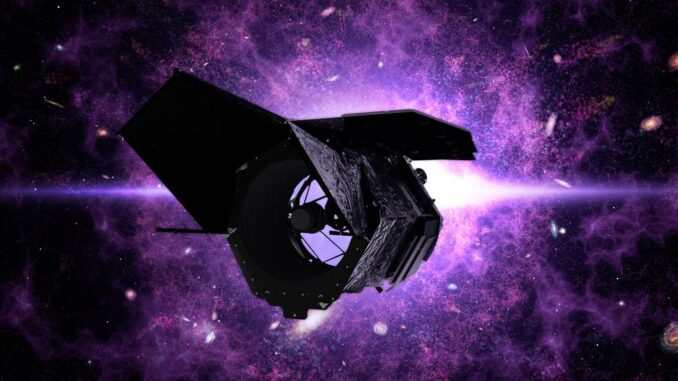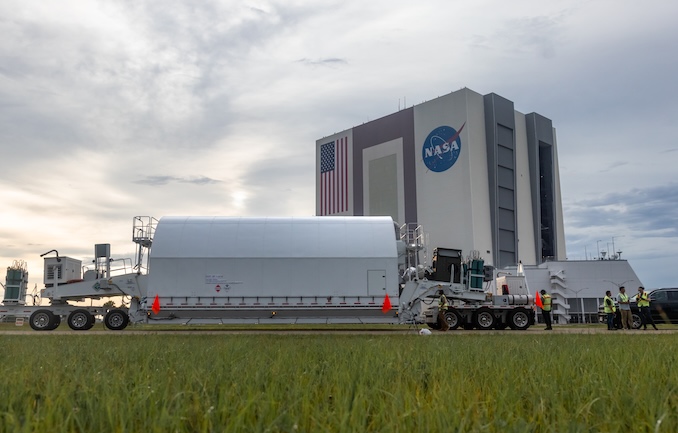
HAWTHORNE, Calif. — One of NASA's most ambitious observatories has arrived at the launch site, and a SpaceX Falcon Heavy will be the rocket that sends it on its way. The Nancy Grace Roman Space Telescope reached Kennedy Space Center aboard the agency's Pegasus barge, kicking off a roughly 70-day prelaunch campaign ahead of a liftoff now targeted for no earlier than August 30 — moved up from an original September date.
A Careful Arrival in Florida
The 43-foot-tall observatory traveled inside a protective transport container that NASA nicknamed the Chariot, a nod to the spacecraft's namesake — not the ancient empire, but Nancy Grace Roman, the agency's first Chief of Astronomy and the woman often called the Mother of Hubble. The barge journey from Massachusetts was not entirely smooth; engineers had to make an emergency stop to add rental cooling units after the primary system struggled to hold the spacecraft below its 74-degree temperature limit.
Now at the Payload Hazardous Servicing Facility on the south end of the Kennedy campus, Roman will undergo checkouts, fueling and finally encapsulation inside the Falcon Heavy payload fairing. Program executive Lucas Paganini credited the team with accelerating the schedule, telling Spaceflight Now that the group had "been able to accommodate schedules, to accelerate to be able to launch earlier."
Why Falcon Heavy
Launching from Launch Complex 39A, the same historic pad that has hosted crewed lunar and station missions, Falcon Heavy will loft Roman toward Lagrange Point 2, about 1.5 million kilometers from Earth on the side opposite the Sun. The mission underscores how central SpaceX has become to NASA's science and exploration plans, a role that already spans crew transport — the company is set to fly every NASA astronaut crew through 2030 — and heavy-lift science payloads alike.