
Musk Tells SpaceX Short Sellers the Long Odds Favor Bulls

Elon Musk warned that firms betting against SpaceX face very low survival odds, laying out a long-term case built on Starship economics and a multi-trillion-dollar space frontier.

3 min read
Musk Tells SpaceX Short Sellers the Long Odds Favor Bulls

HAWTHORNE, Calif. — Elon Musk has a message for the traders lining up against his newly public rocket company: over the long run, the math is not on their side. In a pointed post on X, Musk said the survival probability of firms that keep a significant short position in SpaceX over time is very low.

The comment landed amid post-IPO volatility for SpaceX, now trading on the Nasdaq under the ticker SPCX. Five weeks after the largest IPO in history, the stock had pulled back from a peak above $2.6 trillion in market value, and short sellers had booked paper gains. Musk's reply was less about the day's price than about the decade ahead, and it echoed the conviction retail investors have shown by buying the dips.

A familiar playbook

Musk has been here before. With Tesla, he spent years framing persistent bears as destined for losses, and the stock's long arc rewarded holders who ignored the noise. He has called short selling value-destroying and once argued it amounts to betting against innovation itself. Applying the same lens to SpaceX, he cast the bears as fundamentally misjudging how quickly the company's technology is advancing.

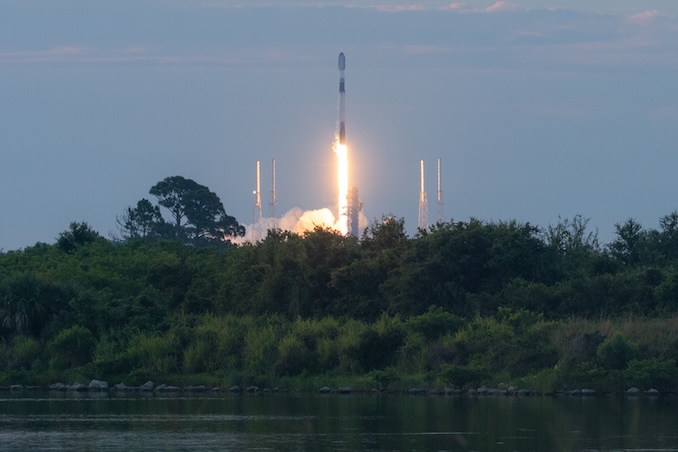
Critics counter that near-term metrics, quarterly numbers and a choppy post-IPO chart do not yet justify the valuation. That debate is real, and it will play out over coming quarters. But Musk's argument is explicitly a long-duration one, tied to capabilities SpaceX is already demonstrating rather than promises alone, the same reliability on display in its relentless launch cadence.
Musk Tells SpaceX Short Sellers the Long Odds Favor Bulls — additional image

The trillion-dollar thesis

The bull case Musk pointed to rests on Starship. If the fully reusable system drives launch costs down as sharply as SpaceX projects, it could unlock a space economy measured in the tens of trillions of dollars, spanning orbital data centers, space-based solar power, asteroid mining and eventually Mars settlement. In that vision, SpaceX becomes the essential infrastructure layer for all of it, an AWS-of-space capturing recurring revenue from launch, transport and data across an expanding frontier.

It is a sweeping thesis, and reasonable people disagree about the timing. Skeptics note that many of these markets barely exist today and that execution risk is real; bulls respond that SpaceX is the only company operating at the scale required to build them, and that today's dips look small against a decades-long ascent. Coverage from CNBC detailed how heavily traders have positioned against the stock, setting up a high-stakes test of both camps.

Conviction meets a catalyst

With SpaceX's first earnings report as a public company due August 4, both sides will soon have fresh data to argue over. For Musk and the company's supporters, the near-term volatility is simply the price of admission for owning what they see as the infrastructure of the next great economic frontier.

Whether the bears blink or double down, the message from the top is unchanged: bet against multi-planetary ambition at your own risk.