HAWTHORNE, Calif. — Not every satellite SpaceX launches wears a Starlink badge. Over the weekend, a Falcon 9 lifted the final three satellites for SES's O3b mPOWER constellation out of Cape Canaveral, closing out a network more than a decade in the making and underscoring how much of the world's connectivity now rides on SpaceX hardware.
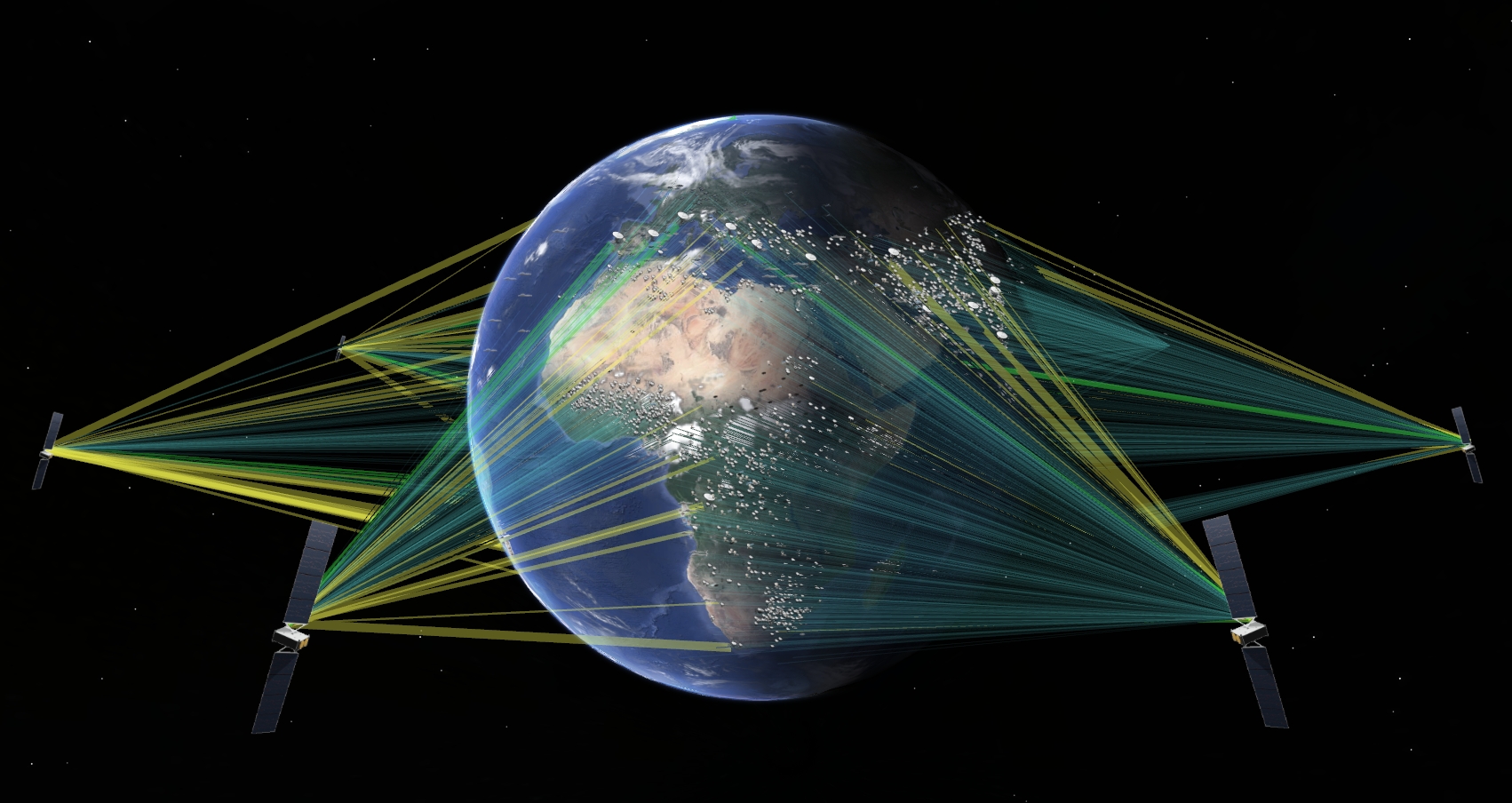
The three new spacecraft, tagged F11, F12 and F13, are headed for medium Earth orbit at roughly 5,000 miles up — more than ten times higher than Starlink's shell near 340 miles, but a fraction of the 22,000 miles where traditional geostationary satellites sit. That middle ground is the entire point of the design.
A different orbit, a different job
A satellite parked that far out needs far fewer siblings to blanket the globe than a low-orbit constellation does. Where Starlink relies on thousands of spacecraft, SES needed only 13 O3b mPOWER satellites to offer quick, steady service across the planet. It is a reminder that there is no single "right" way to build a space-internet network — the orbit follows the customer.
And the customers could hardly be more different. Starlink is built for volume: consumers, RVs, homes, small businesses, and a fast-growing aviation and maritime base that recently helped push the network toward its next milestones, including its direct-to-cell expansion toward 25 million users. O3b mPOWER skips consumers entirely, selling enterprise-grade connectivity to airlines, cruise lines, offshore energy operators, telecoms needing backhaul, and governments — provisioned more like a dedicated circuit than a subscription.
Rivals on paper, partners in practice
The two systems are sometimes cast as competitors, but in practice SpaceX and SES already blend them. A 2023 partnership lets cruise ships combine Starlink's raw speed with O3b mPOWER's steady, guaranteed capacity, switching between them based on what a ship needs at any given moment, as Teslarati detailed in its look at the completed constellation. Sunday's launch effectively finished the medium-orbit half of that pairing.
For SpaceX, the mission was also a workhorse showcase. This was the flight's 29th trip to orbit for the booster — a résumé that already included two crewed Axiom missions, the European Space Agency's Euclid telescope and 22 separate Starlink batches. The planned droneship landing was set to be one of the hundreds of successful Falcon booster recoveries to date, extending a reuse record that keeps rewriting the economics of spaceflight.
The bigger picture
The completion arrives just as SpaceX's launch cadence keeps climbing on other fronts, following a run that recently included its 700th Falcon flight and the O3b mPOWER fleet's completion. A company that pushed the Starlink constellation past 11,000 satellites earlier this year still has room on the manifest for someone else's spacecraft — and the reliability to fly them on schedule.
That flexibility is the quiet story here. SpaceX has become the launch backbone for the entire satellite economy, whether the payload competes with Starlink or complements it. SES gets a finished network tuned for a narrow set of demanding customers, and Falcon 9 adds one more line to an already historic flight log. In an industry where most rockets fly once, SpaceX keeps turning the same boosters into infrastructure for everyone.