
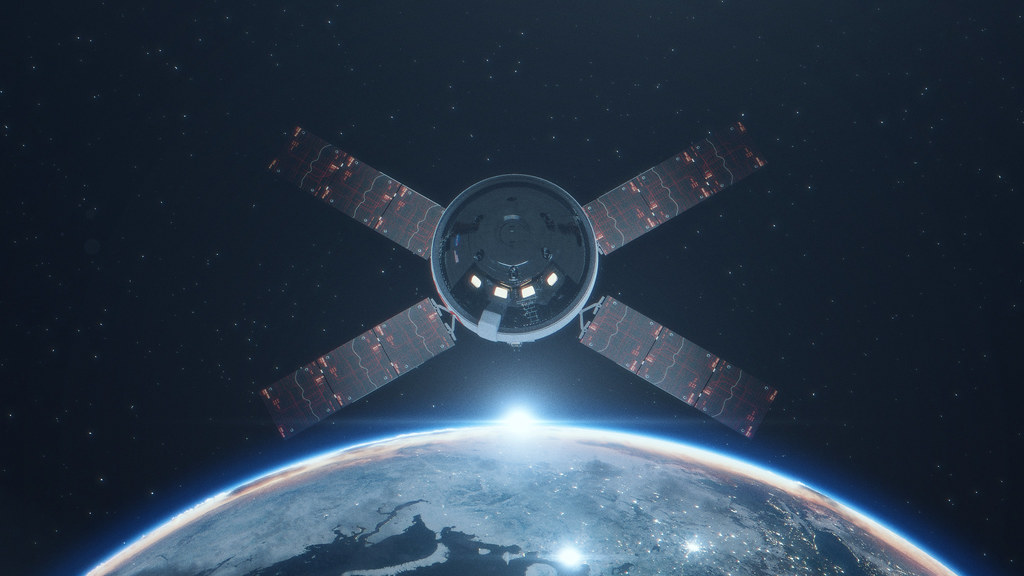
HAWTHORNE, Calif. — NASA is handing SpaceX a front-row seat on humanity's return to the Moon. The agency has selected the company to provide laser communications for next year's Artemis III mission, installing two Starlink mini laser terminals on the exterior of the Orion spacecraft to beam 4K imagery and video back to Earth as four astronauts test rendezvous and docking near the Moon.
The terminals use the same optical crosslink technology that already stitches together SpaceX's Starlink constellation. According to NASA's announcement, they will downlink high-definition footage directly to Mission Control at Johnson Space Center in Houston, giving viewers a real-time, cinematic view of a ship-to-ship docking in deep space for the first time.
Why Lasers, and Why SpaceX
Optical communications use invisible infrared light to move far more data per downlink than traditional radio-frequency systems. NASA's crewed missions have long relied on aging Tracking and Data Relay Satellites, but the agency is retiring that system and shifting toward buying commercial relay services instead of building its own.
That is where SpaceX's scale becomes an asset. The Starlink mini lasers headed to Orion are based on the more than 25,000 laser terminals already operating in orbit to interconnect the constellation — hardware SpaceX has also used to stream live video and telemetry during its Starship flight tests. Few other providers can point to a laser network of that size already running in space.