AUSTIN, Texas — For years, Tesla was valued as a car company that happened to dabble in software and batteries. A fresh wave of Wall Street analysis argues that framing is now backwards: the company's real value increasingly sits in energy storage, autonomous ride-hailing and humanoid robotics, with vehicles serving as the cash engine that funds it all.
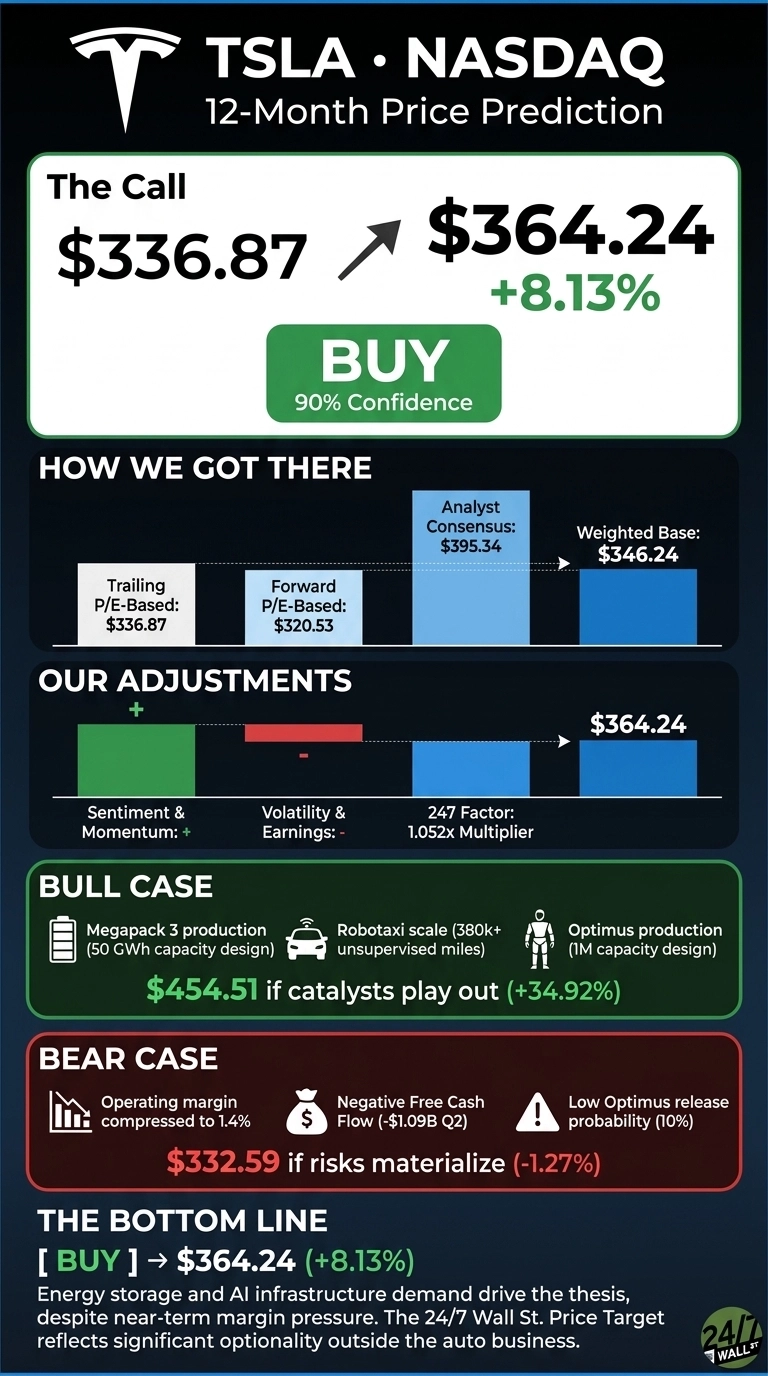
In a note published August 19, 24/7 Wall St. put a buy rating and a $364.24 price target on Tesla — roughly 8% above the recent $336.87 quote — and argued the stock is priced almost entirely on opportunities outside the traditional auto profit-and-loss statement. "Cars fund the business," the firm wrote, while energy storage, Full Self-Driving subscriptions, robotaxi and Optimus "create the value."
The Numbers Behind the Shift
The non-auto story is showing up in the results. In the second quarter, Tesla posted record revenue of $28.24 billion, up more than 25% year over year, on a second-quarter record of 480,126 vehicle deliveries. But the faster-growing lines sat elsewhere: energy storage deployments hit 13.5 gigawatt-hours, services revenue climbed 50%, and active Full Self-Driving subscriptions grew 56% year over year to 1.48 million. Chief executive Elon Musk framed batteries as the bottleneck for the entire AI build-out, saying the energy business "will be crucial for the scale-up of artificial intelligence data centers."
That reframing helps explain why Tesla continues to invest aggressively even as margins compress. The company is standing up Megapack 3 production designed for 50 gigawatt-hours of annual capacity and installing the first Optimus humanoid-robot lines at Fremont, targeting an eventual cadence Musk has called "the biggest product ever." Tesla's expanding autonomy footprint — including a freshly secured robotaxi permit clearing a Las Vegas launch — adds another lever the auto income statement does not yet capture.