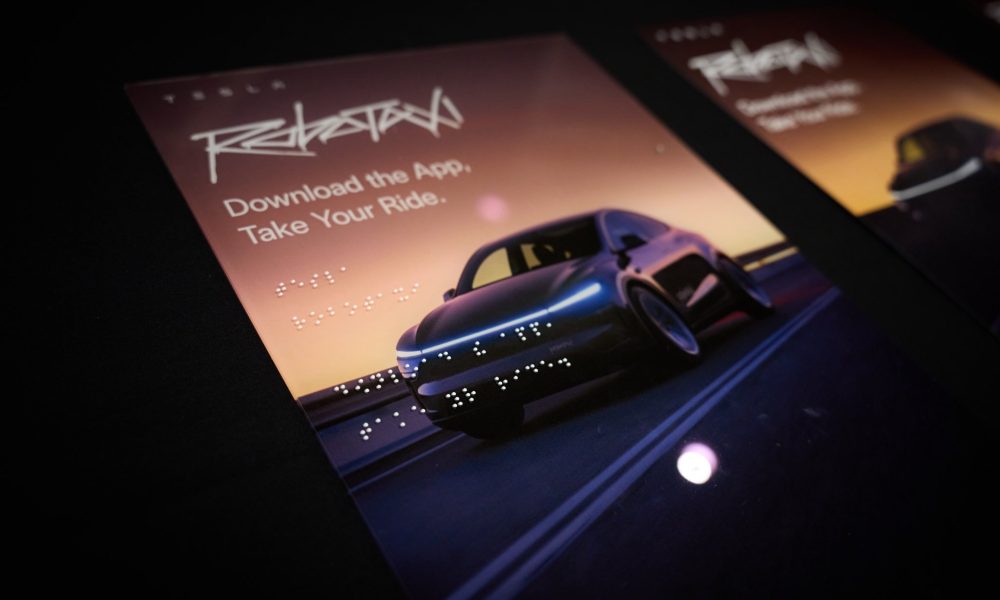
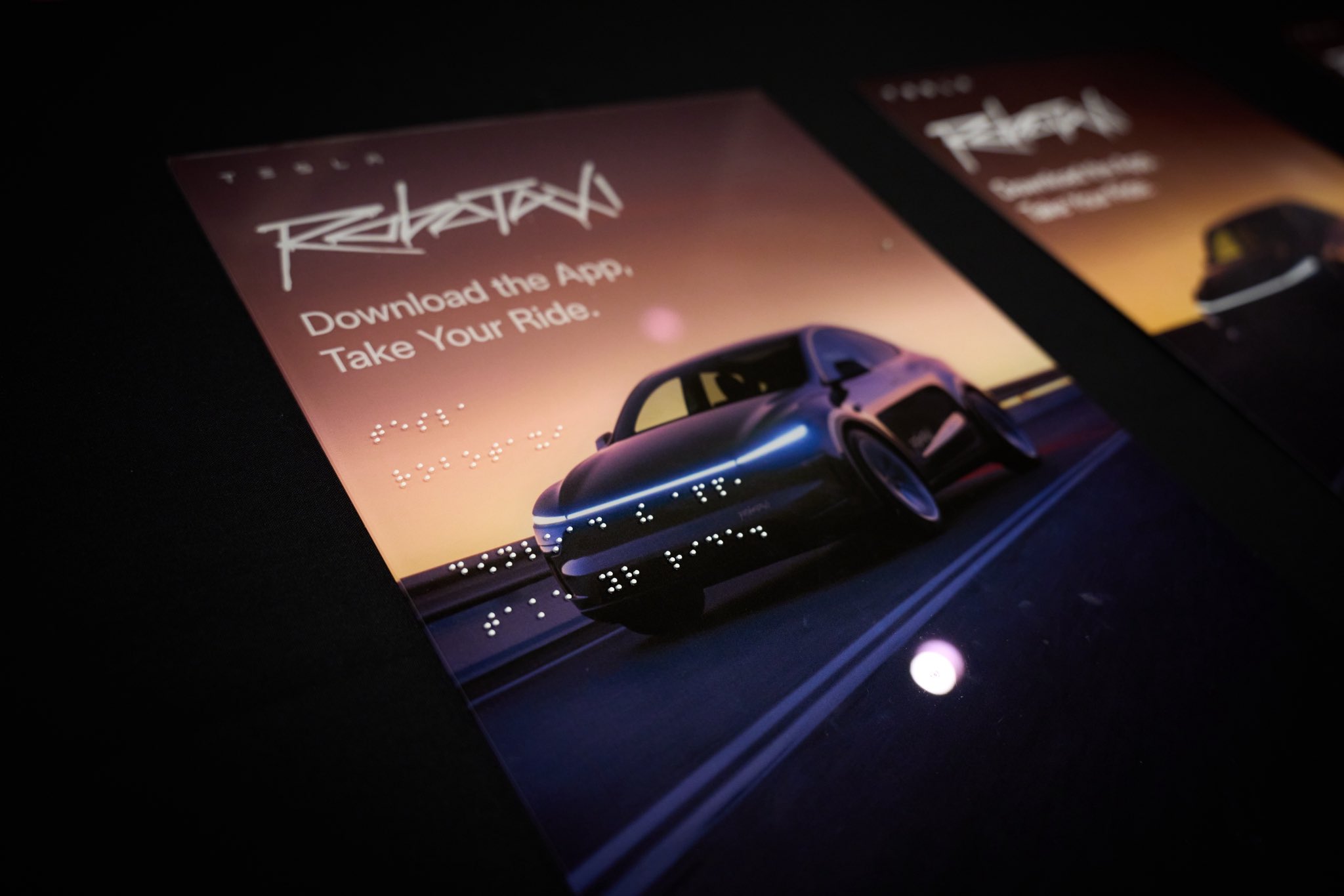
AUSTIN, Texas — Tesla rolled a production Cybercab into the National Federation of the Blind Annual Convention at the JW Marriott Austin on July 3, giving blind and visually impaired attendees a hands-on look at a robotaxi designed from the wheels up for riders who cannot see a screen or grip a steering wheel that no longer exists.
The demonstration put Tesla's accessibility work front and center. Attendees arriving with white canes and service dogs stepped into the steering-wheel-free two-seater and explored features tailored to independent travel: Braille lettering on physical controls, generous room for service animals and assistive devices, and wheelchair-height seating that makes transfers easier. Tesla's official Robotaxi account highlighted the same details, noting Braille markings on door releases and the emergency stop button so a rider can board, ride and exit without a sighted companion.
Independence Built Into The Hardware
For the roughly 2.2 million visually impaired Americans, spontaneous travel has long meant leaning on sighted drivers, costly paratransit or patchy public transit. A driverless Cybercab hailed from an app with voice guidance removes that dependency, letting riders go to work, shop or attend an event on their own schedule. The Cybercab that Tesla brought to Austin is the same class of vehicle already being validated on public roads, part of the company's broader push into autonomy that recently saw its self-driving fleet cross 10 million vehicles.
Braille on the door release and the emergency stop matters because it hands control back to the rider. Rather than hunting for a touchscreen, a blind passenger can locate a labeled physical control by touch, confirm it, and act on it. The generous cabin footprint means a guide dog can settle in comfortably, and the low, wide seating reduces the awkward, sometimes unsafe transfers that riders with mobility aids face in conventional cars.