Tesla Begins Engineering Tests of First Production Cybercab

Tesla has put its first production Cybercab on public roads in Austin for engineering tests, the first time a customer-spec, controls-free robotaxi has been validated outside Gigafactory Texas.

3 min read
Tesla Begins Engineering Tests of First Production Cybercab

AUSTIN, Texas — Tesla has taken its purpose-built robotaxi out of the factory and onto public streets, confirming on June 30 that engineering tests of the first production Cybercab have begun in Austin. It is the first time a customer-specification unit of the two-seater — built with no steering wheel and no pedals — has been validated in real-world traffic.

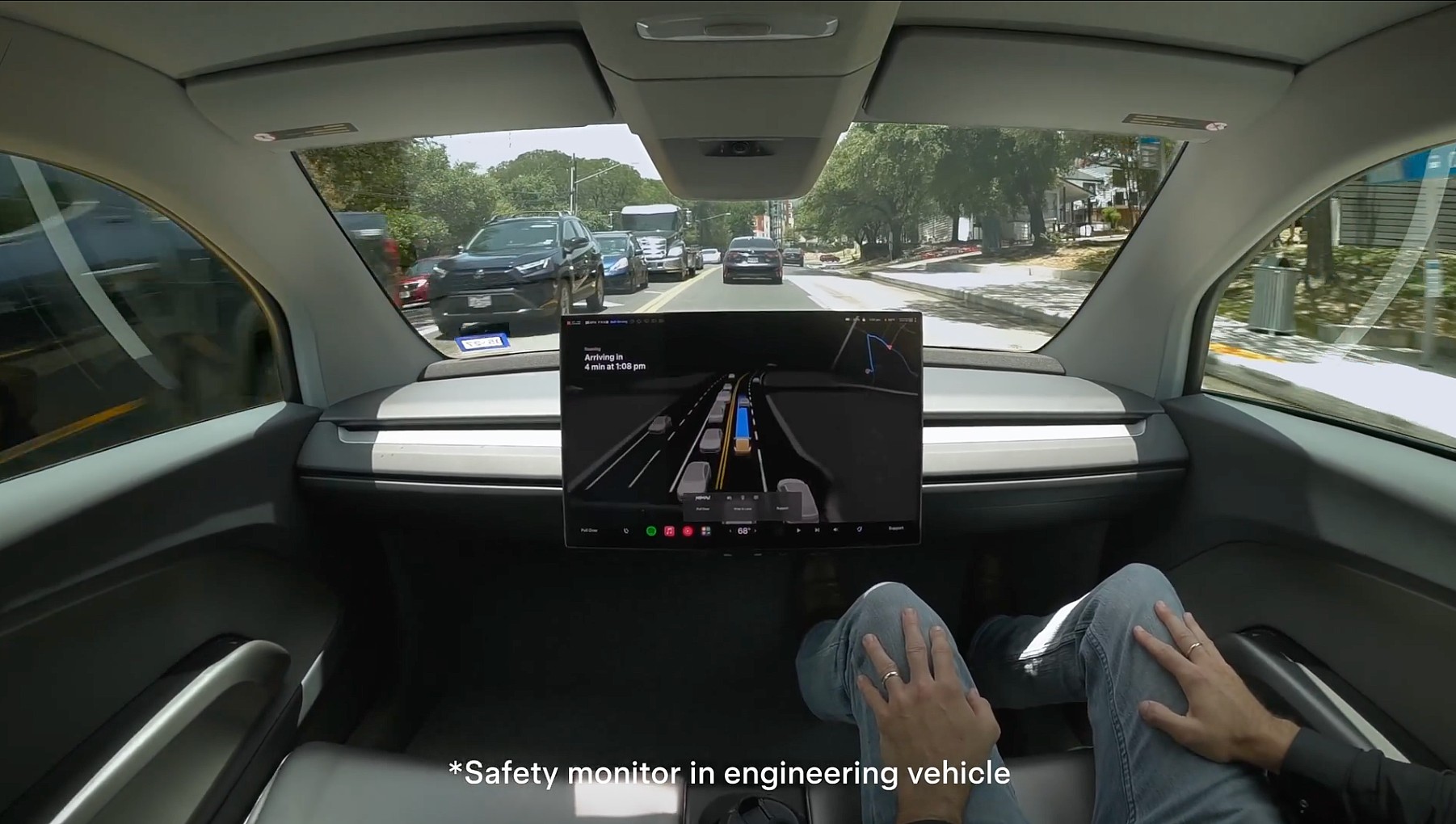
The company shared video of the vehicle navigating city streets with no one in the driver position, which is unavoidable given the Cybercab has no manual controls at all. A Tesla safety monitor rides in the front passenger seat during the runs, a reminder that this is a validation phase rather than a fare-collecting service.

A Purpose-Built Platform Hits the Road

The milestone caps a methodical ramp. Tesla rolled its first steering-wheel-less Cybercab off the line at Gigafactory Texas on February 17, confirmed the start of production during its Q1 earnings call in April, and over the past weekend published a First Responders Guide ensuring emergency crews have 24/7 access to Robotaxi assistance. Putting a production-line unit through public-road validation is the next box to check before the car can carry paying passengers.

The Cybercab is no longer a mystery on paper. An EPA filing pegged its curb weight at 3,113 pounds with 219 horsepower and a 48 kWh battery, and at roughly 165 Wh/mi it ranks as the most efficient vehicle Tesla has ever built. CEO Elon Musk has pitched a price near 25,000 dollars, economics that could reset the cost of autonomous ride-hailing if the software delivers. The hardware story rhymes with other recent Cybercab developments, including the unique front-wheel-drive wheel design revealed in a recent patent.
Tesla Begins Engineering Tests of First Production Cybercab — additional image

Software Is the Real Test

Tesla's Robotaxi service in Austin currently runs on Model Y SUVs equipped with Full Self-Driving, not the Cybercab. The engineering tests now underway are a separate, dedicated process to validate the new platform's hardware and, more importantly, the software that pilots it around the city with nobody supervising from inside the cabin.

Those early runs serve as a benchmark: how many rides the system completes safely, how many miles it strings together without intervention, and which scenarios challenge the stack most. Tesla has paired the testing with geofencing tools that can reroute autonomous traffic around closures, construction, or incidents. The buildout dovetails with the company's broader autonomy push, including its filing for a 5,000-vehicle robotaxi network in Las Vegas.

What Comes Next

Tesla has prioritized safety throughout the Austin rollout, and its driverless operations there have maintained a strong record. That discipline suggests public Cybercab rides could still be months away rather than weeks — but the trajectory is unmistakable. From an EPA Certificate of Conformity to road decals to today's engineering tests, each step has moved the dedicated robotaxi closer to the fleet. As detailed by Electrek, the next major signal will be the announcement of the first passenger rides, setting up a summer of momentum for Tesla's autonomy story.