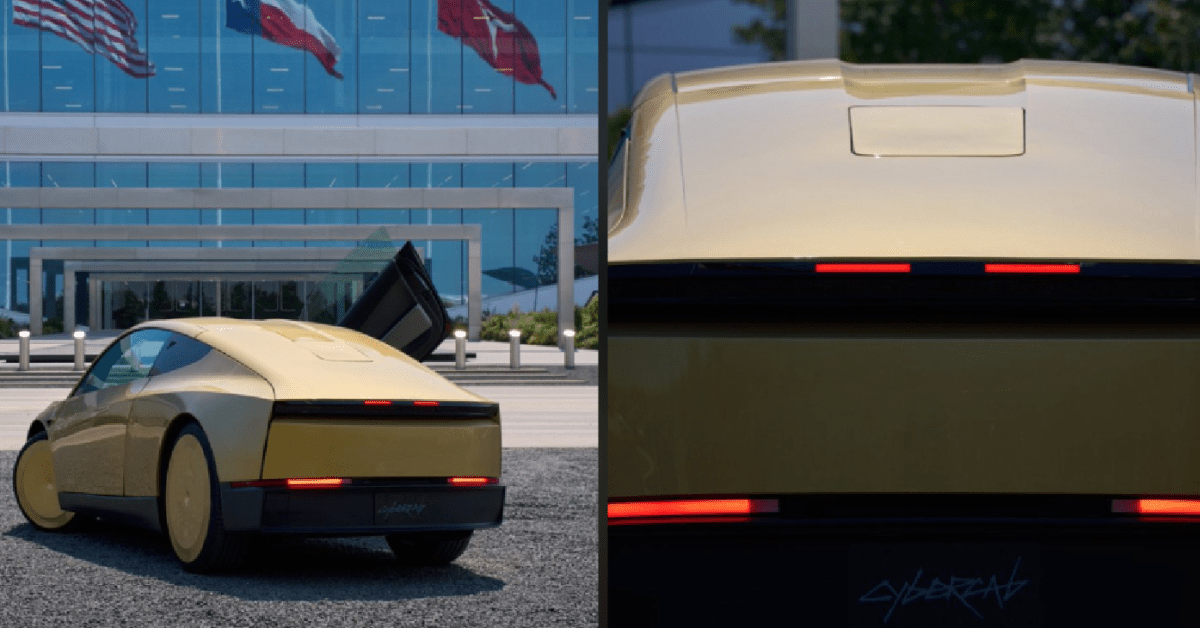
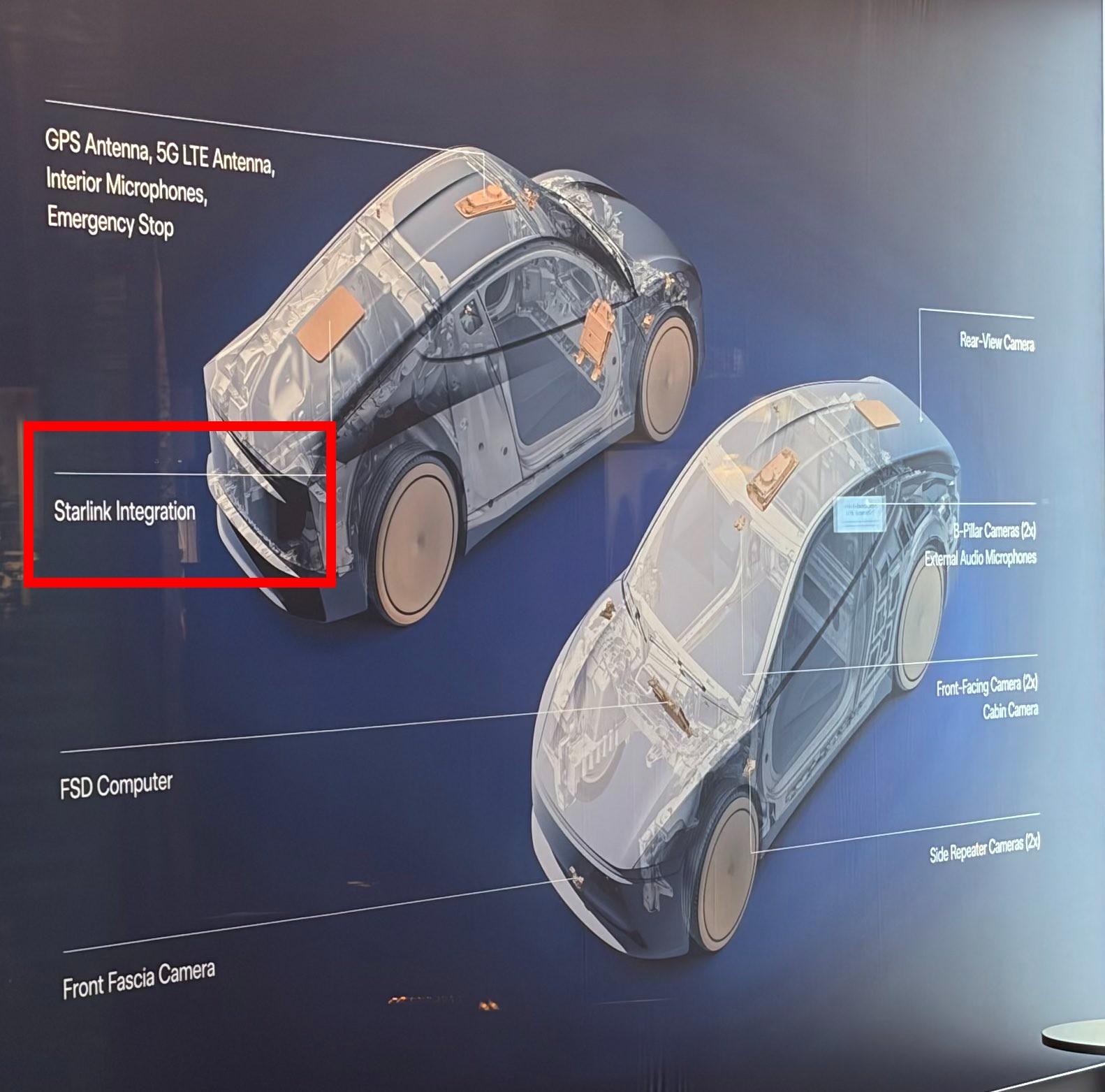
AUSTIN, Texas — Tesla has settled months of speculation with a clear answer: the Cybercab will be the first vehicle in its lineup to ship with built-in Starlink connectivity. The confirmation came from a new hardware display at Tesla's freshly renovated Santana Row showroom in California, where a production Cybercab now sits beside a diagram that labels 'Starlink Integration' as part of the car's architecture.
The reveal ends a long guessing game. Prototype robotaxis had been photographed for months with Starlink antennas crudely bolted to the rear trunk, wiring exposed. The production layout, first surfaced by Tesla watchers and detailed by Teslarati, tucks the antenna cleanly into the rear of the vehicle, flush with or beneath the trunk lid.
Why a Robotaxi Wants Its Own Satellite Link
The Cybercab is built for one job: fully autonomous ride-hailing for one or two passengers, with no steering wheel, no pedals and no side mirrors. For a car with no human behind the wheel, an always-on connection is not a luxury, it is infrastructure.
Consumer Teslas lean almost entirely on cellular networks. A Starlink terminal gives the Cybercab a second, independent path to the cloud, keeping it connected in areas with weak cellular coverage or during outages. That link can carry telemetry uploads, live map updates and diagnostics, while also delivering high-speed Wi-Fi so riders can stream or work during the trip.