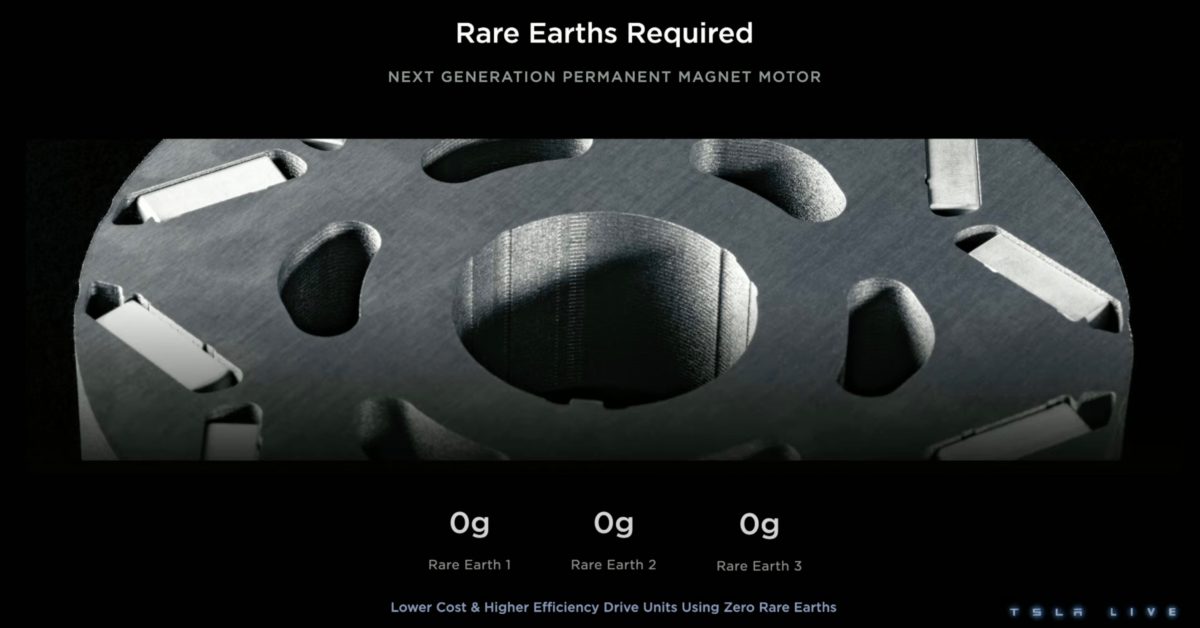
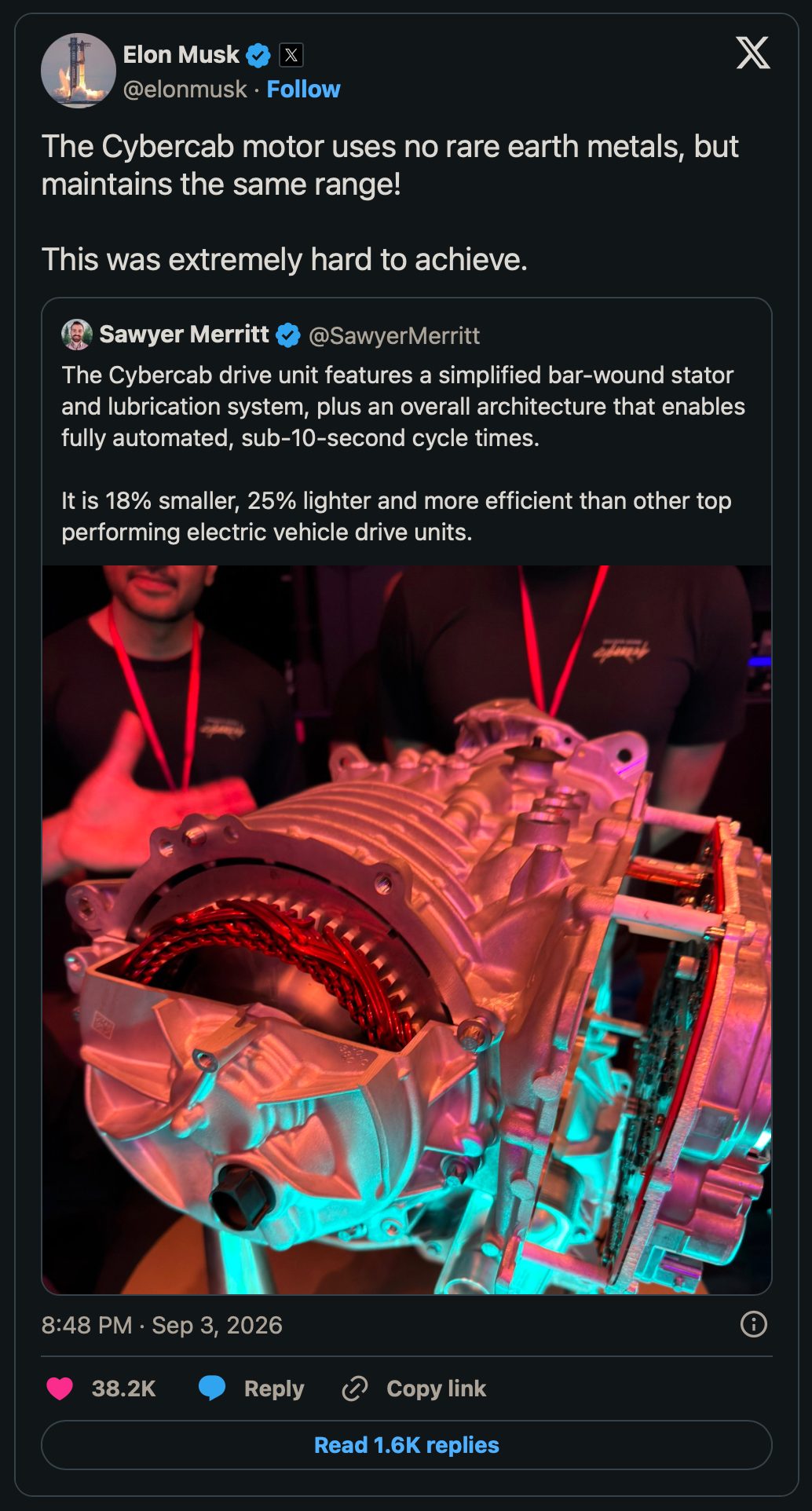
AUSTIN, Texas — Tesla used its Cybercab launch to show off an engineering milestone years in the making: a new electric drive unit that uses no rare-earth metals at all, yet runs smaller, lighter and more efficient than the motors it replaces. CEO Elon Musk, adding detail on X, said the rare-earth-free design was "extremely hard to achieve."
The company says the new motor is 18% smaller, 25% lighter and more efficient than other top-performing drive units, all while powering the purpose-built Cybercab that just began carrying public riders in Austin. It is the clearest evidence yet that a promise Tesla made back in 2023 — to build permanent-magnet motors without rare earths — has moved from the lab to the road.
Why Rare Earths Matter
Rare-earth elements such as neodymium are used to make the powerful permanent magnets inside many EV motors. There is only about a kilogram of the material in a typical motor, but across millions of vehicles that adds up fast. The bigger issue is not scarcity but supply: China dominates the processing and magnet production that turns those elements into finished parts, which gives one country outsized leverage over the entire industry.
By removing rare earths from the equation, Tesla insulates the Cybercab program from export controls, tariffs and pricing swings that have rattled automakers over the past year. It is a supply-chain hedge and a cost reduction rolled into a single component — exactly the kind of vertical-integration win Tesla has built its manufacturing reputation on.
Smaller, Lighter, And Packaged For Efficiency
The practical payoff shows up in packaging. A motor that delivers high power density in a smaller, lighter housing frees up precious space in a compact two-seater, letting engineers pack the vehicle tighter and chase every last point of efficiency. The Cybercab has already been certified at 165 Wh per mile, making it the most efficient electric car on the road, and the new drive unit is part of that story alongside the car's low-slung aerodynamics and light weight.
Tesla has a track record of migrating breakthrough hardware across its lineup. When it introduced permanent-magnet motors with the Model 3, the technology eventually spread to other models. The same could happen here: what debuts in the Cybercab today may power future Teslas tomorrow, multiplying the supply-chain and cost benefits across millions of vehicles.
A Building Block For The Robotaxi Era
The rare-earth-free motor lands as Tesla scales its autonomous ambitions, from the radically simpler Cybercab drivetrain to a growing robotaxi fleet. Each optimization compounds: a cheaper, lighter, more resilient motor lowers the cost per mile of a vehicle designed to run all day, every day.
For a company betting its next decade on autonomy at scale, controlling the supply chain for a core component is as strategic as the software that steers the car. Tesla just showed it can build a world-class motor without depending on materials refined halfway around the world — and it did it in the vehicle meant to define the robotaxi era.