First Clear Look at How Tesla Adds Steering to the Cybercab

A pre-production Cybercab spotted in Berkeley reveals the Cybertruck steering wheel and column Tesla bolts into test cars that were designed with no controls at all.

3 min read
First Clear Look at How Tesla Adds Steering to the Cybercab

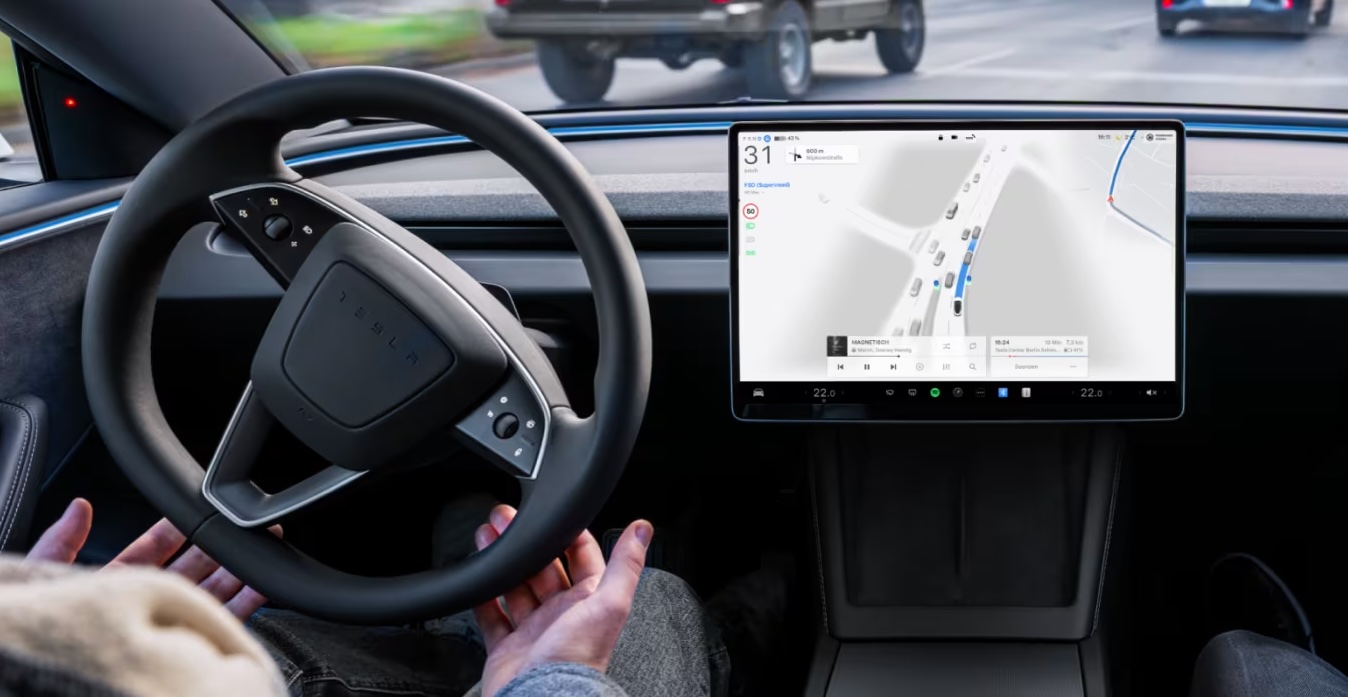
AUSTIN, Texas — A pre-production Tesla Cybercab parked on a street in Berkeley, California, has given the public its clearest look yet at how Tesla puts a steering wheel into a car it designed to have none. Photos shared with Electrek show a squared-off Cybertruck steering wheel mounted on an exposed column, bolted into the two-seat robotaxi as a temporary rig for road testing.

The images are a fascinating window into the engineering reality behind one of Tesla's boldest bets. The production Cybercab has no steering wheel, no pedals, and no mirrors, a purpose-built robotaxi Tesla says will cost less than $30,000. That radically simplified design philosophy is the same one detailed in the Cybercab's brake-by-wire drive unit engineering.

A car built with no wheel, testing on a borrowed one

Tesla began rolling steering-wheel-less units off the line at Gigafactory Texas earlier this year. But the vehicles Tesla runs on public roads for data collection are a different matter. An engineering mule still needs a human able to take over, so Tesla grafts on a Cybertruck wheel and column mounted to what looks like an adjustable rail.

As Electrek reported, the test car wore a Texas manufacturer plate and a "CYBERCAB" vanity plate, finished in the gold-ish wrap Tesla has used on other prototypes. The reader who photographed it said he was struck by how compact and city-friendly the vehicle looked in person, calling it exactly the kind of affordable Tesla many had hoped for.

First Clear Look at How Tesla Adds Steering to the Cybercab — additional image

Why the temporary rig matters

The steering assembly is not a sign of any retreat from Tesla's autonomy-first vision. It reflects the regulatory reality that prototypes tested on public roads generally require a human able to intervene. For depot moves, Tesla has even hidden a virtual joystick in the production car's touchscreen, letting a person nudge the vehicle without any physical controls at all.

The Cybercab rides on the same next-generation platform Tesla once discussed for a $25,000 car before that project evolved into a dedicated robotaxi. With riders now able to hail one through the app, as covered in Tesla's robotaxi app that lets riders choose Cybercab or Model Y, the pieces of Tesla's autonomous network are steadily clicking into place.

The road ahead

Every automaker runs mules with makeshift hardware, and the Berkeley sighting is a normal part of validating a new vehicle. What makes it notable is the contrast: Tesla is simultaneously mass-producing the wheelless production car and testing engineering versions with a bolted-on wheel. It is a snapshot of a company building the future in public, one prototype at a time, as it marches toward a driverless fleet at scale.