Tesla Keeps Quietly Upgrading the Cybertruck, Engineer Reveals

Cybertruck lead engineer Wes Morrill shared how Tesla keeps improving the pickup mid-production — from a lighter, cheaper aero shield to a reshaped camera housing that keeps lenses clear in the rain.

3 min read
Tesla Keeps Quietly Upgrading the Cybertruck, Engineer Reveals

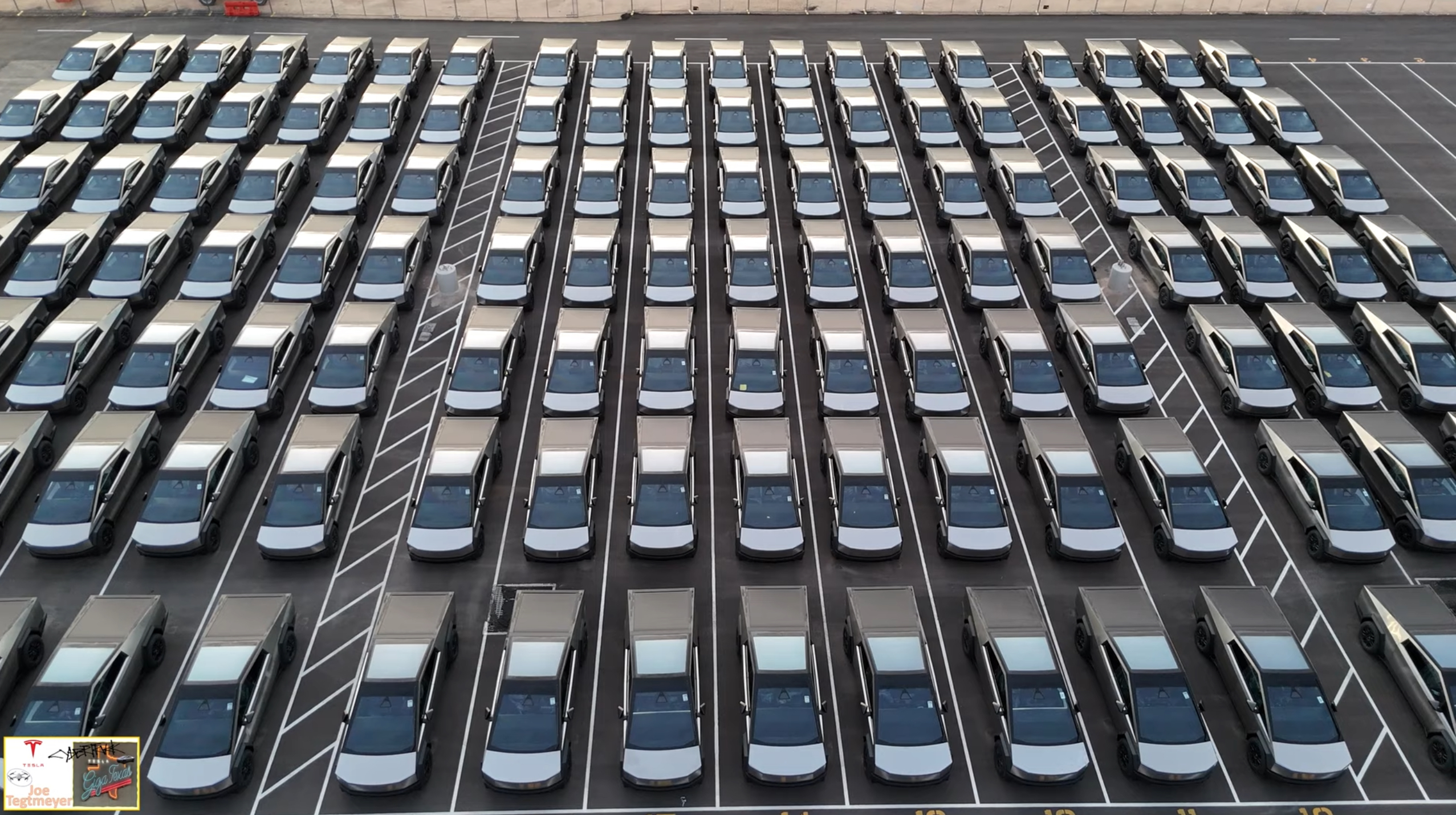
AUSTIN, Texas — Most automakers freeze a vehicle's design and wait for a new model year to change it. Tesla does the opposite, and Cybertruck lead engineer Wes Morrill just pulled back the curtain on how relentlessly the company refines its stainless-steel pickup while it is still rolling off the line at Gigafactory Texas.

"The finish line isn't getting to production. A product is a living thing, constantly evolving and improving," Morrill said, before detailing a series of under-the-skin changes that make the Cybertruck cheaper, lighter and more capable.

A stronger shield, hidden underneath

The most notable change is to the aero shield that sits beneath the truck — a part almost no owner will ever see. Tesla swapped the original aluminum piece for a self-reinforcing polypropylene that Morrill said is "stretched into fibers and then laminated into the form." The result is more durable, significantly lighter and cheaper to produce than aluminum.

The new material also unlocked small improvements in the truck's geometry, cleaning up the manufacturing around bolts and edges and trimming drag. It is the kind of invisible upgrade that compounds over time, improving durability and efficiency at once. As Teslarati reported in its interview with Morrill, several more changes are still to be revealed.

Sharper vision in the rain

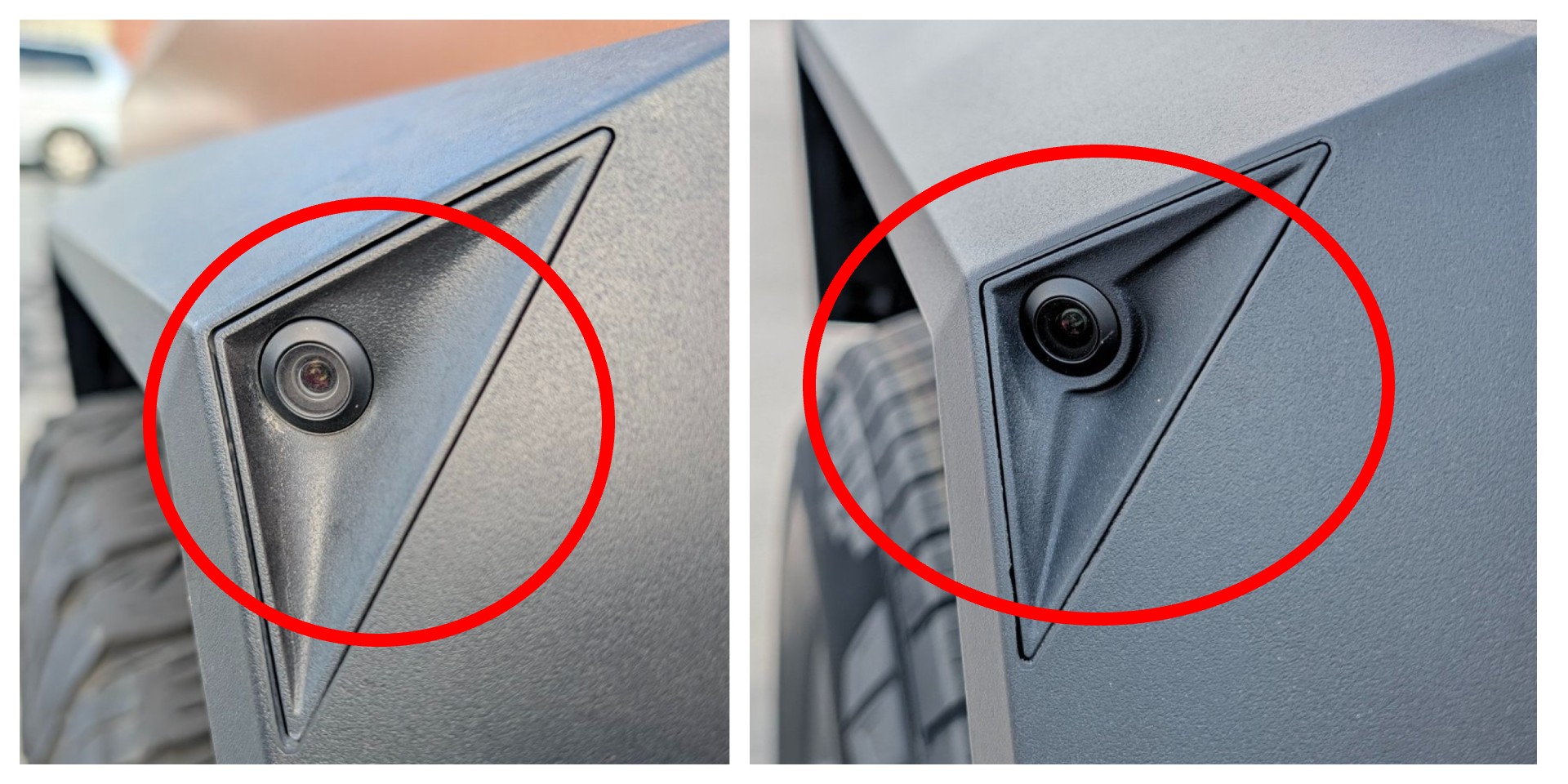
Tesla also reshaped the Cybertruck's side repeater camera housings, the triangular pods mounted on the front fenders. At a glance the new part looks identical, but a revised contour uses the air already flowing around the truck to create localized eddies that physically push water droplets off the lens while driving.
Tesla Keeps Quietly Upgrading the Cybertruck, Engineer Reveals — additional image

That matters because those cameras feed Autopilot and Full Self-Driving for lane changes and blind-spot monitoring, and early trucks sometimes collected water that degraded the image in wet weather. Rather than add washers — which introduce cost, complexity and potential leak points — Tesla solved it with pure geometry. Morrill called it "pure vision improvement" at "no cost penalty," since once the mold is updated, every part costs the same as before. It is the same camera-first philosophy that underpins Tesla's wider self-driving effort, including features like the Cybercab's standard Starlink integration.

Why Tesla builds this way

Because these updates arrive continuously, Teslas are recognized by "generation" or "era" rather than model year — the way newer Model Y owners call their cars "Juniper" or Model 3 buyers say "Highland." There is no waiting for an arbitrary calendar date if a car can be made better right now.

Owners of trucks delivered as recently as June 2026 have already confirmed they received the revised camera housing, and the cameras appear electrically compatible for potential retrofits, though Tesla has not announced a formal service program. Meanwhile the Cybertruck keeps gaining capability on other fronts, including its newly enabled ability to pair with a Powerwall 3 for days of home backup.

None of these tweaks will grab headlines the way a new battery pack might. But better wet-weather vision, a lighter and stronger underbody, and zero added cost add up to a truck that is measurably better every month — exactly the kind of steady, engineering-led progress that has always defined the way Tesla builds.