Live Robotaxi Rollout2,201Tesla
robotaxis
  • Bay Area, CA1,655 Model YsSafety driver
  • Texas546 (126 Cybercab · 420 Model Y)Driverless
  • Miami, FLModel Y fleet · count not disclosedDriverless
  • Orlando, FLModel Y fleet · count not disclosedDriverless
  • Tampa, FLModel Y fleet · count not disclosedDriverless
  • Las Vegas, NVPermit for up to 5,000 robotaxisApproved
  • Phoenix, AZLaunch preparations under wayComing soon

Tesla Says Pothole Avoidance Is Coming Soon to FSD

Elon Musk says Full Self-Driving will soon steer around potholes, tapping HW4 cameras and billions of miles of real-world data to protect wheels and tires.

3 min read
Tesla Says Pothole Avoidance Is Coming Soon to FSD

AUSTIN, Texas — Tesla is preparing to give Full Self-Driving one of the most requested quality-of-life features on the road: the ability to spot and steer around potholes. Chief Executive Elon Musk said the capability is "coming soon," and it has been listed as an upcoming improvement in Tesla's FSD v14 release notes for months.

Potholes are a small problem with outsized consequences. Hitting one can bend a wheel, shorten tire life, throw off alignment, and in severe cases jar occupants. For a company building toward a future where passengers work, relax, or sleep while the car drives, smoothing out that experience is a natural next step, and it dovetails with the step-change improvements Tesla has touted in FSD v15.

Why Now Is Different

Tesla has the ingredients to finally deliver. Vehicles on Hardware 4 carry cameras with roughly 4.5 times the resolution of earlier units, giving the neural network far more detail to recognize a pothole from the surrounding pavement. Tesla has also been quietly collecting road-surface data for years, labeling bumps and rough patches so the fleet can learn where hazards tend to appear.

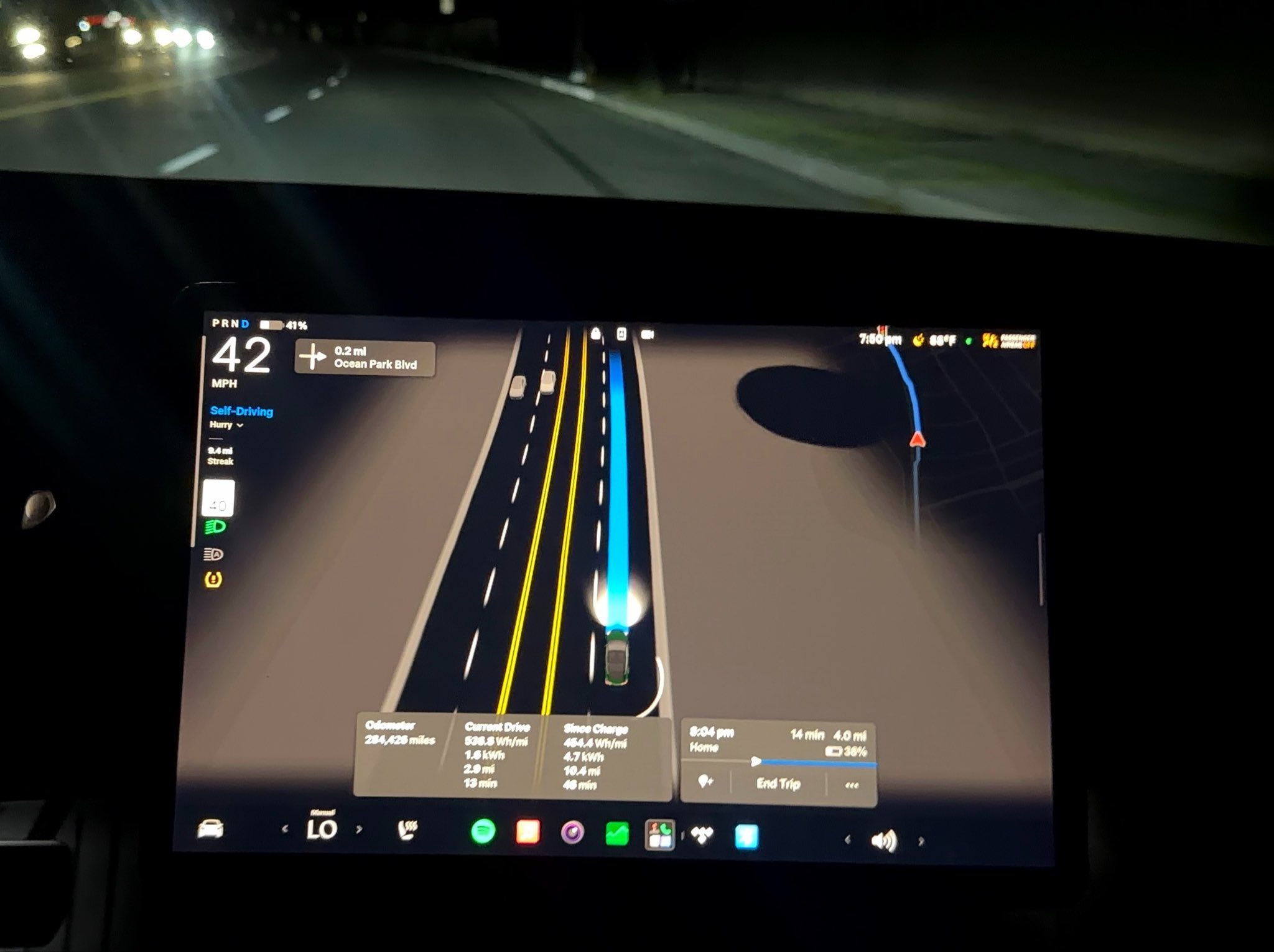
Just as important, FSD has already shown it can handle debris. As Teslarati reported, the system reliably avoids obstacles like cardboard boxes and stray car parts, and drivers have captured clips of Teslas nudging within a lane to slot a pothole neatly between the tires. Turning that emergent behavior into a dependable, trained feature is the goal.
Tesla Says Pothole Avoidance Is Coming Soon to FSD — additional image

Built On Billions of Miles

The strongest argument for confidence is scale. Tesla's fleet has now gathered more than ten billion miles of real-world driving data, an enormous corpus for teaching a vision system the subtle visual signatures of a pothole under different light, weather, and road conditions. That is the same data advantage powering the company's broader autonomy push.

Pothole avoidance also complements the safety-first direction Tesla has been taking with recent updates, from smoother obstacle handling to more assertive hazard detection. Each incremental capability makes the overall driving experience feel more human, and more trustworthy.

A Feature Drivers Will Feel

Unlike headline features that only matter in rare situations, pothole avoidance is something owners would notice on nearly every drive, especially in regions where winters chew up asphalt. It is the kind of everyday polish that builds loyalty and reinforces Tesla's positioning as the leader in real-world "physical AI."

With Hardware 4 rolling out across the lineup and FSD improving on a rapid cadence, as seen in Tesla's expansion of supervised FSD abroad, the pieces are in place. If "soon" holds, Tesla drivers could soon add smoother, safer rides, and healthier wheels, to the growing list of things their cars quietly handle on their own.