AUSTIN, Texas — Tesla's energy business is ramping into a market that is expanding faster than almost anyone expected. Fresh federal data shows renewables and battery storage adding capacity at a record clip, and Tesla's next-generation Megapack 3 is arriving at exactly the right moment to capture it.
New figures from the U.S. Energy Information Administration, reviewed this week, project that renewables and storage will add roughly 82.9 gigawatts of new U.S. capacity by mid-2027, even as fossil and nuclear capacity edges down. Utility-scale battery storage alone is set to grow more than 40% in a single year, a surge that runs straight through Tesla's wheelhouse.
Megapack 3 arrives at the right time
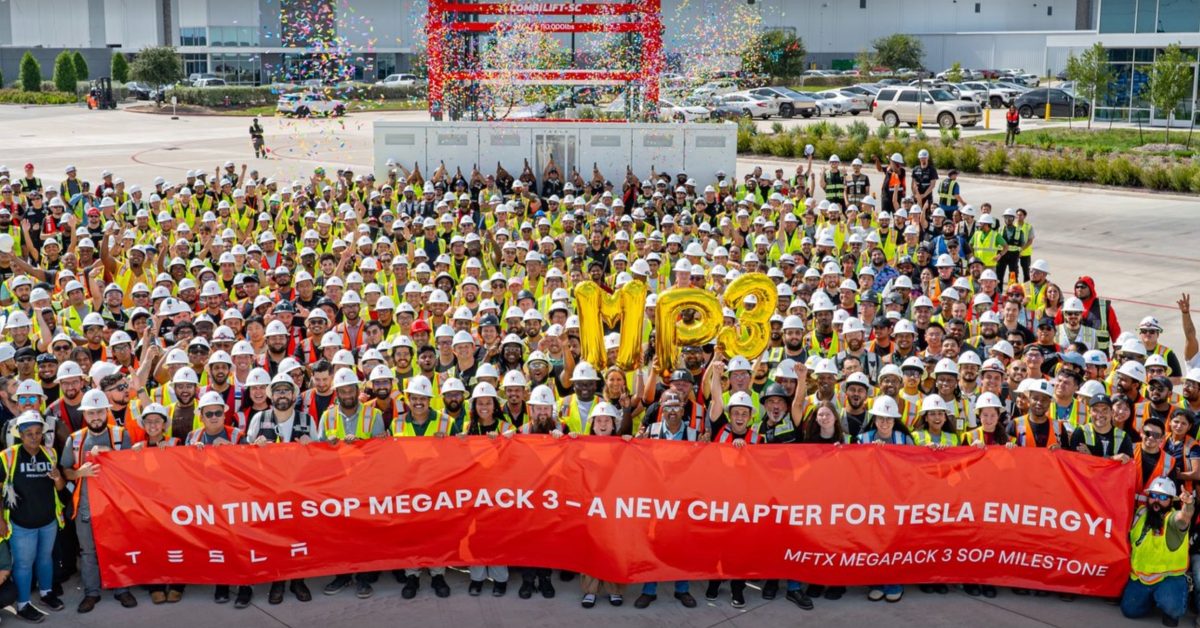
Tesla began building its next-generation Megapack 3 at a new Megafactory in Brookshire, Texas, a plant that went from groundbreaking to production in just 16 months and is designed to build 50 GWh of the units a year. Each Megapack 3 holds about 5 MWh, roughly 28% more energy than the unit it replaces, packed into the same footprint.
The gains come from bigger cells and smarter engineering. Tesla says Megapack 3 cuts thermal-system connection points by 78%, meaning fewer places to leak or fail and less labor to install and service. At grid scale, those unglamorous reliability wins are what actually move deployment numbers.
Tesla's energy arm has been a quiet engine of the company's growth, complementing its vehicle and manufacturing milestones like the recent 6 millionth battery pack built at Giga Shanghai. Storage has become one of Tesla's fastest-scaling and highest-margin businesses.
The Megablock changes the math
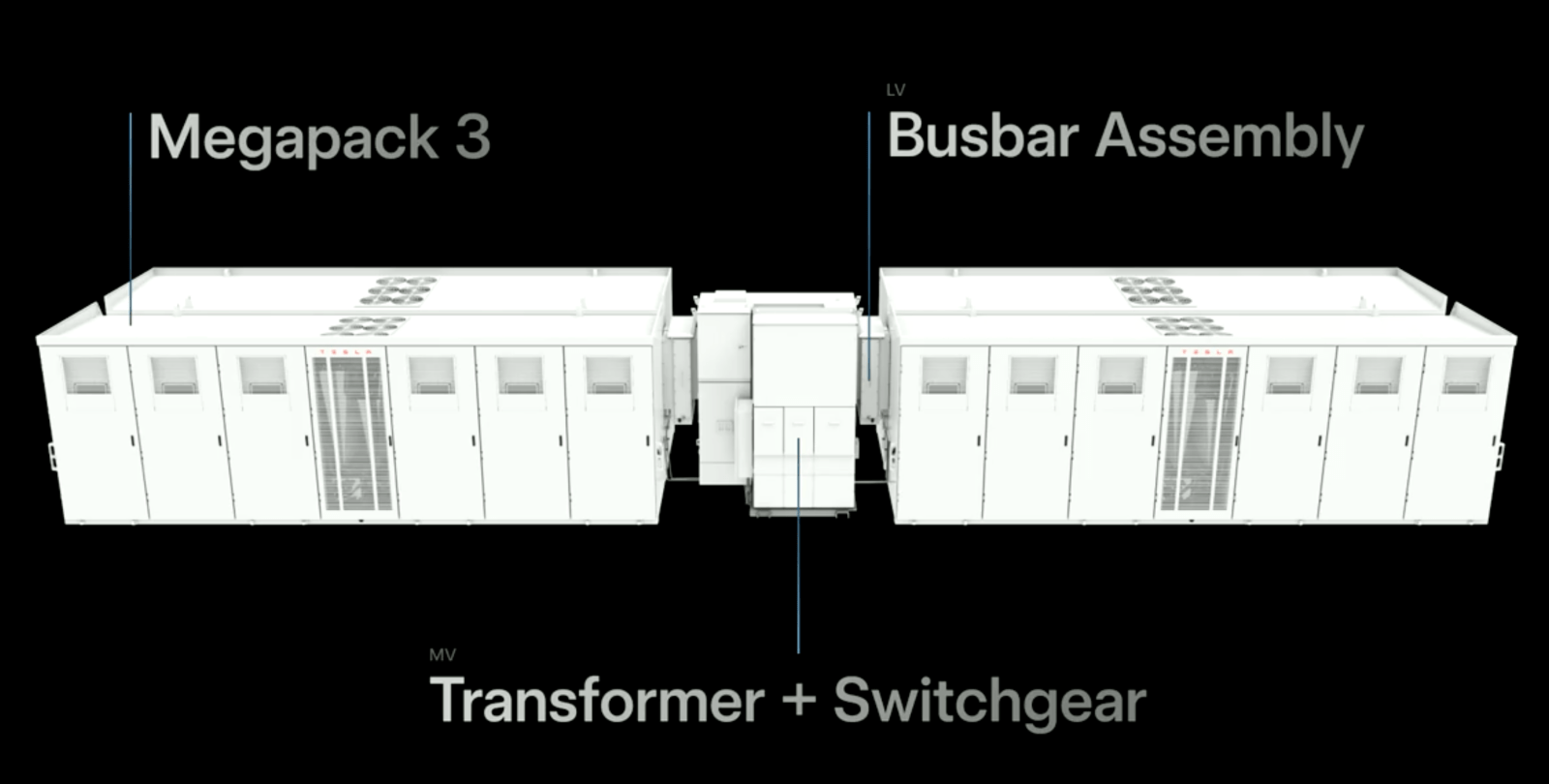
The bigger leap may be the Megablock, which bundles up to four Megapack 3 units, about 20 MWh, with the transformer and switchgear already integrated at the factory. Historically, much of that medium-voltage wiring happened in the field, one of the slowest and costliest parts of building a battery farm.
By moving that work indoors, Tesla says it can reach 248 MWh per acre and deploy 1 GWh in about 20 business days, with installation running roughly 23% faster than before. Fewer trucks, fewer electricians on site, and faster interconnection are exactly what data-center operators and utilities are demanding as electricity loads climb.
Riding a historic buildout
The timing could hardly be better. The EIA data, reported by Electrek, shows utility-scale battery storage has jumped nearly twentyfold in five years, and that renewables' share of U.S. generation now sits at more than 30%. Solar and storage are increasingly deployed together, and a denser, faster-to-install battery is precisely what that pairing needs.
Tesla has also lined up demand to match its new capacity, including a $5 billion, 25 GWh Megapack agreement in Europe and steady orders from data-center customers. As the company sharpens its broader energy strategy, seen in moves like its renewed focus on scalable solar and Powerwall, storage is emerging as a pillar of the business rather than a side project.
With Brookshire coming online, Megapack 3 shipping, and the grid buildout accelerating, Tesla Energy looks set for one of its strongest stretches yet. The company that made electric cars mainstream may be on the verge of doing the same for the batteries that hold up the grid.