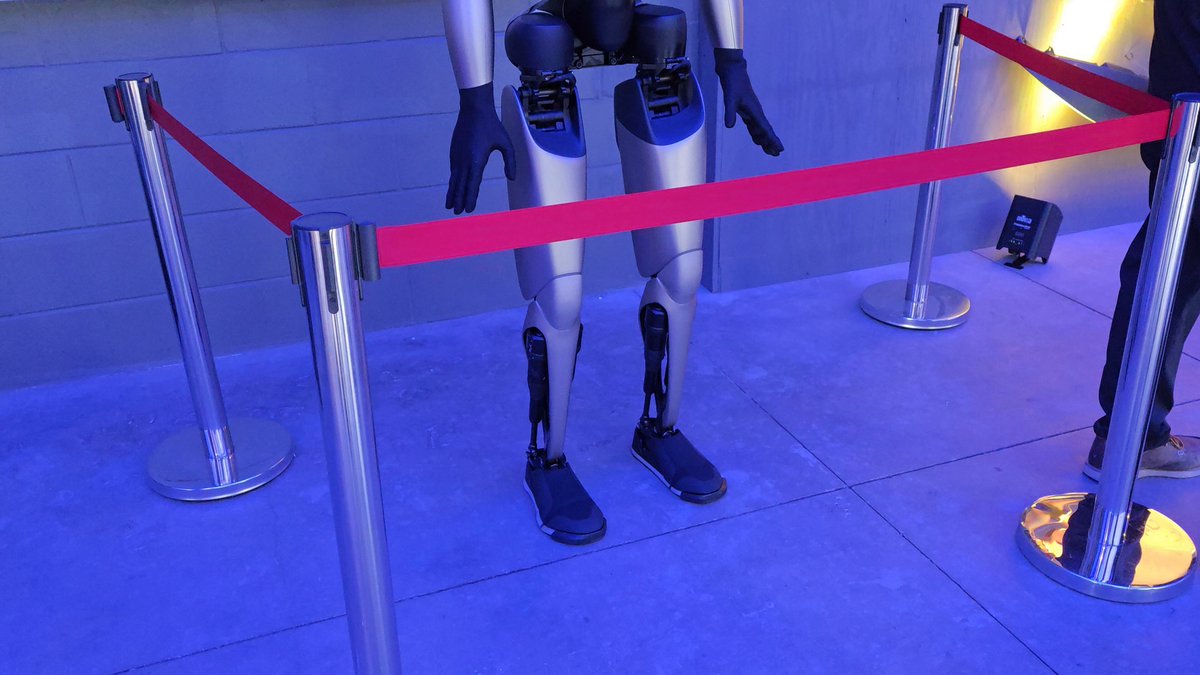
AUSTIN, Texas — Tesla's Cybercab launch this week was billed as an autonomy showcase, but the two-seat robotaxi was not the only piece of hardware turning heads. Optimus, Tesla's humanoid robot, was on the scene in Austin — a detail that spoke volumes about how the company sees its future.
Staging Optimus beside the Cybercab, Tesla's first purpose-built robotaxi, sent a clear message: the automaker views autonomous transport and humanoid labor not as separate experiments but as two halves of the same artificial-intelligence bet.
Two bets, one vision
For years, Elon Musk has framed Tesla as an AI and robotics company that happens to build cars. Putting a walking, working robot next to a driverless taxi at a marquee event made that thesis tangible. Both products run on the same foundational ingredients — vision-based neural networks, custom silicon and enormous training data — and both aim to automate expensive, repetitive human work.
The pairing also reflects a real internal shift. Tesla has been ramping Optimus development at its Fremont facility, with the storied Model S and Model X production line now being repurposed toward robot manufacturing. Dedicating prime factory space to Optimus signals that the robot has moved from science project to strategic priority, much as the company's self-driving program matured into the milestone captured in our report on how Tesla Robotaxi passed 1 million unsupervised miles.
Why the sighting matters
Whether Optimus was there as a working demonstration or simply a show of force, its presence at a high-profile launch reinforces how central the robot has become to Tesla's public identity. Investors and owners watching the event got a glimpse of two enormous markets Tesla intends to address at once: moving people and doing physical labor.
The logic is compelling. The same manufacturing muscle and AI stack that let Tesla design a robotaxi cheap enough to build by the millions can, in principle, be pointed at a humanoid robot. Each program feeds the other — advances in perception, planning and real-world data collected by Robotaxis can sharpen the intelligence that guides Optimus, and vice versa. That shared foundation is a big part of why Tesla can pursue both ambitions in parallel without splitting its focus.
Building toward an autonomous future
The Cybercab and Optimus appearing together also fit a broader pattern of Tesla pushing multiple frontiers at once, from robotaxis in Austin to new factories and features rolling out across its lineup, including the safety upgrades detailed in our coverage of how Tesla FSD can now intervene to prevent a crash. Tesla has laid out this dual mission in its Master Plan Part IV, which describes autonomous vehicles and humanoid robots as the hardware behind an AI-driven push to make transportation and labor dramatically more affordable, a framing Tesla details on its own Master Plan page.
For now, Optimus's cameo is a preview rather than a product reveal. But its place in the spotlight at Tesla's biggest launch of the year makes one thing clear: when Tesla imagines the decade ahead, the robotaxi and the robot are standing side by side.