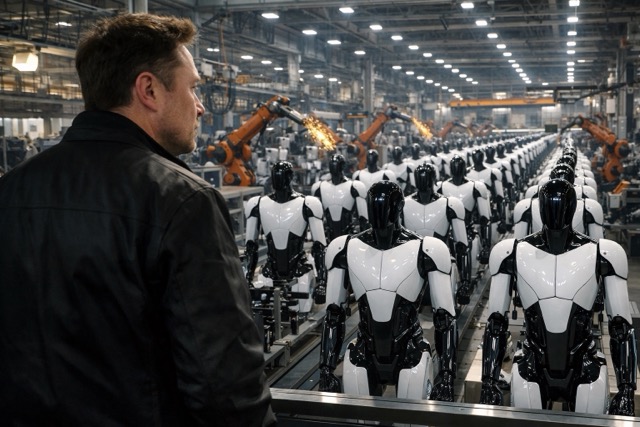
AUSTIN, Texas — Tesla's dedicated Optimus factory at Gigafactory Texas is closing in on a finished steel frame, according to fresh drone footage that offers the clearest outside look yet at how quickly the humanoid-robot plant is rising. Roughly six months after breaking ground, the building's primary skeleton is in its final stretch.
Longtime site observer Joe Tegtmeyer, whose recurring drone flights have chronicled the North Campus buildout, said structural steel assembly is now about five column grids away from reaching the building's north perimeter beam. Concrete is already going in on three upper floors while crews continue laying rebar and pouring grade-beam footings at ground level.
Parallel work to save time
That kind of parallel construction, steel rising at one end of the site while concrete sets at the other, is the same scheduling approach Tesla used at the original Giga Texas building. Repeating it here signals a company racing to hit its targeted 2027 high-volume production start. The pace also tracks with Tesla's broader Optimus roadmap, which recently saw the company ramping toward 15,000 robots and eyeing 2027 customer shipments.
The facility is part of a more than 5.2 million square foot expansion of Giga Texas's North Campus. Tesla has said the building will eventually run nearly the length of the existing vehicle factory, over 4,000 feet, while sitting somewhat narrower.
A campus built for scale
The Optimus plant sits alongside another major buildout on the same grounds: Terafab, the joint Tesla and SpaceX chip fabrication complex that will eventually supply the silicon running Optimus units in the field. Housing robot assembly and chip production together is a deliberate supply-chain decision, cutting the shipping and lead time that would otherwise separate the two. The North Campus has become a hub of activity, echoing recent milestones like the Cybercab shipping from Giga Texas with Starlink built in.
Elon Musk has pegged the long-term output target at 10 million Optimus units a year once the line runs at full capacity, a volume that would dwarf the one-million-unit pilot line Tesla is standing up separately in Fremont, California.
The clearest look yet at the timeline
Fremont's smaller pilot line began mass-producing the current Gen 3 robot in January and is expected to build tens of thousands of units this year, primarily to generate the real-world data Tesla needs to refine the robot's software before Giga Texas ramps. As Teslarati reported, six months of visible progress shows how seriously Tesla is treating that 2027 deadline.
If the steel tops out on schedule, attention will shift to fit-out and tooling, the final steps before a factory Musk has described as central to Tesla's future begins churning out the robots he believes could one day outsell the company's cars.