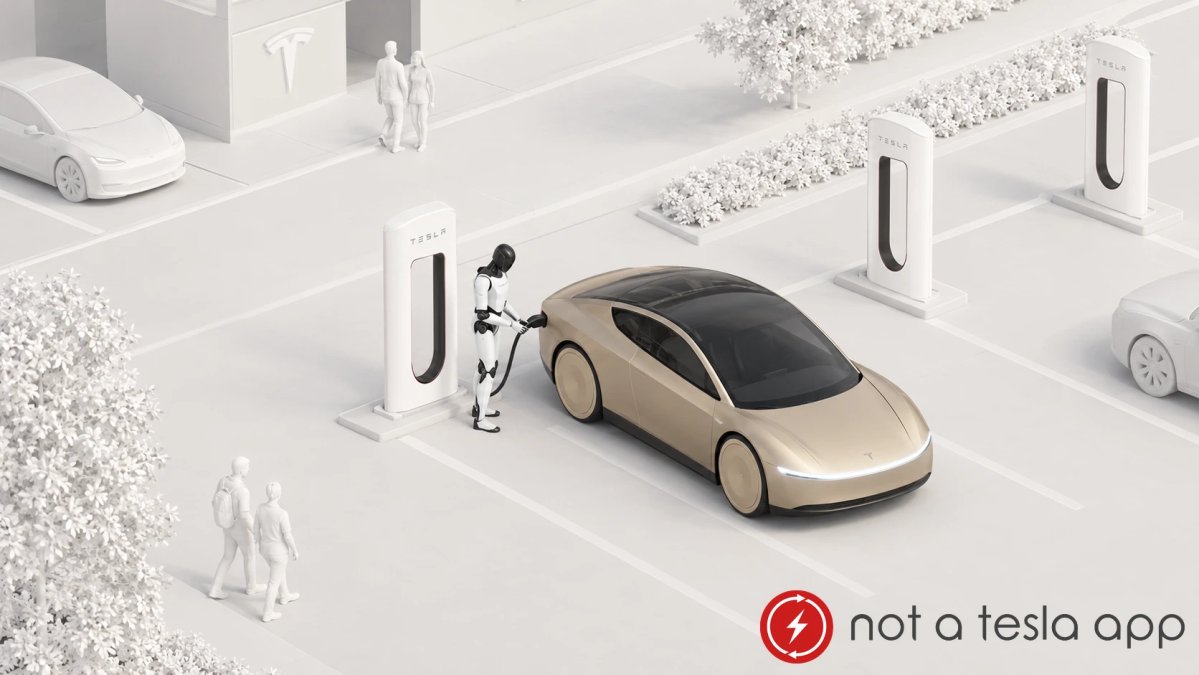
Tesla Taps Optimus to Plug In Its Robotaxis at Superchargers

Tesla engineers say the Optimus humanoid robot will soon handle the job of plugging in Robotaxis at Superchargers, a first look at the robot joining the fleet workflow.

3 min read
Tesla Taps Optimus to Plug In Its Robotaxis at Superchargers

AUSTIN, Texas — Tesla has offered its clearest hint yet about how its Optimus humanoid robot will earn its keep: by plugging the company's growing Robotaxi fleet into Superchargers, freeing human staff from one of the last manual chores in an otherwise driverless operation.

The disclosure came from Tesla VP of Vehicle Engineering Lars Moravy and Cybercab lead Eric Earley in an interview with Munro Live. Asked how the automaker keeps its autonomous cars topped up, the executives said employees currently plug them in by hand — then added, "Hopefully, Optimus will help us with that shortly." It is the first time Tesla has placed Optimus directly inside the Robotaxi workflow, and it dovetails with the start of early Optimus production in Fremont ahead of 2027 customer deliveries.

Closing the Last Manual Gap

Tesla's Robotaxi service already runs with striking autonomy, but charging remains a human touchpoint. A recent video from an Austin Supercharger showed staff plugging in Cybercabs and Model Y Robotaxis, and occasionally repositioning cars that had stopped too far from a stall. The Cybercab does not support AC charging and relies on Superchargers through a NACS port tucked into its rear bumper, so a reliable way to connect the car matters as the fleet scales.

Handing that task to Optimus is a natural fit. The robot is designed for exactly this kind of repetitive, dexterous physical work, and Tesla has already installed car-cleaning robots at its Robotaxi hubs. Adding a humanoid that can grab a cable and find a charge port would let a hub run with far less human involvement, a crucial step as Tesla pushes its driverless miles higher — a figure that jumped roughly eightfold in a single quarter.

Tesla Taps Optimus to Plug In Its Robotaxis at Superchargers — additional image

Wireless Charging on the Horizon

The plug-in role is framed as an interim measure. Tesla secured FCC approval for wireless Cybercab charging earlier this year and is building an Austin Robotaxi hub outfitted with 80 wireless chargers. Once that infrastructure is live, neither humans nor robots would need to touch a cable at all — the cars would simply park over a pad and charge.

Until then, Optimus offers a bridge. Moravy and Earley suggested the robot could eventually do more than charging, potentially servicing vehicles or assisting with deliveries, and they grouped Cybercab, Optimus and the Robovan together as examples of what Tesla calls physical AI.

A Fleet That Runs Itself

The vision is a self-sustaining operation: cars that drive themselves, robots that maintain and recharge them, and hubs that need only occasional human oversight. Plugging in a Robotaxi may sound mundane, but it is precisely the kind of task that stands between today's supervised fleet and a fully autonomous one. For a fuller account of the executives' comments, Not a Tesla App has the details from the Munro Live interview. If Optimus can master the cable, the rest of the loop is already falling into place.

Stay Up to Date on All Things Elon

Get the most interesting Elon Musk stories straight to your inbox, once a day. Short, interesting and relevant!