FREMONT, Calif. — Elon Musk is tempering expectations for Tesla's Optimus humanoid robot even as the program hits real milestones, telling enthusiasts that early production will move deliberately rather than explosively. "No, Optimus production will be extremely slow at first, as everything is new," Musk wrote on July 1 in reply to speculation that Tesla was about to reveal large volumes of its V3 robot. "This is not like making a car."
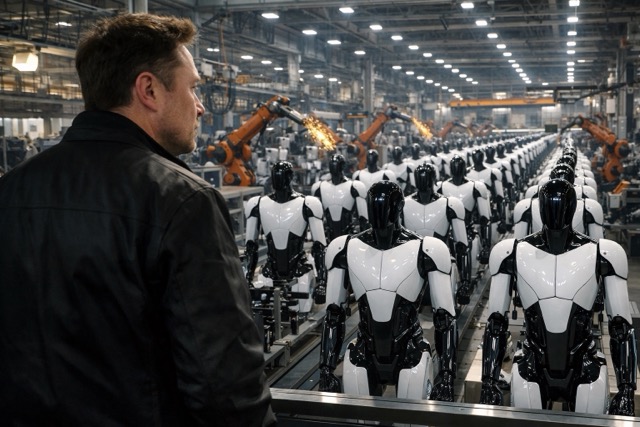
The comment landed days after Musk posted a photo of himself walking the Optimus production line inside Tesla's Fremont factory, where the company has converted the floor space that once built the Model S and Model X into a dedicated humanoid-robot line. According to guidance from Tesla's earlier 2026 earnings commentary, limited production on that converted line is slated to begin in late July or August.
Why the ramp starts slow
Optimus is a genuinely new product, and Musk has repeatedly stressed that scaling it has little in common with automotive manufacturing, which benefits from more than a century of refined tooling and supply chains. The robot carries roughly 10,000 unique parts, many of which — from dexterous hands to AI-integrated actuators — require fresh engineering and brand-new production processes.
That complexity is why early output rates are, in Musk's words, difficult to predict. Tesla is inventing automation techniques, actuator supply chains and quality-control standards in real time. Analysts expect the classic S-curve: a slow, deliberate start while foundational issues are solved, followed by a steep acceleration once the process matures. It is the same pattern that ultimately turned Tesla's record second-quarter vehicle deliveries into a high-volume operation.