
Live Robotaxi Rollout2,201Tesla
robotaxis
  • Bay Area, CA1,655 Model YsSafety driver
  • Texas546 (126 Cybercab · 420 Model Y)Driverless
  • Miami, FLModel Y fleet · count not disclosedDriverless
  • Orlando, FLModel Y fleet · count not disclosedDriverless
  • Tampa, FLModel Y fleet · count not disclosedDriverless
  • Las Vegas, NVPermit for up to 5,000 robotaxisApproved
  • Phoenix, AZLaunch preparations under wayComing soon

Tesla Patents Active Rear Wing for the New Roadster

A newly surfaced USPTO filing details a two-piece deployable rear wing that generates up to 700 kg of downforce, deploys in under three seconds, and folds flat for a drag-reduction mode.

3 min read
Tesla Patents Active Rear Wing for the New Roadster

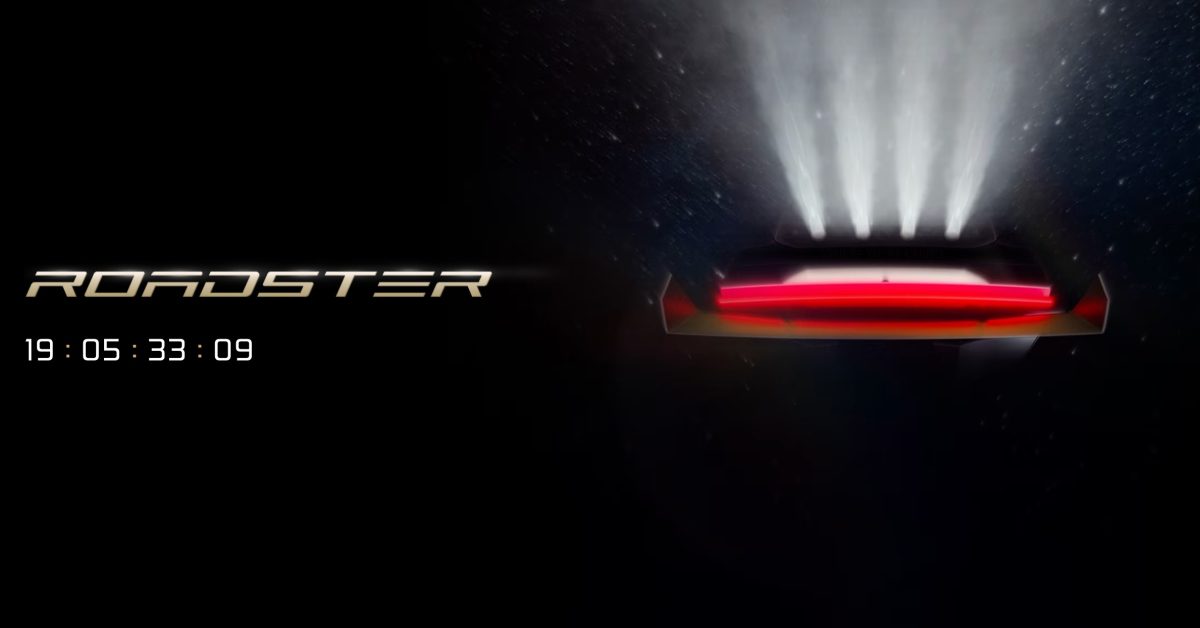
AUSTIN, Texas — Days before Tesla unveils the production version of its next-generation Roadster, a freshly published patent has offered the clearest look yet at how the long-awaited supercar plans to plant itself to the road at extreme speeds.

The filing, published by the U.S. Patent and Trademark Office as US 2026/0285418 A1 and titled "Deployable and Active Rear Wing Assembly with Safety Features," describes a sophisticated active aerodynamic system credited to inventors David Lemire and James Michael Arthur Crook. It continues a line of work Tesla began with an application filed in March 2025, underscoring how long the company has been engineering the car's high-speed behavior. The timing is notable: Tesla has scheduled the Roadster's October 1 reveal in Texas, and the patent reads like a preview of the hardware fans will finally see in the metal.

Downforce On Demand

At the heart of the design is a two-piece wing — a main element paired with a leading-edge slat positioned three to 15 millimeters ahead of it — driven by a four-bar linkage and actuators. Tesla says the assembly can generate up to 700 kg of downforce at speeds beyond 100 mph, deploy from fully stowed to fully raised in under three seconds, and adjust its angle in less than a quarter of a second.

That responsiveness matters because the wing is designed to do two jobs at once. In high-grip cornering and braking it stands up to pin the rear axle, adding roughly 1,000 counts of downforce. On the straights it rotates flat into a drag-reduction mode that trims about 250 counts of drag, letting the Roadster chase top speed without the aerodynamic penalty of a fixed wing.
Tesla Patents Active Rear Wing for the New Roadster — additional image

Built-In Safety Margins

The patent devotes considerable attention to safety, a sign Tesla intends the system for real-world roads rather than the track alone. Mechanical impact latches are designed to retract the wing automatically in a collision, while a predictive retraction feature uses the car's onboard cameras and radar to stow the element before an anticipated impact. Tesla has been steadily widening the appeal of its performance halo car, having recently reopened Roadster reservations ahead of the unveiling.

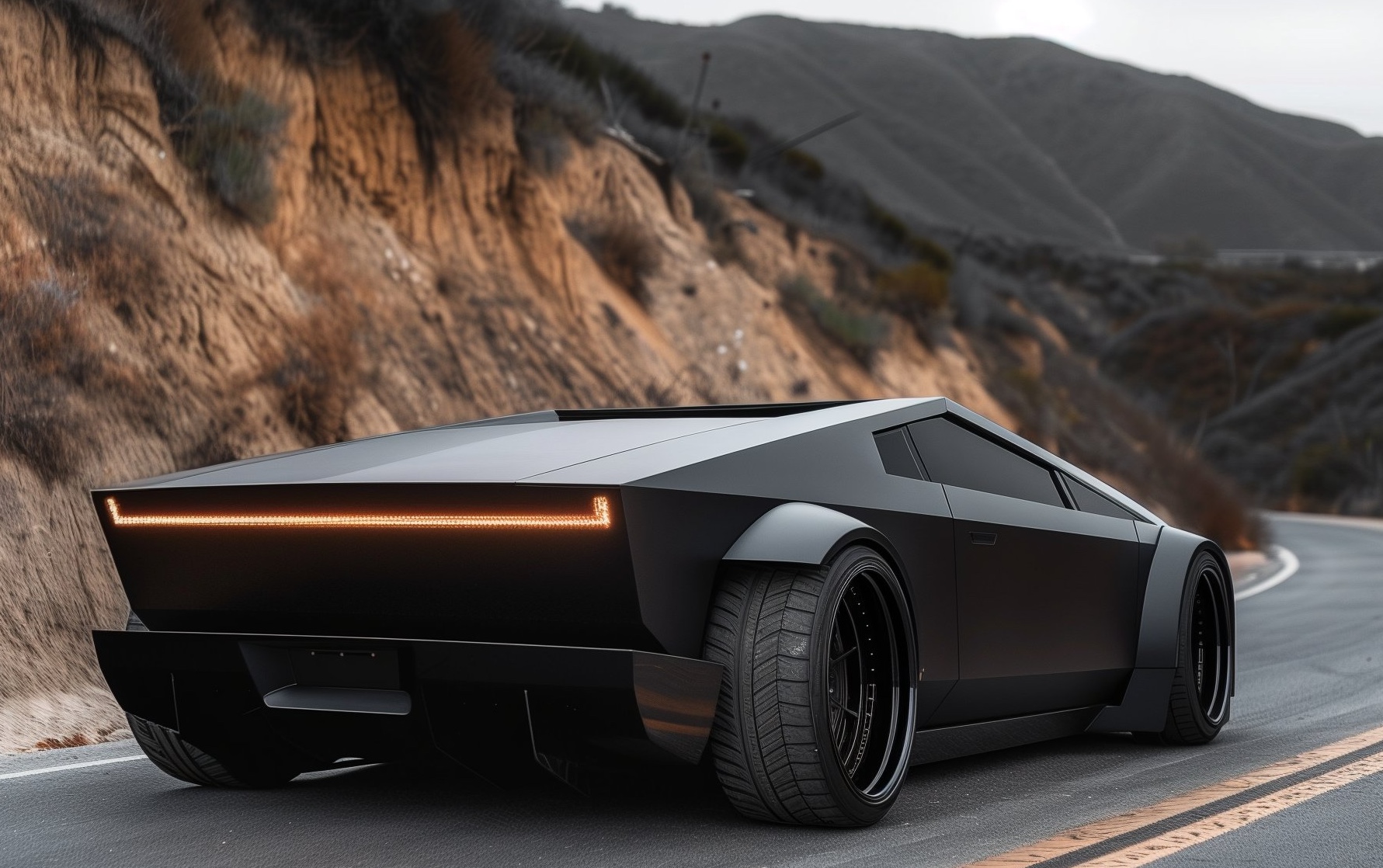
The document also hints at a design departure from the sleek 2017 prototype, pointing toward a sharper, more angular "Cyber" aesthetic in keeping with Tesla's current design language.

What Comes Next

Active aerodynamics have long been the preserve of seven-figure hypercars, so seeing the technology detailed for a Tesla suggests the new Roadster is being engineered to compete at the very top of the performance ladder. Paired with Tesla's repeated promises of sub-two-second acceleration, the wing helps explain how the company hopes to translate raw power into usable, repeatable grip.

With the reveal now days away, the patent turns anticipation into specifics, and it suggests the finished car will back up its headline numbers with genuine engineering. As first reported by Electrek, the filing is one of several aero innovations Tesla has been quietly assembling — and on October 1, the world should finally see how they come together.