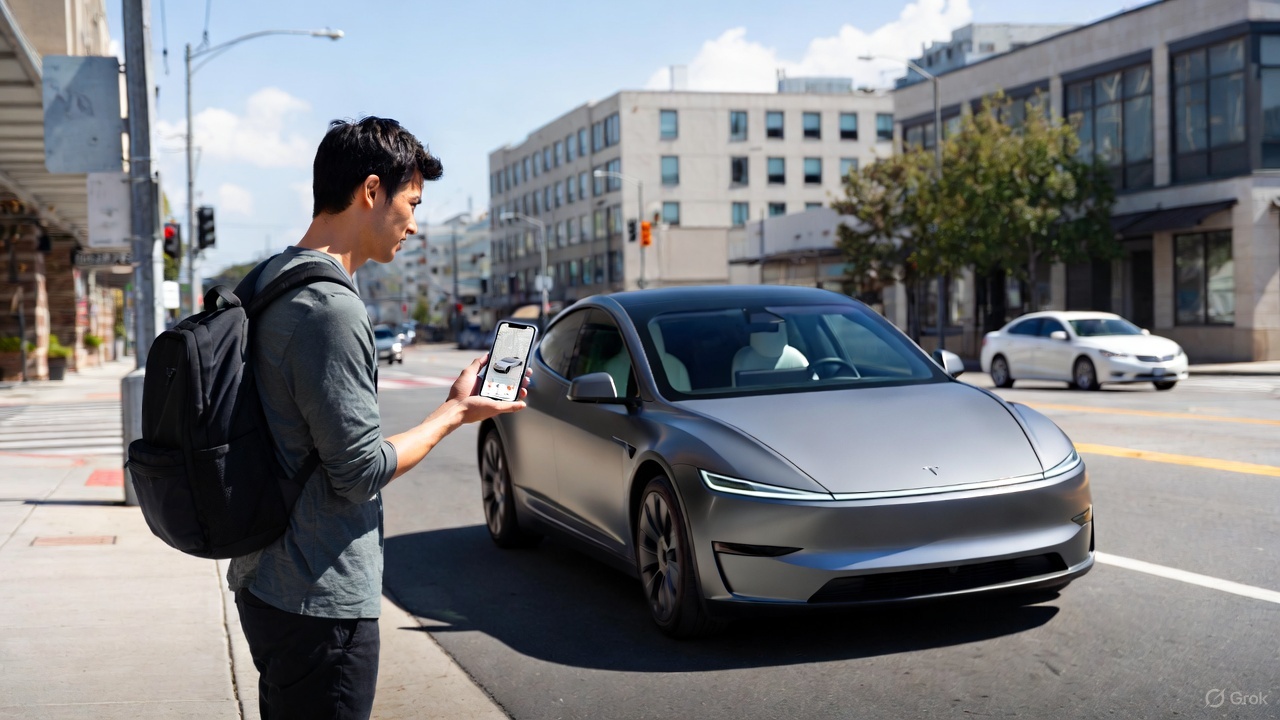
AUSTIN, Texas — Tesla's unsupervised robotaxi fleet has grown far faster than the public numbers suggested. According to data compiled by the crowdsourced Robotaxi Tracker, Tesla now has nearly 200 vehicles operating without a safety monitor across Austin, Dallas and Houston — a roughly sevenfold increase in about three weeks.
The jump lined up neatly with the company's biggest autonomy showcase yet, arriving just days before Tesla unveiled its purpose-built Cybercab and opened public driverless rides in Austin. It is a quiet but powerful signal that the robotaxi business is no longer a small pilot — it is an operating service scaling in real time.
From A Handful To Nearly 200
For much of the past year, Tesla scaled its robotaxi program in deliberate steps: first widening geofences, then extending operating hours, then growing fleet size, usually with little fanfare. Critics seized on a fleet that appeared stuck around two dozen vehicles as evidence the ambition was outrunning the deployment.
The sudden surge to nearly 200 unsupervised vehicles reframes that story. Rather than a slideshow of promises, Tesla can now point to a real base of Model Y robotaxis running without anyone behind the wheel, across three major Texas metros, every day.
Built On A Proven Safety Record
The expansion rests on a safety record Tesla has leaned on repeatedly. Company AI lead Ashok Elluswamy told investors the program had logged more than 380,000 unsupervised miles with no notable incidents caused by the vehicles themselves, and the fleet has since crossed one million unsupervised miles. That caution — scaling only as confidence grew — is exactly what made the rapid ramp possible without drama.
Tesla has argued that camera-based, end-to-end neural networks, rather than costly extra sensors, are the core of the solution. A fleet quietly climbing toward 200 cars while maintaining that record is the strongest rebuttal yet to skeptics who doubted the approach could scale.
Two Ramps Running In Parallel
What makes the moment notable is that two ramps are happening at once. Tesla grew its software-driven Model Y fleet even as it expanded its Austin geofence and registered dozens of purpose-built Cybercabs with Texas regulators, with the Cybercab count climbing from single digits to 45 in a matter of days.
The two efforts feed each other. The Cybercab uses the same underlying Full Self-Driving stack already proven on the Model Y fleet, so every mile the existing cars log de-risks the new vehicle. As first reported by Teslarati, the parallel ramps suggest Tesla wants the market to see its robotaxi network not as a concept reveal, but as a business already running at meaningful scale — and accelerating.