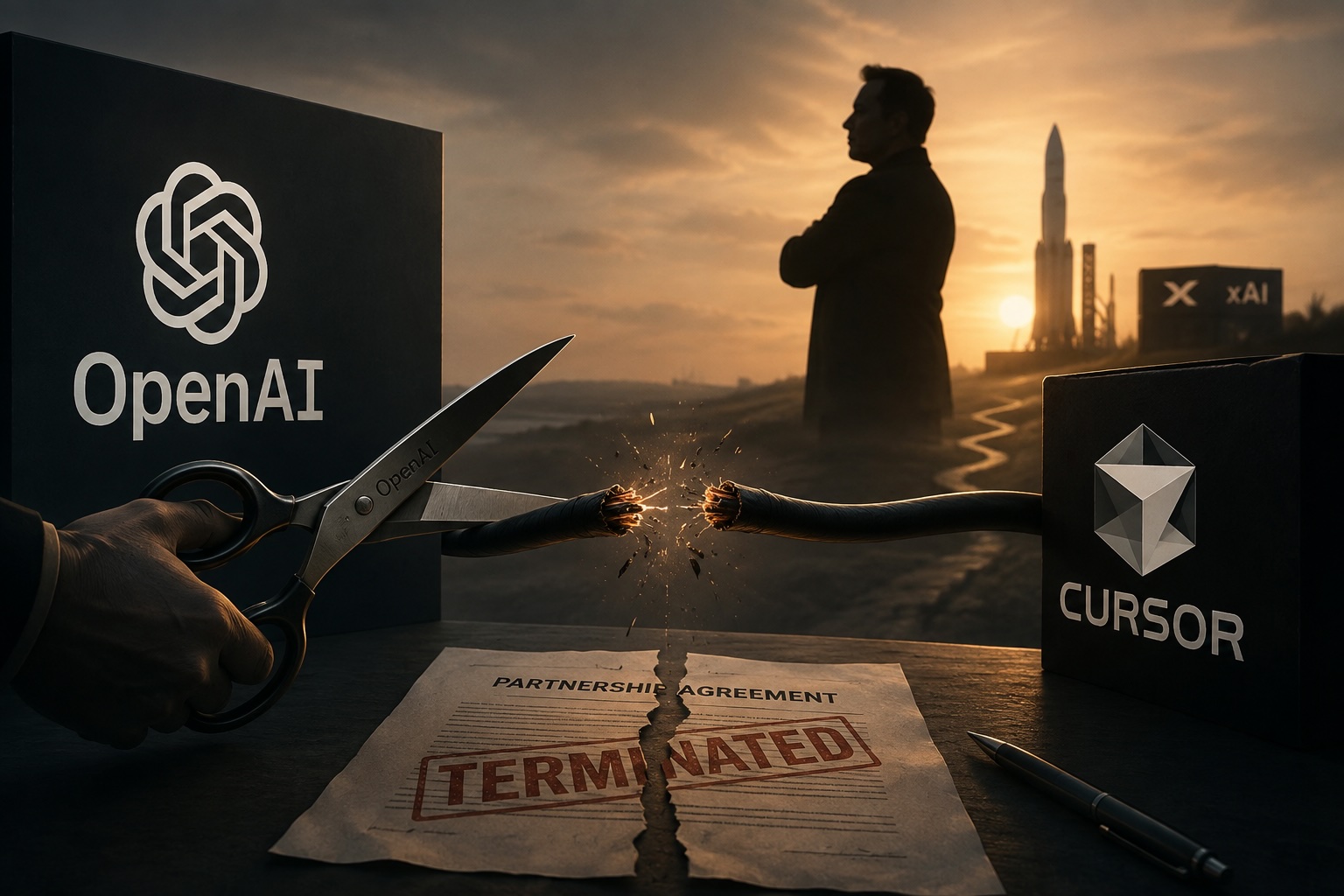

HAWTHORNE, Calif. — Elon Musk is handing his AI model something no competitor can buy: decades of real-world rocket engineering. Musk said this week that SpaceX will pour its internal engineering data into the next major training run for Grok, the model now housed inside SpaceX following February's merger with xAI.
In a post on X, Musk wrote that SpaceX's "massive corpus of world-class engineering data" — excluding anything restricted under U.S. arms-export law — will be added during supplemental training of what he called the "2T run," a roughly two-trillion-parameter model that would nearly double the scale behind the current Grok 4.5. It is the clearest example yet of the strategy underpinning SpaceX's transformation into an AI powerhouse.
A Data Moat No One Else Has
The excluded material falls under the International Traffic in Arms Regulations, which restrict export of technical data tied to defense and space hardware. That likely walls off propulsion specifics for the Merlin and Raptor engines and guidance-and-control details for SpaceX's launch vehicles.
But it leaves an enormous amount on the table: manufacturing know-how, materials science, and Starlink hardware design accumulated since 2002. No other AI lab has access to a proprietary trove of aerospace engineering at that depth — the kind of hard, physical-world data that is far scarcer than the text scraped from the open internet.