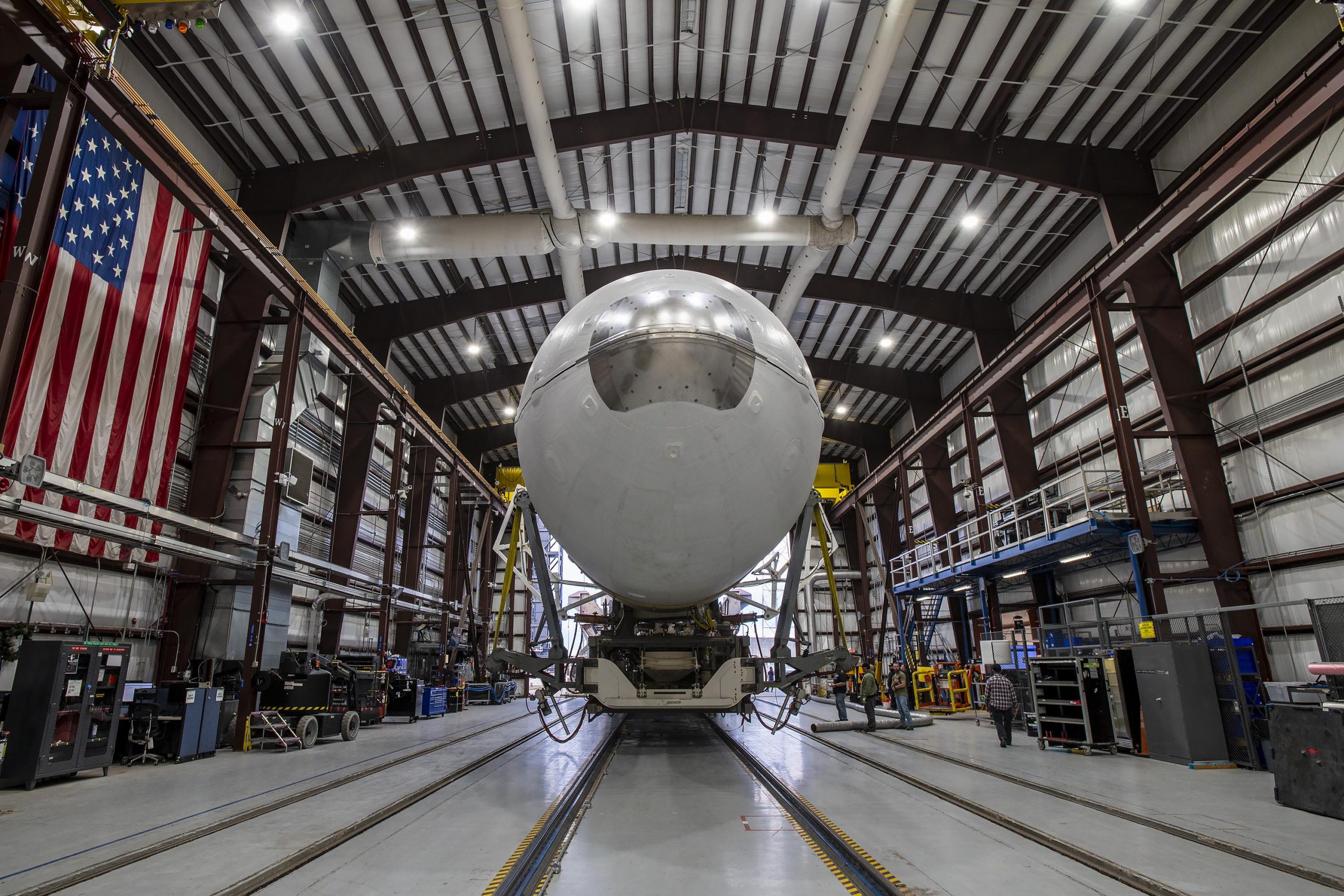
HAWTHORNE, Calif. — Elon Musk this weekend gave the clearest signal yet of how SpaceX intends to hand off from Falcon 9 to Starship, saying the company will begin winding down its workhorse rocket once the far larger Starship is flying reliably several times per week.
In a post on X, Musk wrote that once Starship reaches that cadence, "it makes sense to shift super scarce SpaceX engineering and production resources to Starship to get launch rate to several times per day, which means winding down Falcon." Rather than reading as a farewell, the comment lands as a statement of confidence: SpaceX believes the successor is close enough to start planning the transition.
A workhorse at its peak
Falcon 9 is not slowing down as that conversation begins. The rocket is on pace for roughly 140 to 145 flights this year after 165 in 2025, and the fleet is closing in on 1,000 total launches, a number no other orbital rocket has approached. President Gwynne Shotwell has said Falcon flight rates would naturally "tail off" as Starship comes online, and the company has already stopped booking new Falcon 9 missions past 2028 as it plans the changeover.
That backdrop is what makes the milestone remarkable. SpaceX is talking about retiring a vehicle precisely because it has become so dependable that the engineering talent behind it can be redirected to something even more ambitious. The same discipline that made Falcon the most-flown rocket in history is now being pointed at Starship, and the company recently reinforced that momentum when it cleared a full-duration static fire ahead of the first orbital Starship flight.
Starship steps up
Starship, the fully reusable two-stage system Musk calls a "planet-colonizer class" rocket, is the vehicle SpaceX is clearing the runway for. It has flown twice this year, with its most recent July flight ending in a controlled soft splashdown in the Indian Ocean, a result Musk pointed to when he said the vehicle''s heat-shield challenge had been effectively solved. The next mission, Flight 14, is aimed at reaching orbit for the first time and deploying operational Starlink satellites, with a launch targeted for no earlier than late August.
Musk has framed the endgame in dramatic numbers, saying SpaceX is aiming for more than 30 Starship launches a day by 2030, roughly 10,000 flights a year. That figure dovetails with a new national space policy targeting 1,000 launches a year, which directs federal agencies to open new launch sites and speed permitting. Falcon 9, which took more than a decade to reach its first 100 launches, was never built for that scale, but the reusable Starship is designed precisely for it.
The bigger picture
For now, both rockets have their roles. Falcon 9 and its Dragon capsule remain the backbone of American crew and cargo access to the International Space Station, and they will keep flying at a near-record pace while Starship proves itself. Musk''s post, as detailed by Teslarati, is a condition rather than a countdown, and that is exactly why it is encouraging: SpaceX is confident enough in Starship''s trajectory to describe the day its legendary predecessor steps aside, a transition that would mark one of the boldest capability leaps in the history of spaceflight.