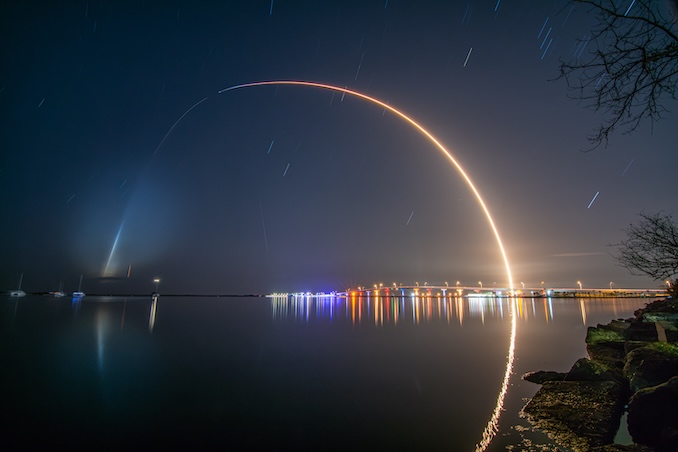
HAWTHORNE, Calif. — SpaceX just closed one chapter of the Starlink story and opened a far bigger one. On Aug. 25, the company flew what it says is the last planned Falcon 9 Starlink mission from Florida, clearing the way for its next-generation Starship rocket to take over East Coast deployments of the satellite internet network.
The end of an era on the Cape
The mission lifted off from pad 40 at Cape Canaveral Space Force Station carrying 29 Starlink satellites, and it launched on the fleet-leading booster — the same record-setting stage that recently notched its 37th flight. Over the past seven years, Falcon has flown roughly 260 Starlink missions from the Cape, a cadence that built the largest satellite constellation in history.
"Super proud of this incredible team. You've made Falcon 9 the most reliable launch vehicle in history," SpaceX Vice President of Launch Kiko Dontchev wrote. "You also helped build the largest low-Earth orbit satellite constellation providing connectivity to millions around the world, and you've set the foundation for what's next."
Starship steps up
From here, Dontchev said, Starlink missions out of Florida will fly on Starship. The West Coast team will keep launching Starlink from Vandenberg Space Force Base on Falcon 9, so the workhorse rocket is far from retired — it is simply handing its highest-volume East Coast route to a vehicle built for much greater scale.