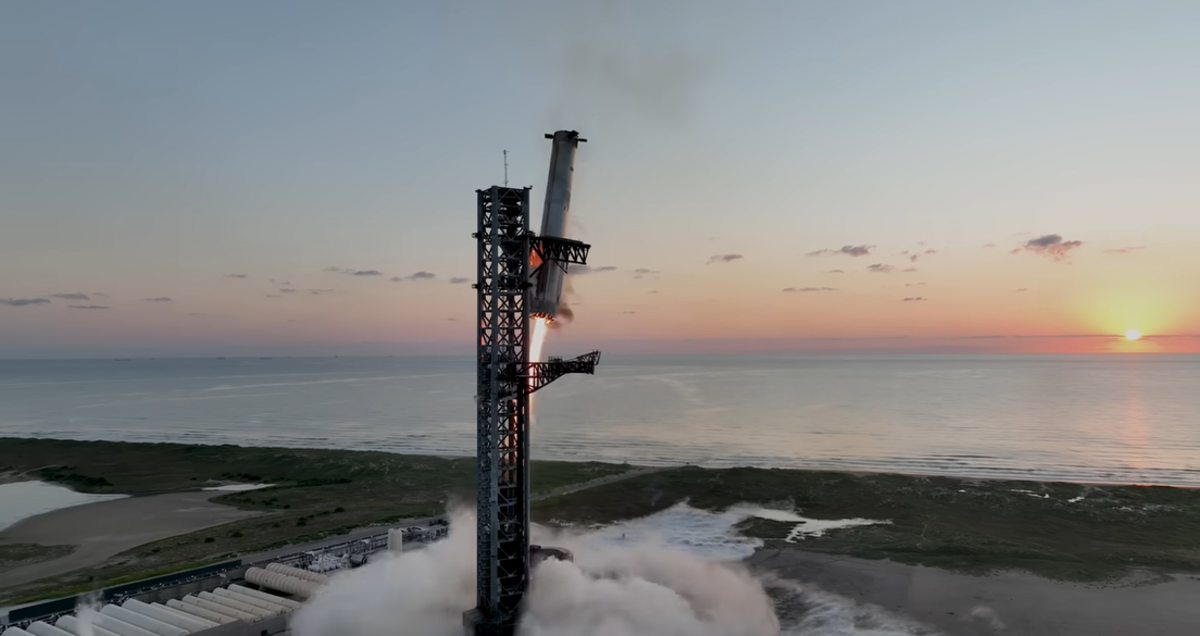
BOCA CHICA, Texas — SpaceX has cleared the final engineering gate before its most ambitious Starship mission yet. After six days of poring over flight data, Elon Musk confirmed on July 30 that Starship's July 24 splashdown was precise enough to have been caught by the launch tower — setting the stage for Flight 14 to attempt the first-ever recovery of an orbital-class upper stage.
"The ship landing was precise, meaning that it would have been caught by the tower arms," Musk wrote, describing exactly the outcome SpaceX had set as its condition before committing to a catch over land, a plan the company had signaled it wanted to attempt on Flight 14.
Precision Data Was the Last Gate
Engineers spent the interval since the flight analyzing telemetry, thermal sensor logs, and propulsion metrics from Ship 40. The vehicle's flip-and-burn maneuver arrested it in a nearly perfect vertical attitude that fell inside the tight tolerance Mechazilla's chopstick arms demand. That confirmation validated the guidance algorithms and landing-flap actuation systems the next ship will rely on.
The regulatory path is clear as well: the Federal Aviation Administration declined to require a mishap investigation for Flight 13, removing the kind of pause that once grounded an earlier flight, as NASASpaceFlight reported in its analysis of the mission.
Why Flight 14 Will Be Starship's First Orbital Flight
Every previous Starship test flew a suborbital arc, arcing up and splashing down over water as a deliberate safety measure. A tower catch changes that calculus. For Mechazilla to intercept the ship, the vehicle must approach Starbase from orbit — flying all the way around the Earth and returning from the east.