SpaceX to Power Terafab Chip Plant With Its Own Gas Plants

SpaceX confirmed it will build and own natural gas power plants and large battery arrays to supply its Terafab semiconductor complex in Texas.

3 min read
SpaceX to Power Terafab Chip Plant With Its Own Gas Plants

GRIMES COUNTY, Texas — SpaceX will supply its planned Terafab semiconductor complex with electricity from power plants it builds and owns, company officials confirmed this week, adding fresh detail to one of the most ambitious industrial projects Elon Musk has ever attached his name to.

Speaking at a public meeting in Grimes County on Wednesday, SpaceX head of energy and data center development Riley Trettel told residents the company would be bringing its own power to the site, pairing on-site natural gas generation with what he described as very large battery arrays. Bloomberg first reported the plan, and TechCrunch confirmed the details on Friday.

Bringing Its Own Power

The approach, often called bring your own power, lets a developer sidestep long interconnection queues and build generation directly alongside the load it serves. For a chip fab that will draw enormous, around-the-clock electricity, that control over supply is a strategic advantage — and, SpaceX has stressed, a way to avoid pushing up power costs for other Texans on the state grid.

The company is pairing the gas plants with large-scale battery storage, a combination that smooths output and keeps the fab running without interruption. It is the same playbook Musk-led companies have leaned on elsewhere: Tesla is one of the world's largest suppliers of grid-scale batteries, and SpaceX has said it plans to buy billions of dollars of gas turbines over the next three years to feed its growing compute footprint. Terafab is designed to make chips for the data centers SpaceX and its xAI unit will run, tying the energy build-out directly to the company's AI ambitions.
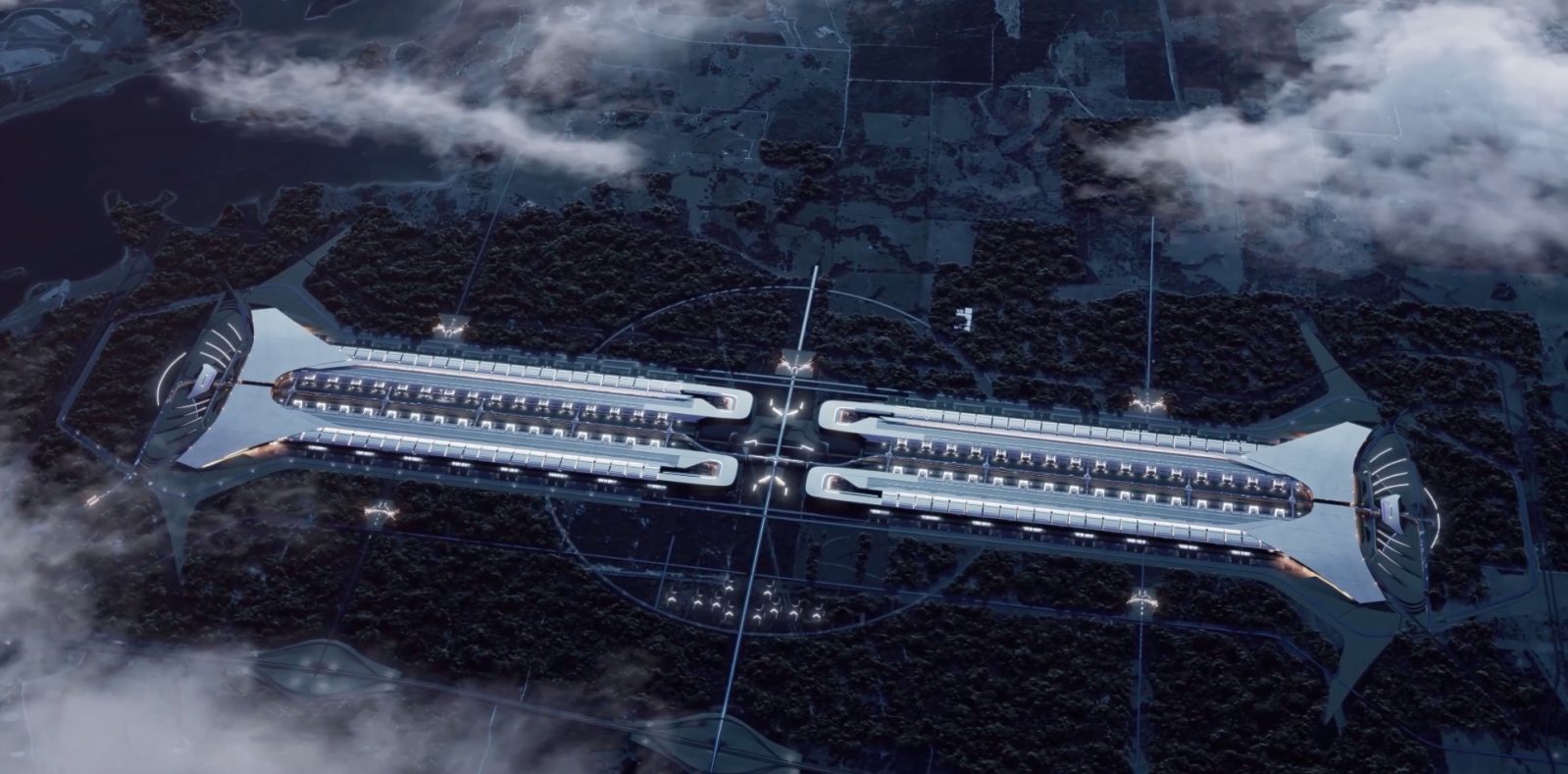
SpaceX to Power Terafab Chip Plant With Its Own Gas Plants — additional image

A Massive First Phase

Terafab will rise in Grimes County, about 45 miles northwest of Houston, on the Gibbons Creek site. SpaceX has committed to spending at least $5 billion by 2030 and creating at least 1,800 full-time jobs by 2035 in exchange for a county tax agreement, and Texas is adding $30 million in incentives. The initial construction phase carries a price tag of $16.8 billion, one of the first hard capital figures attached to the venture since Musk unveiled it earlier this year.

Once complete, the campus is expected to span more than 100 million square feet, a scale that would place it among the largest buildings on the planet. SpaceX's record public debut and surging cash flow give the company the balance sheet to move quickly on projects of this magnitude.

Why Gas, Not Solar

Notably, SpaceX's energy plan centers on firm natural gas generation rather than the solar panels Tesla sells, a pragmatic choice for a facility that needs uninterrupted power day and night. Batteries handle the peaks and valleys, while the gas plants provide the steady baseload a fab demands.

For Musk, controlling the power supply is of a piece with the vertical integration that has defined both Tesla and SpaceX — owning the hard parts of the stack rather than depending on others. If Terafab delivers, it would give the Musk empire its own source of advanced chips, its own power to make them, and its own AI data centers to put them to work. Construction milestones over the coming months will show how fast that vision moves from rendering to reality.