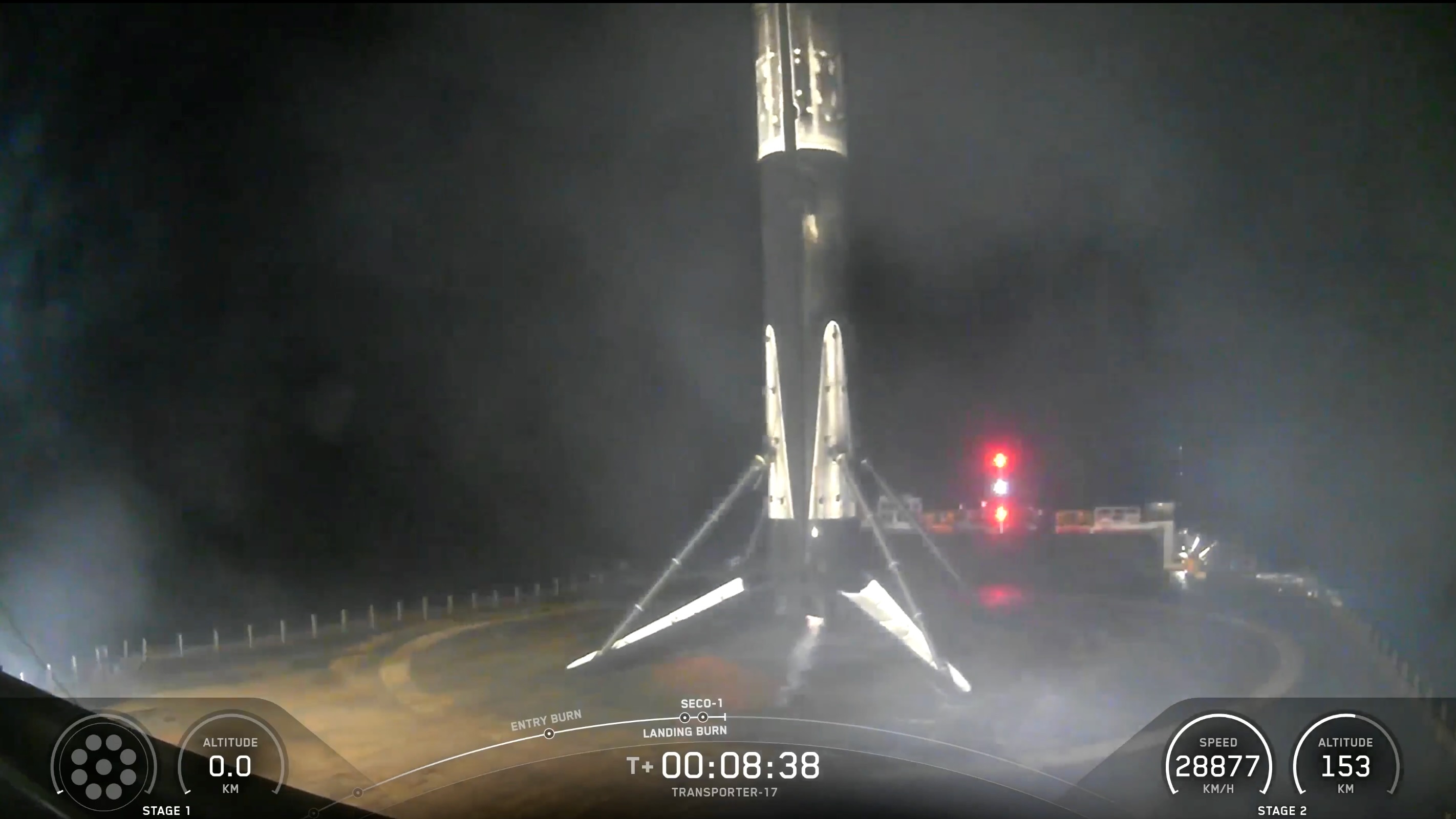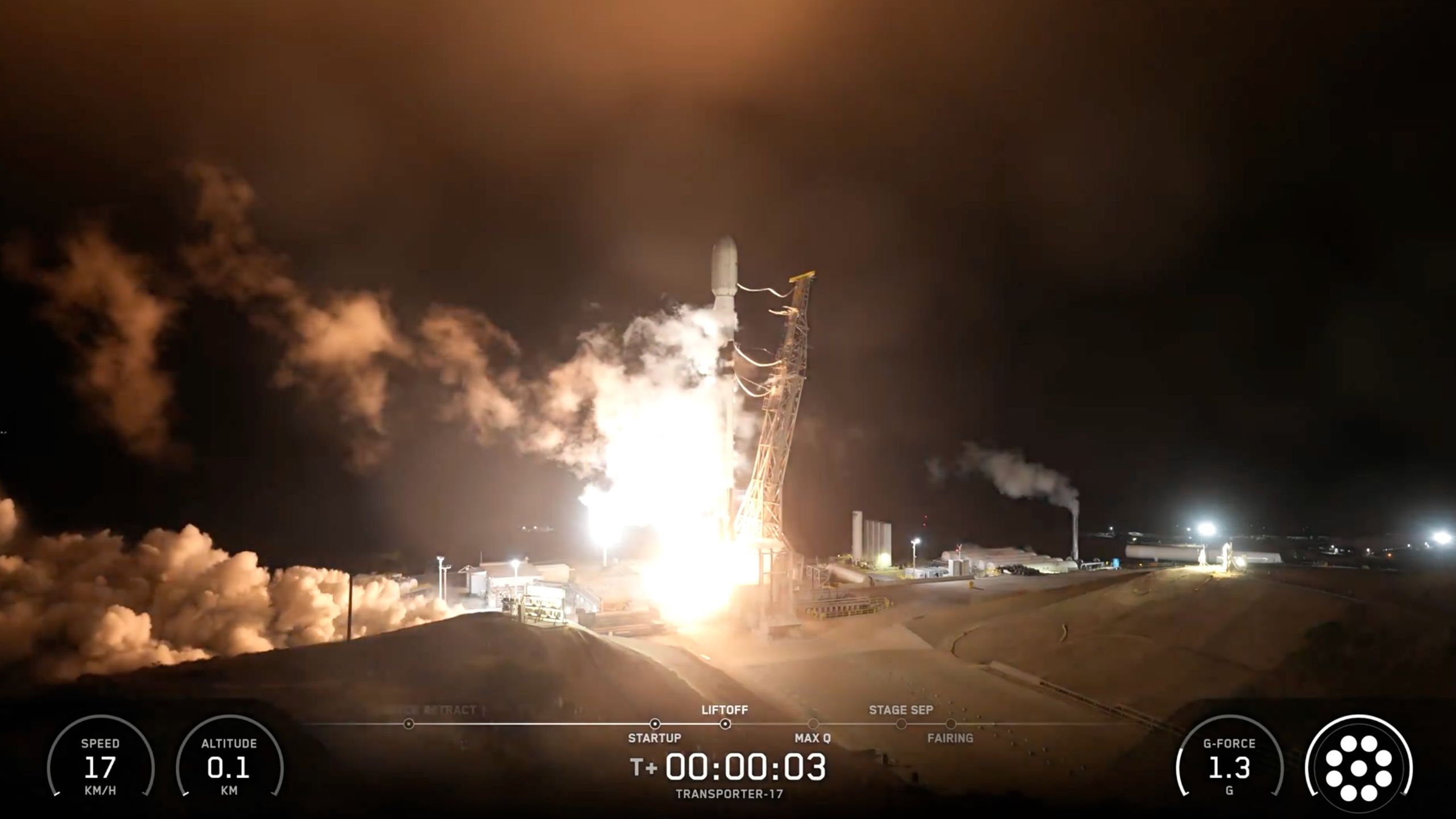
HAWTHORNE, Calif. — SpaceX added another entry to its record book early on July 7, when a Falcon 9 rocket carried 81 payloads to orbit on the Transporter-17 rideshare mission and pushed the company past a major cumulative milestone. Liftoff came at 3:12 a.m. EDT from Vandenberg Space Force Base in California, and the first stage returned for a clean landing on a droneship in the Pacific about eight and a half minutes later.
With Transporter-17 in the books, SpaceX's dedicated rideshare program has now delivered more than 1,800 payloads to Earth orbit across 20 previous Transporter and Bandwagon flights. It is a staggering total that has quietly reshaped how small-satellite operators reach space, turning what was once a bespoke, expensive process into something closer to a scheduled bus route to orbit.
A Ride for the Whole World
The 81 spacecraft aboard Tuesday's flight spanned cubesats, microsats, hosted payloads and orbital transfer vehicles for customers from five nations. The largest was CAS500-4, a roughly 1,100-pound South Korean Earth-observation satellite that will help monitor crops and forests. Others will be released from orbital transfer tugs over the coming weeks, extending the mission's reach well beyond the initial deployment.
Transporter-17 also continued SpaceX's theme of firsts. The same manifest carried the world's first commercial nuclear-powered satellite, City Labs' BOHR betavoltaic CubeSat, a technology demonstration that could reshape how small spacecraft stay powered for years without sunlight. The flight had been lined up as a July 7 rideshare in the run-up to launch, and it delivered on schedule.