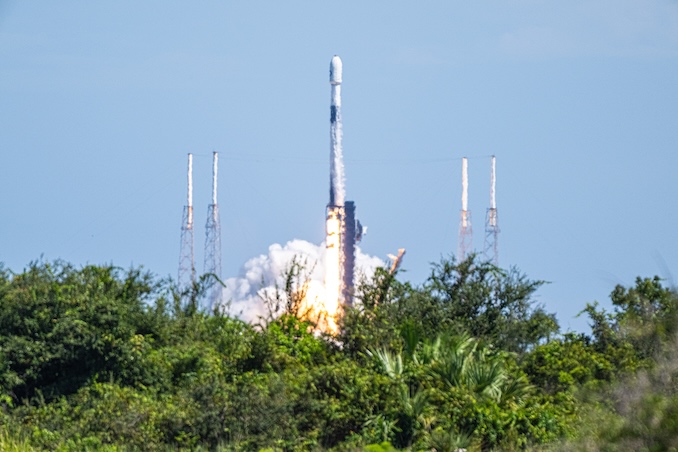

HAWTHORNE, Calif. — SpaceX added another national security mission to its growing government resume, launching the classified USSF-153 payload for the United States Space Force from California and recovering the rocket's first stage minutes later. The flight underscores how central SpaceX has become to America's most sensitive space operations.
A Quiet but Critical Launch
The Falcon 9 lifted off from Space Launch Complex 4 East at Vandenberg Space Force Base at 8:42 a.m. PDT, carrying an undisclosed number of satellites to low Earth orbit. Because of the classified nature of the mission, SpaceX did not publish a post-launch timeline beyond the booster landing, and Space Systems Command told reporters that "specific details about the mission and payload are protected."
Even without public details, the mission fits a clear pattern: the U.S. government increasingly turns to SpaceX for reliable, on-demand access to orbit. The company's proven cadence and reusable hardware have made it the workhorse of national security space, a role reinforced by its broader Starlink and Starshield infrastructure. SpaceX's defense footprint has expanded alongside its commercial constellation, including work tied to Starlink's direct-to-cell and next-generation satellites.
Another Booster, Another Recovery
The mission flew on Falcon 9 first stage B1081, notching its 27th flight. The booster's history reads like a tour of SpaceX's customer base: four NASA missions, two flights each for the National Reconnaissance Office, the European Space Agency and rideshare customers, and 16 batches of Starlink satellites. About eight and a half minutes after liftoff, B1081 touched down on the droneship Of Course I Still Love You, the 224th landing on that vessel and the 660th Falcon booster recovery to date, as documented in Spaceflight Now's launch report.