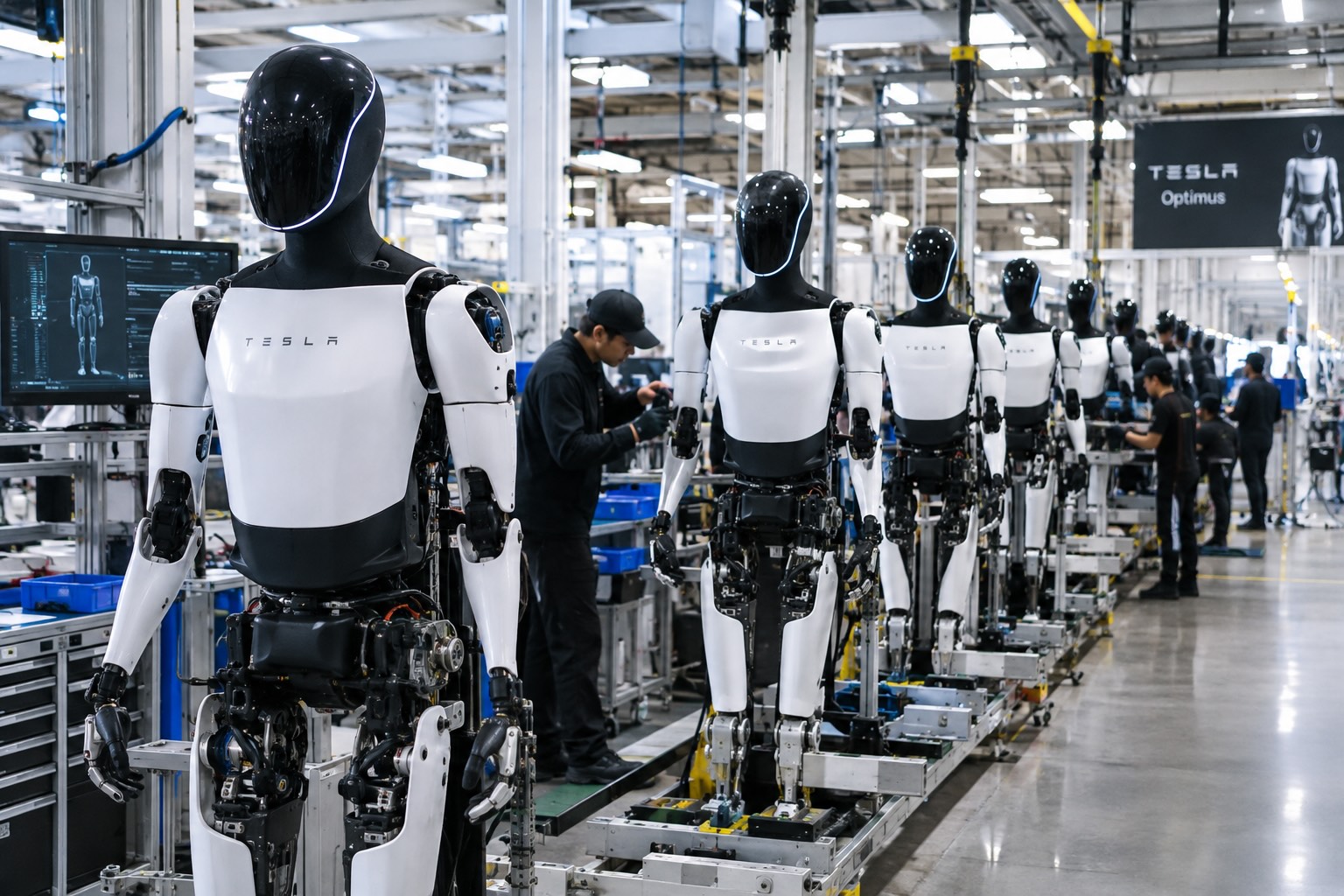
FREMONT, Calif. — Tesla's humanoid robot is moving off the demo stage and onto the assembly line in earnest. The company is now producing several hundred Optimus units a week, roughly a tenfold jump from its second-quarter output, as it races toward a year-end goal of building more than 1,000 robots every week.
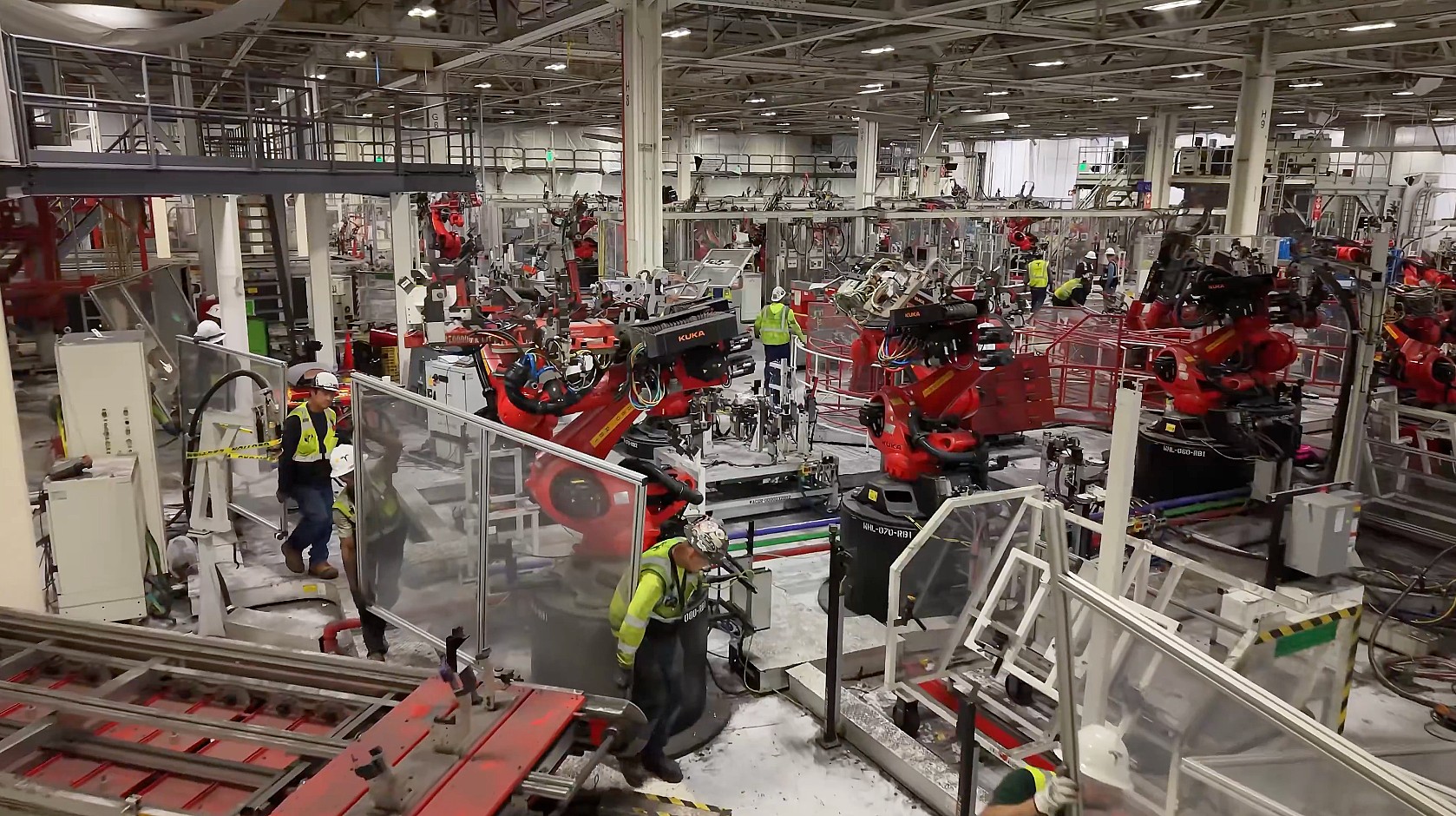
The ramp is unfolding at Tesla's Fremont factory, where the company converted its historic Model S and Model X production line to Optimus manufacturing back in early May 2026, redeploying workers and engineers from both flagship car programs. That decision — giving one of its most storied lines over to robots — signaled just how central Optimus has become to Tesla's long-term vision, a theme that also runs through its recently leaked production-ready Optimus Gen 3 design.
Ten Times The Pace
Scaling a brand-new product is rarely linear, and Optimus is no exception. Going from roughly a tenth of today's rate in the second quarter to several hundred units a week is a steep climb, achieved through increasingly automated, continuous production. Tesla's stated year-end target of 1,000-plus robots weekly would put the program on a genuine manufacturing footing, and the company's long-term ambition is more striking still: around 20,000 units a week as the design matures and the supply chain deepens.
That supply chain has been a focus of its own, with Tesla recently certifying Chinese suppliers to feed the Optimus ramp. Securing components at volume is one of the hardest parts of scaling a machine with as many actuators, sensors, and precision parts as a humanoid robot.