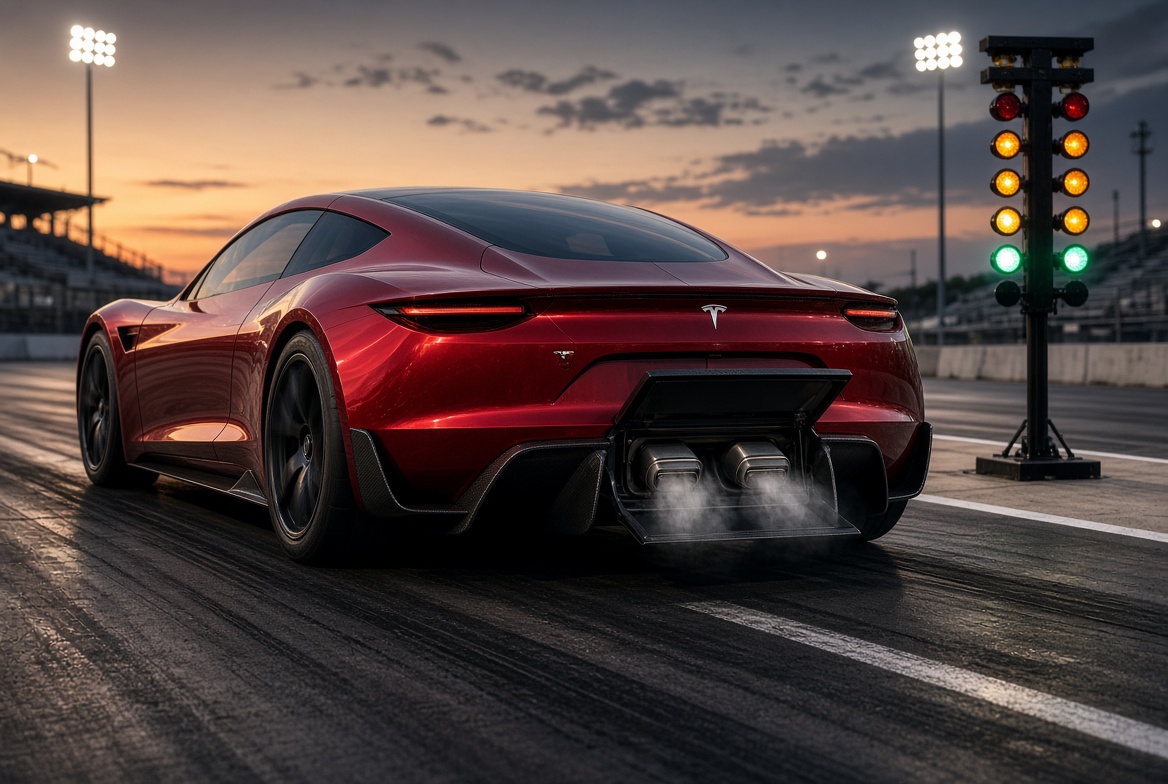
AUSTIN, Texas — Tesla is giving its next-generation Roadster a little more runway. The company has moved the long-anticipated unveiling of the electric hypercar from Oct. 1 to Oct. 15, with Elon Musk citing weather as the reason for holding back a demonstration built to be unforgettable.
The reveal will still take place in Waco, Texas, roughly 90 minutes north of Tesla's Austin headquarters, and expectations could hardly be higher. Musk has promised this will not be a conventional car launch but a 'demonstration' — a nod to the SpaceX-derived technology that Tesla says will let the Roadster do things no production car has done before. Pushing the date two weeks to secure clear skies is a small price for a first impression the company clearly wants to nail. The extended wait builds on years of anticipation that grew with the radical engineering hinted at in Tesla's recent Roadster patents.
Why the Wait Is Worth It
The centerpiece of the new Roadster is its optional SpaceX package, which pairs the car with cold-gas thrusters borrowed from rocket engineering. Tesla has said the setup can launch the Roadster from 0 to 60 mph in roughly 1.1 seconds while subjecting occupants to about 2.75 g of acceleration — figures that read more like a spacecraft spec sheet than an automotive one. A demonstration of that caliber leaves no margin for error, and staging it under ideal conditions is a sensible call.
When the Roadster was first shown in 2017, its numbers already stunned the industry: 0 to 60 in under two seconds, a top speed above 250 mph, a 620-mile range and a 200-kWh battery. The production car is expected to build on those targets rather than walk them back.
