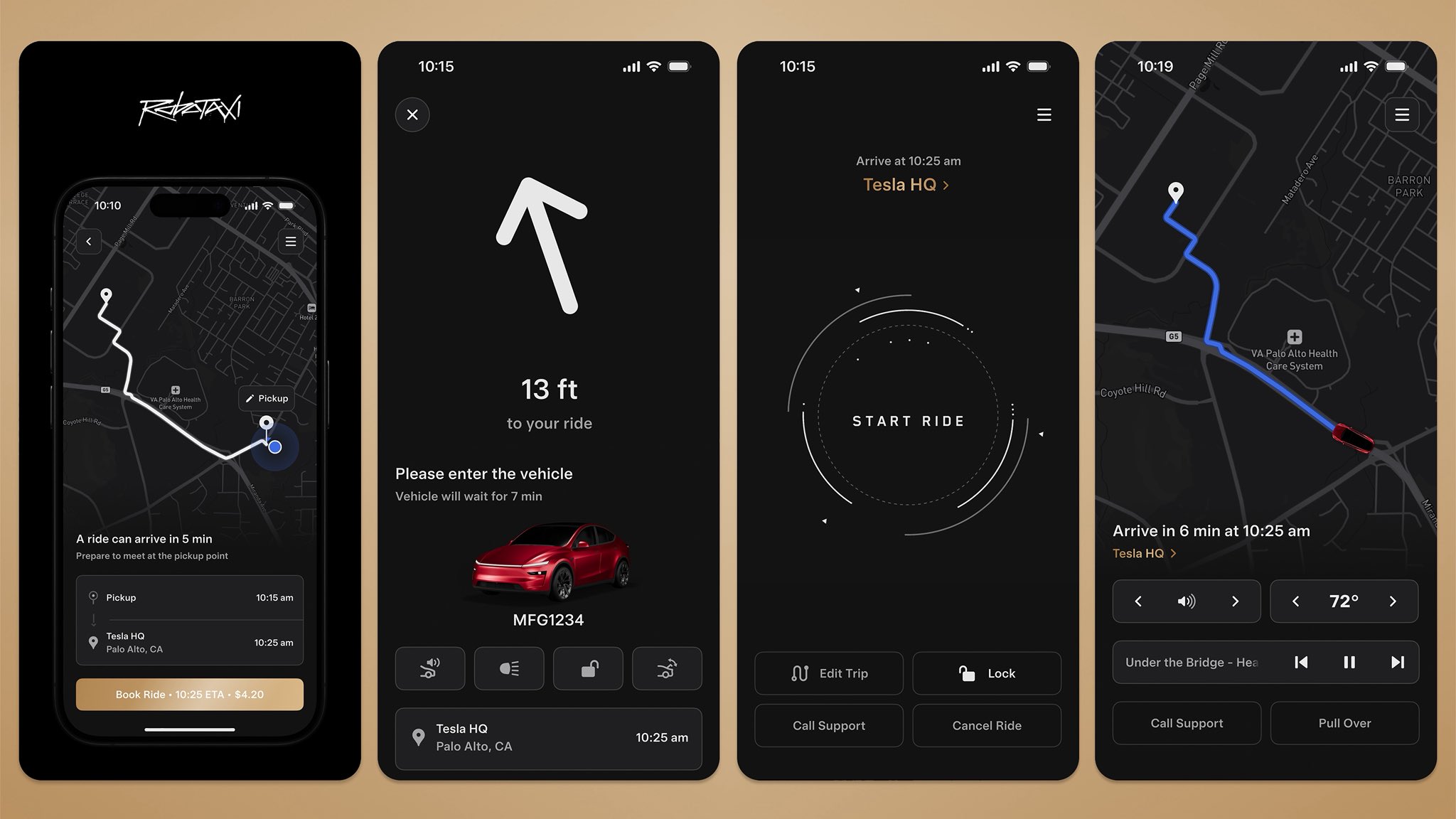
AUSTIN, Texas — Tesla is quietly turning its Robotaxi app into the cockpit for a car that has no cockpit. Code uncovered in version 26.6.0 of the app reveals a wave of unreleased passenger features built specifically for the steering-wheel-free Cybercab.
Because the Cybercab has no wheel, no pedals, and no driver, the phone becomes the primary way riders interact with the vehicle. The latest decompilation shows Tesla building exactly that: a rider's handset that controls seating, climate, media, and even the doors. It is the next logical step for a network that just crossed 380,000 fully unsupervised miles across seven markets.
Gesture controls for seats and climate
One of the biggest additions is a dynamic seat selector that adapts to the vehicle — supporting both the two-seat Cybercab and future layouts with more capacity. Rather than plain buttons, Tesla appears to be using gesture controls: dragging sections of a virtual seat adjusts recline or cushion angle, while bench seats slide with a continuous swipe. The code also references seatbelt checks and limits that would restrict adjustments while the car is moving.
Climate gets the same treatment, with a dedicated interface offering gesture-based temperature control and real-time feedback synced to the vehicle. The effect is a phone that behaves less like a remote and more like the car's actual control surface.
A full media and streaming experience
The update points to a much richer entertainment layer, too. Riders would be able to adjust volume, skip tracks, manage playback queues, and pull up recently played content without ever touching a screen in the car. The most eye-catching find is a native Netflix interface — complete with artwork, logos, episode metadata, and browsing elements — that suggests passengers could browse Netflix on their phone and cast a selection to the vehicle's theater display.
That mirrors what Tesla showed when it confirmed early Cybercab employee rides, where riders managed audio, video, and climate entirely from their phones. The app work now filling in behind the scenes is what will make that experience feel polished when the service opens to the public.
Powered doors and what it signals
The decompilation also reveals preparations for powered door controls, including a deliberate "hold-to-open" gesture to prevent accidental activation and a stop command to halt the doors instantly. Taken together, the hidden features sketch a clear picture: Tesla is engineering the entire Cybercab passenger experience around the app before the vehicle reaches riders.
As Drive Tesla reported, none of these features are live yet — they are code Tesla is staging for release. But the direction is unmistakable. With mass production of the Cybercab already underway and driverless miles climbing, the software that turns a phone into the car's controls is being built right now, one app update at a time.