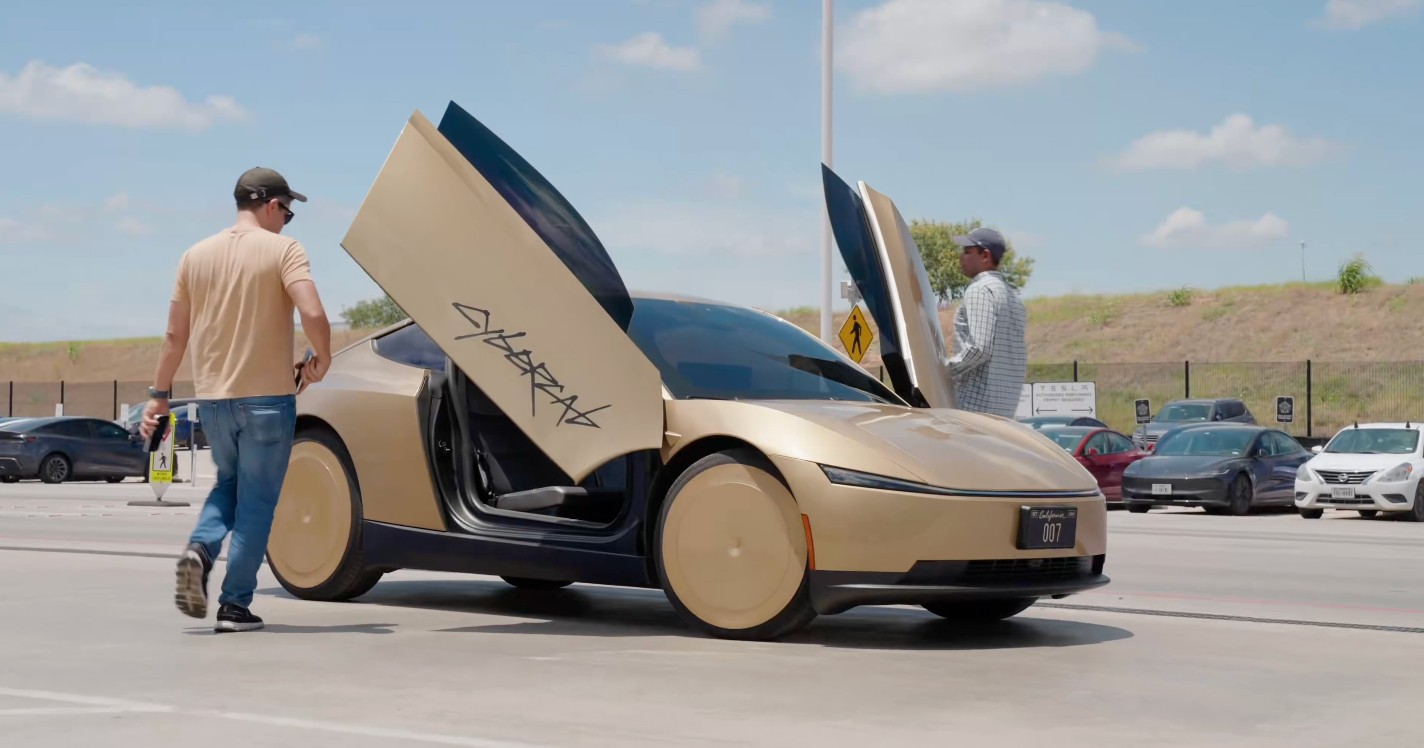
AUSTIN, Texas — A glimpse of Tesla's robotaxi operation in Austin this week revealed something refreshingly low-tech beneath the futuristic surface: a single employee walking from car to car, plugging each one in by hand.
A clip shared by observer Abhimanyu Yadav showed 10 autonomous vehicles — one Cybercab and nine Model Y units — pulling into a Tesla Supercharger, where one worker managed the entire charging cycle. "There are 9 other Model Ys that showed up too. A Tesla employee is walking around and plugging each of them in," Yadav wrote. In other words: one person charges multiple robotaxis at once.
Function Over Flash
It is a scene that captures the "scrappy DNA" Tesla has leaned on since its early, cash-strapped manufacturing days — solving a hard problem with the simplest tool that works rather than waiting for the perfect system. The robotaxi program, running for roughly 15 months, has prioritized getting vehicles on the road and learning from real miles over polishing every piece of back-end infrastructure first.
The result is a hybrid of cutting-edge autonomy and hands-on pragmatism. The cars drive themselves; a human tops them up. "It works, and it's keeping the entire suite running," one account of the operation noted. For a service still scaling, that trade-off makes sense — and it echoes the step-by-step expansion Tesla has shown as it widens the robotaxi program's operating hours.
