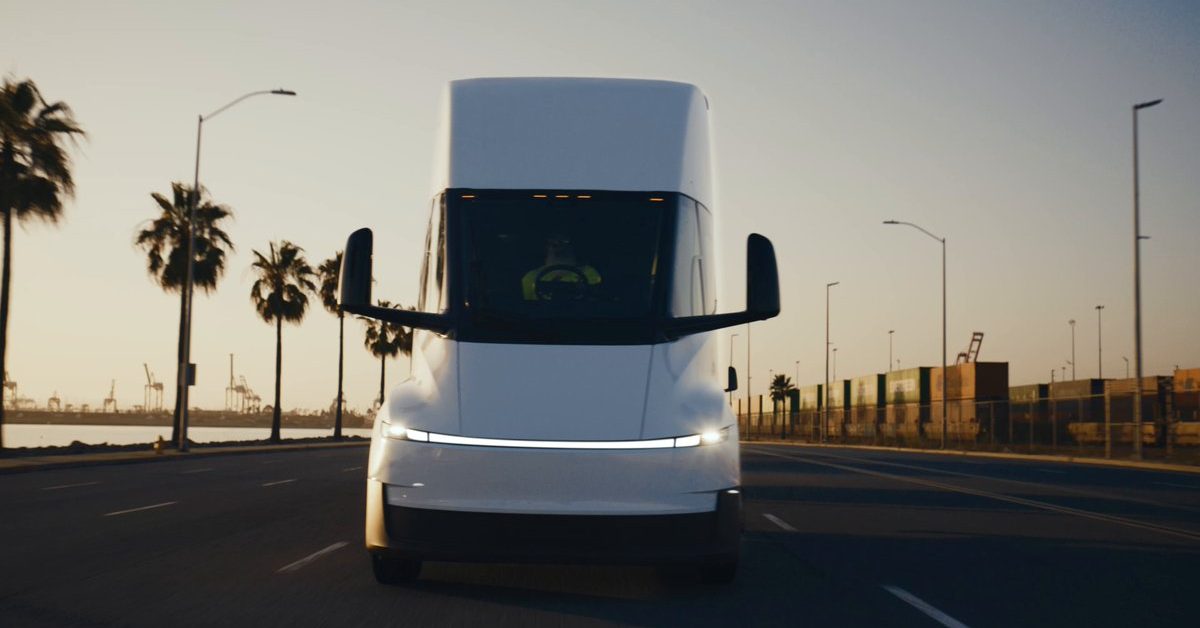
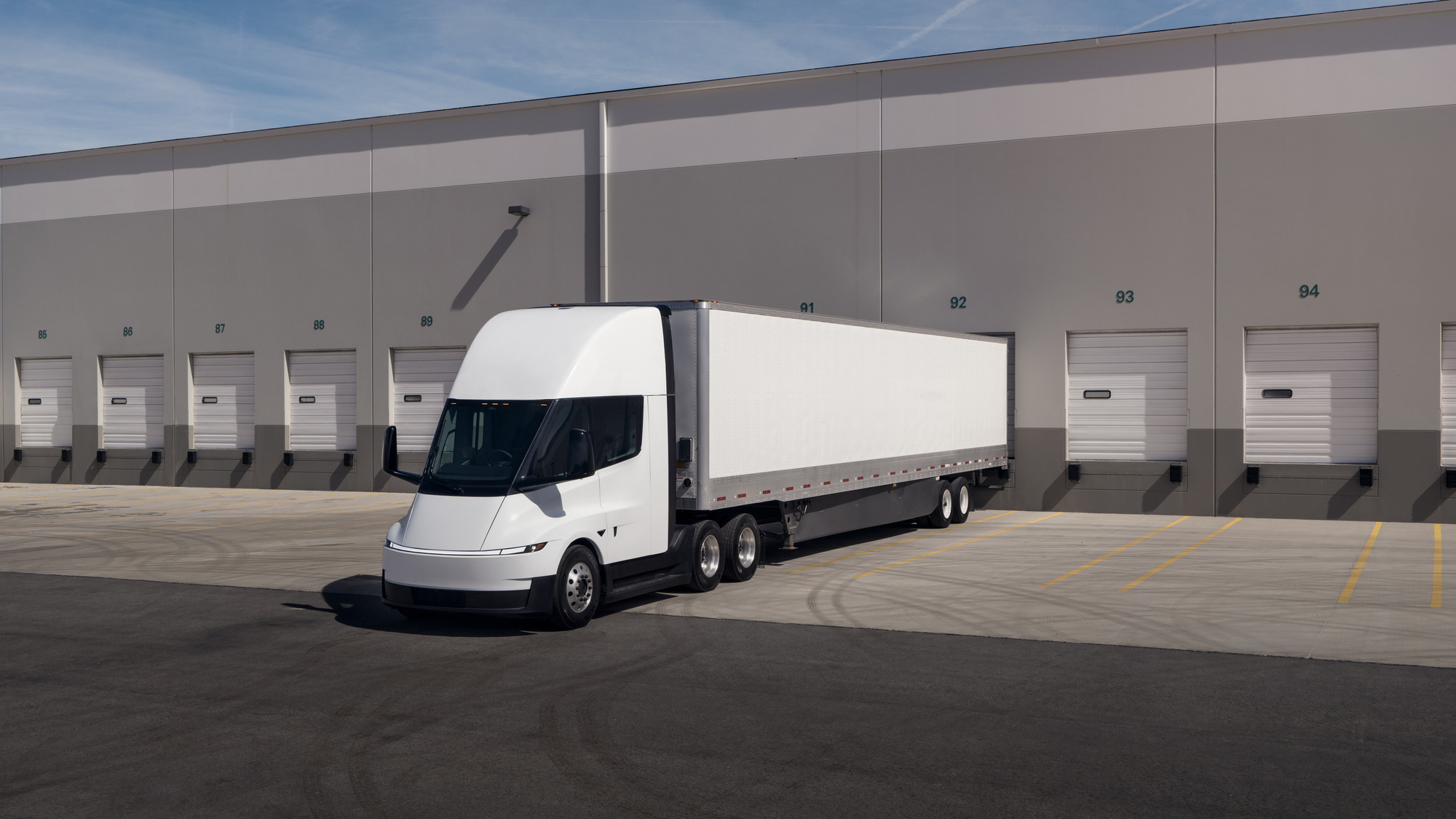
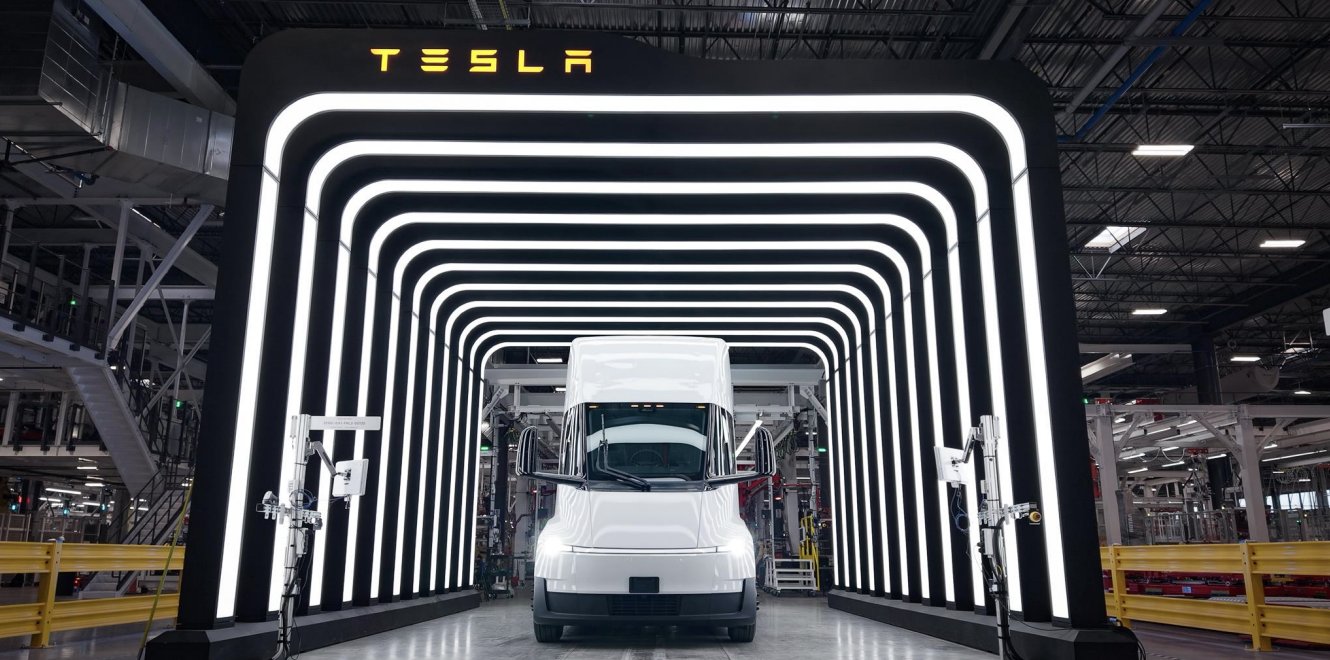
SPARKS, Nev. — The Tesla Semi is no longer a small-batch curiosity. Tesla has begun volume production of its Class 8 electric truck at its new Nevada factory, turning a years-long promise into trucks rolling off a high-volume line and into customer fleets.
The 1.8-million-square-foot plant is built to produce up to 50,000 trucks a year at full capacity. Tesla assembled its first high-volume unit in April 2026 and has now flipped the switch on volume production, a milestone that follows the grand opening of the Nevada Semi factory earlier this month.
First Trucks, Real Fleets
Early deliveries are going to a roster of marquee logistics names, including PepsiCo, DHL, US Foods, ABF, Einride, WattEV and IMC Logistics. The demand signal is strongest from the ZET SCALE alliance, whose record 2,500-truck order is large enough on its own to nearly double the number of electric Class 8 trucks on U.S. roads.
Those aren't pilot-program handshakes. They are fleet operators who move real freight every day placing bets that an electric Semi can do the job — and do it more cheaply.
The Economics Of Electric Freight
Tesla's pitch to fleets is built on operating cost. The company says the Semi runs at roughly $0.20 to $0.30 per mile in electricity, against about $0.80 per mile for diesel. Over the million-plus miles a long-haul truck logs in its life, that gap compounds into serious savings, and it is the single most persuasive number in Tesla's sales deck.
The redesigned truck backs the economics with hardware. It uses Tesla's 4680 battery cells, a steel-caged rotor drivetrain shared with the Cybertruck, and electric steering in place of a traditional hydraulic system. Buyers can choose a Standard Range rated at 325 miles or a Long Range version rated at 500 miles — enough to cover the vast majority of regional and many long-haul routes on a single charge.
Scaling Up From Here
Reaching volume production is the hard part of any vehicle program, and doing it for a heavy truck — with its enormous battery packs and demanding duty cycles — is a genuine engineering achievement. With the Nevada line running and a supporting Megacharger network expanding along freight corridors, Tesla now has the pieces in place to fill those order books.
The story from here is throughput: how quickly Tesla can climb toward that 50,000-truck annual capacity and get clean, low-cost trucks under the freight that keeps the economy moving. As Electrek notes, volume production is the moment the Semi stops being a demonstration and starts being a product — and for Tesla's biggest customers, the first trucks are already on the way.