Grok V9-Medium Deploys to Tesla Cars and X, Turning Musk's Distribution Flywheel

xAI is pushing its 1.5-trillion-parameter model directly into millions of Tesla vehicles and hundreds of millions of X accounts simultaneously — a distribution advantage no pure-play AI lab can match.

4 min read
Grok V9-Medium Deploys to Tesla Cars and X, Turning Musk's Distribution Flywheel

SAN FRANCISCO — xAI began pushing Grok V9-Medium, its largest model yet, into Tesla's connected-car fleet and the X social platform on June 10, 2026 — the moment Elon Musk has spent years engineering toward. Where OpenAI and Google must negotiate distribution deals and compete for app store visibility, Musk can route a model upgrade directly into millions of vehicles and hundreds of millions of social accounts at once. The simultaneous deployment to both platforms is the clearest demonstration yet that the vertical integration built across Tesla, X, and xAI amounts to something AI rivals cannot quickly replicate.

What Grok V9-Medium Actually Is

Grok V9-Medium completed training on June 5, 2026 at 1.5 trillion parameters — roughly three times the size of the prior production model, v8-small, at approximately 500 billion parameters. The jump in parameter count is a proxy for expanded capacity, not a guarantee of benchmark dominance. What it signals is that xAI has headroom to improve reasoning, coding performance, and multimodal responses in ways the smaller model could not accommodate. Accompanying the deployment, xAI rolled out Grok Voice for spoken interaction and Grok Imagine 1.5 Preview via API — back-to-back releases that suggest coordinated sprint launches rather than drip-fed features.

To lead data annotation for the expanded model, xAI tapped Jack Garabedian, a senior manager from SpaceX's Starlink division. The hiring of Garabedian from Starlink underscored how tightly Musk's companies share talent, infrastructure, and institutional knowledge — a pattern that accelerates capabilities across the entire portfolio.

Grok in the Car: Assistant, Not Driver

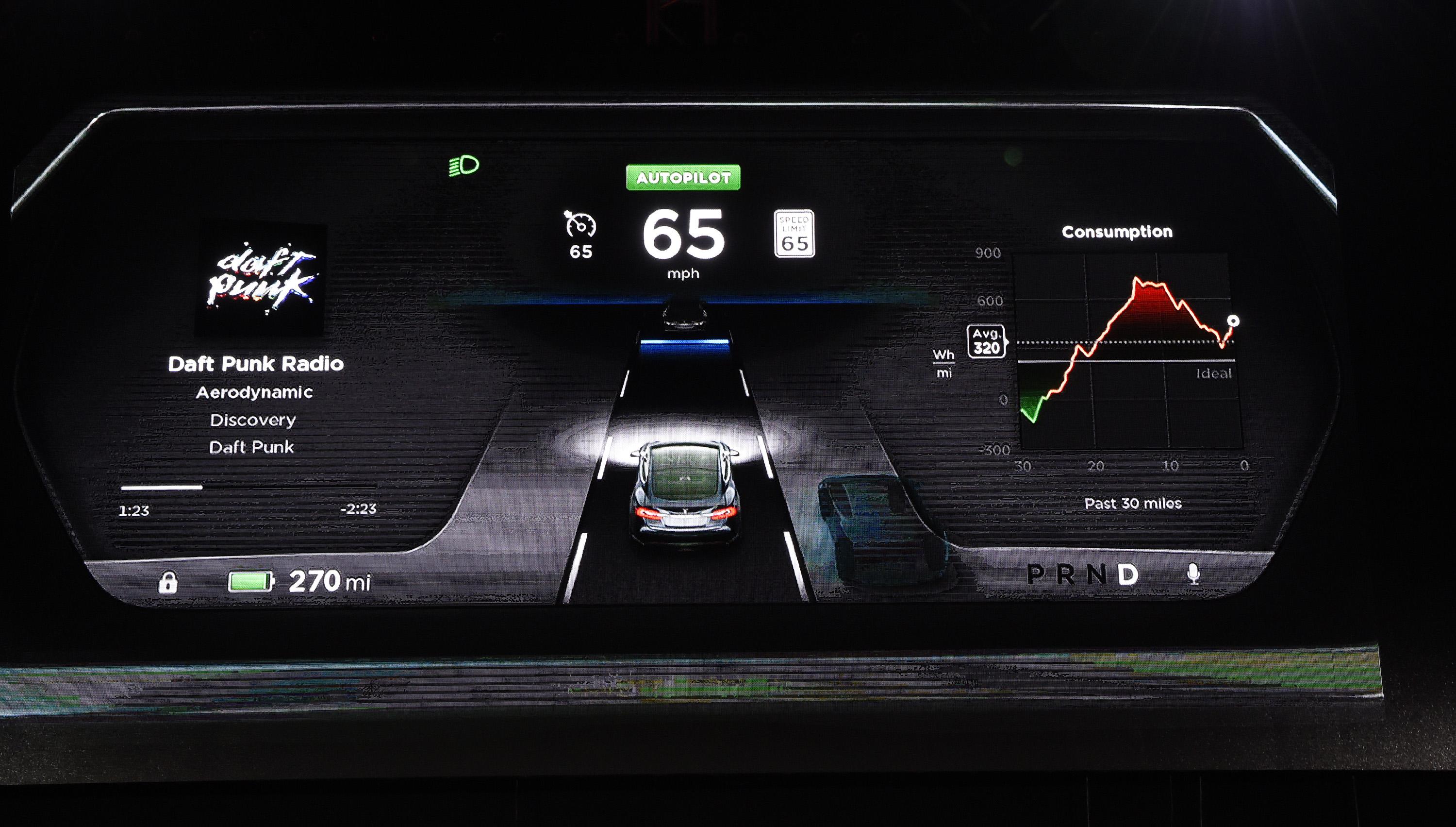
For Tesla owners, the key distinction is straightforward: Grok V9 is an in-car assistant, not a driving system. It powers "Hey, Grok" voice interaction, answers questions, executes navigation commands, and handles conversational queries. Tesla's Full Self-Driving stack remains entirely separate and is not modified by Grok V9 in any way. What changes is the intelligence of the in-car assistant — the system a driver talks to, not the system that moves the vehicle.
Grok V9-Medium Deploys to Tesla Cars and X, Turning Musk's Distribution Flywheel — additional image

That distinction matters, but it does not make the upgrade trivial. A model with substantially more capacity can hold context across longer conversations, reason through multi-step requests, and handle richer voice and visual input. Because Grok reaches Teslas through over-the-air updates, a single push can upgrade the assistant across the entire fleet at once. It arrives the same way any other software update does, without any action required from the driver. For context on how Tesla's FSD and Grok are two separate systems advancing in parallel, the recent Piper Sandler analysis addresses this distinction directly.

Why the Distribution Angle Worries Competitors

The strategic case for Grok is less about model quality than about reach. Most AI labs spend heavily on both compute and user acquisition. Musk's setup supplies both internally: X provides a massive, real-time data stream and user base; Tesla provides a global hardware footprint; xAI provides the model, trained on infrastructure linked to the same network of companies. Each piece feeds the others.

For rivals, the risk is not that Grok V9 tops every benchmark — independent tests will determine that. The concern is that Musk can deploy any competitive model to an installed base of unprecedented scale instantly, while continuously improving it against a captive stream of real-world use. That is the structural advantage the simultaneous push into Tesla and X is meant to demonstrate.

xAI has not published full benchmark results for V9-Medium yet. The case for Grok right now rests more on reach than on proven superiority — and Musk has made clear that he sees those two things as deeply connected. According to Tech Times's analysis of the deployment, the flywheel is now running in the open. Whether V9-Medium proves competitive enough to keep users inside the Tesla and X ecosystems rather than routing around it remains the test the rollout has just begun.