Inside the Gigabay: SpaceX's Plan for 1,000 Starships a Year

As Musk maps out life after Falcon 9, SpaceX's towering Gigabay in Texas is the factory meant to build up to 1,000 Starships a year and make daily launches real.

3 min read
Inside the Gigabay: SpaceX's Plan for 1,000 Starships a Year

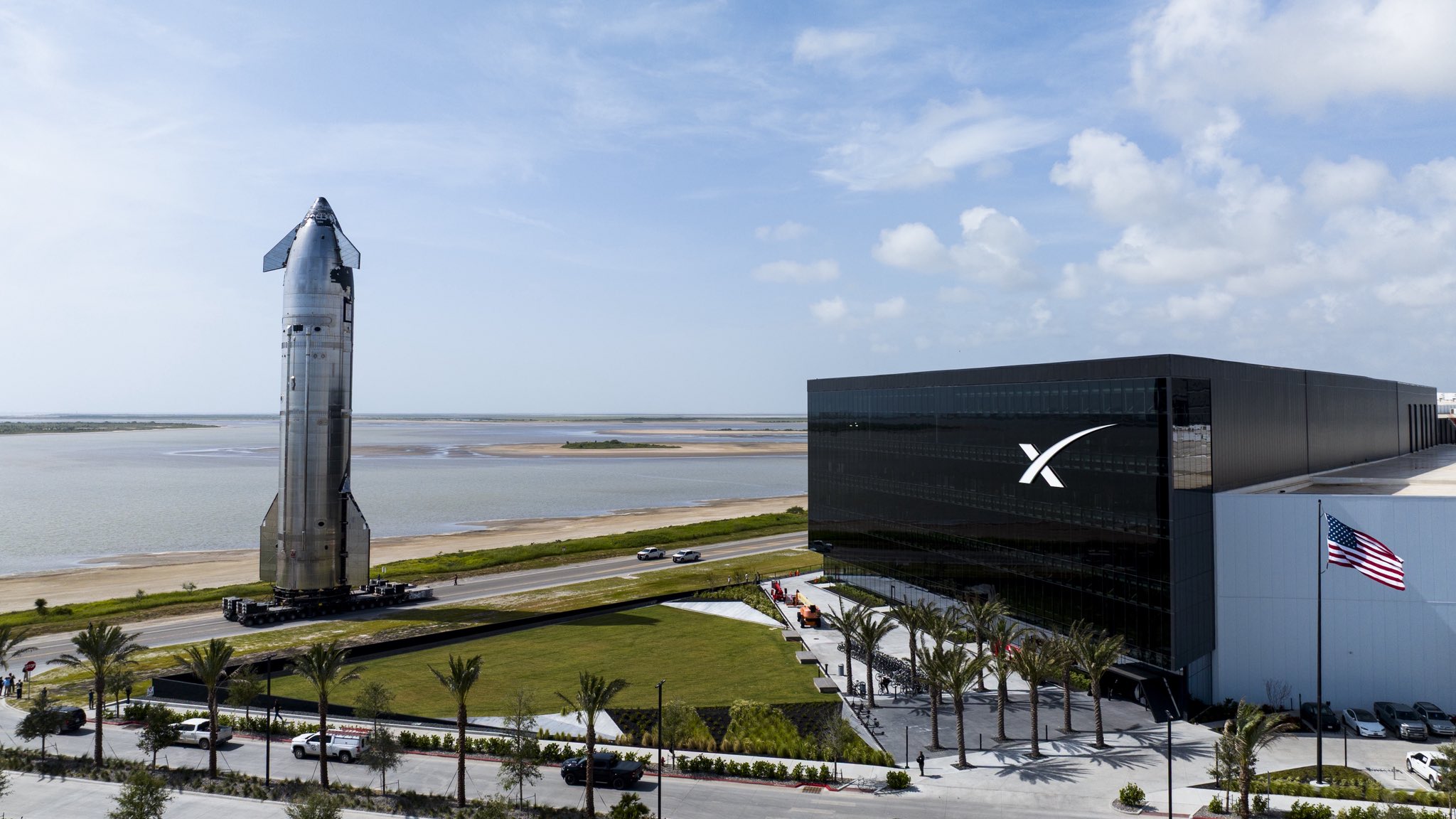
BOCA CHICA, Texas — Elon Musk''s latest comments about scaling Starship to several launches per day raise an obvious question: where will all those rockets come from? The answer is rising right now at Starbase, where SpaceX is building a colossal production hall known as the Gigabay, engineered to manufacture up to 1,000 Starships a year.

The renewed focus on Starship volume comes as Musk this weekend spelled out the condition under which SpaceX would begin winding down Falcon 9, a shift that only works if the company can churn out reusable Starships at industrial scale. The Gigabay is the facility designed to make that math possible.

A structure built for scale

The Gigabay is a roughly $250 million production hub that will stand about 380 feet tall and enclose some 46.5 million cubic feet of interior space, ranking it among the largest industrial structures on Earth. Inside, SpaceX plans 24 dedicated work cells for assembling and refurbishing Starship and its Super Heavy booster, served by heavy-duty cranes capable of lifting up to 400 U.S. tons.

Construction is already well underway, with four tower cranes in place and completion targeted for December 2026. Once operational, the building is expected to transform Starbase from a test and prototyping site into a full-scale factory, dramatically increasing how many vehicles SpaceX can build and turn around. Musk has called it "one of the biggest structures in the world" and predicted that "so many spaceships will be born" inside it.

Inside the Gigabay: SpaceX's Plan for 1,000 Starships a Year — additional image

Feeding an aggressive launch cadence

The Gigabay''s output target aligns with the ambitions Musk has been sketching in public. He has said SpaceX is aiming for more than 30 Starship launches a day by 2030, roughly 10,000 flights a year, and that goal dovetails with a national push toward 1,000 launches a year that directs regulators to open new sites and speed permitting. Building 1,000 rockets annually is the manufacturing side of that same equation.

Starship is central to the plan because it is fully reusable and can carry 100 to 150 tonnes to low Earth orbit, and up to 250 tonnes in expendable mode. A facility that can produce and refurbish those vehicles at high volume is what turns Musk''s daily-launch vision from a slogan into a supply chain, supporting Starlink deployment, lunar missions under NASA''s Artemis program, and eventually Mars.

The road ahead

There is real work between today''s prototypes and a factory humming with a thousand rockets a year, and SpaceX still has to prove Starship''s reliability with milestones like its upcoming first orbital flight. But the Gigabay, detailed by Teslarati, shows how seriously the company is preparing for that future. With cranes already towering over Starbase and a completion date in sight, SpaceX is physically building the capacity to match its most audacious promises, laying the groundwork for an era when getting to orbit could become almost routine.