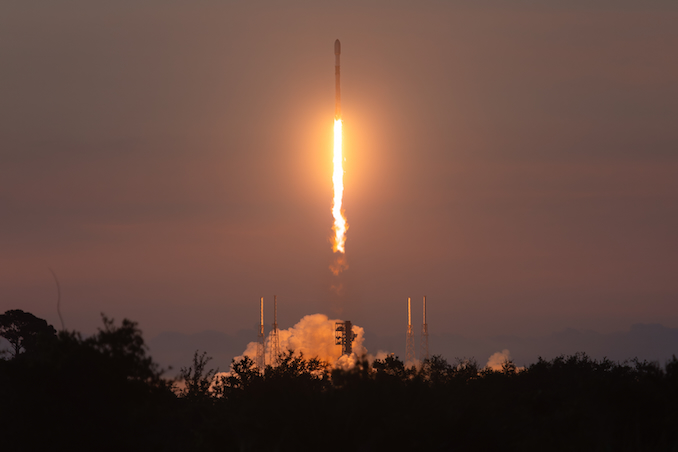
BOCA CHICA, Texas — SpaceX flew two Starshield military satellites on June 6, 2026, tucked alongside a batch of 21 standard Starlink spacecraft on the Starlink 17-43 mission from Vandenberg Space Force Base. The disclosure was unusual by Starshield standards: SpaceX publicly named the military satellites in its launch manifest rather than absorbing them into the Starlink count — a departure from the near-total classification that has typically surrounded the government-focused program since its launch in 2022.
Liftoff from Space Launch Complex 4 East at Vandenberg occurred at 9:24:45 p.m. PDT on June 6. The Falcon 9 booster, B1097, flew for the tenth time before landing on the drone ship "Of Course I Still Love You" — its 201st landing on that vessel and SpaceX's 620th booster landing to date. Satellite deployment was confirmed shortly after midnight EDT. As the IPO filing revealed last week, Starlink now drives approximately 69% of SpaceX revenue — but Starshield represents a separate and growing government revenue stream operating largely outside public view.
What Starshield Is, and How It Differs from Starlink
Starshield is SpaceX's government-focused satellite architecture, designed specifically for defense and intelligence applications. While it draws on the same Starlink platform for its communications backbone, Starshield adds classified capabilities that standard commercial Starlink satellites do not carry: target tracking, optical and radio reconnaissance, early missile warning, and secure government communications protocols. These capabilities are built to serve U.S. and allied government customers — defense agencies, intelligence services, and potentially foreign military partners operating under bilateral agreements with the U.S.
The commercial Starlink business has grown to more than 12 million subscribers as of mid-2026. Starshield is a separate, smaller, and far less transparent revenue line — one that SpaceX does not break out in its public filings. The Starlink V3 satellites, scheduled to deploy via Starship later in 2026 with 100x the bandwidth of current hardware, are on a commercial timeline. Starshield's next generation is on a parallel but classified schedule, advancing with the same infrastructure used to build and launch civilian satellites.
A Rare Public Acknowledgment
Most Starshield satellites have been launched under cover of classified mission nomenclature. In 2024, Reuters reported that Northrop Grumman is providing sensors for some of the SpaceX satellites embedded in what the National Reconnaissance Office describes as a "multi-phenomenology proliferated architecture" — government language for a network of satellites performing multiple types of intelligence collection simultaneously. The NRO has never publicly confirmed which specific launches carry Starshield hardware.