
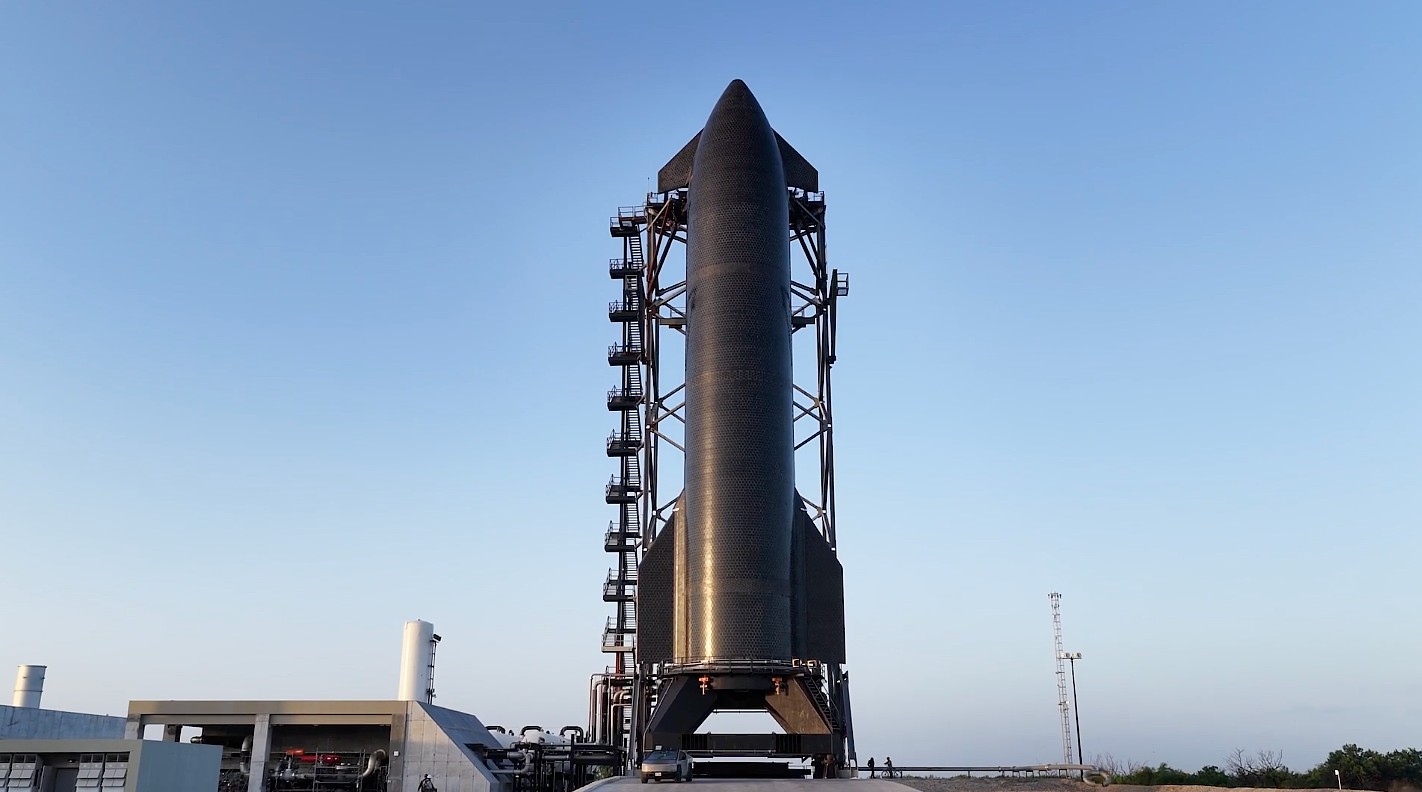
Starship Flight 13 Set to Fly First V3 Starlink Satellites

SpaceX aims to launch Starship Flight 13 on Thursday, carrying the first-ever batch of next-generation Starlink V3 satellites and a heat-shield camera experiment.

3 min read
Starship Flight 13 Set to Fly First V3 Starlink Satellites

BOCA CHICA, Texas — SpaceX is preparing to turn its next Starship test into a working delivery run, with Flight 13 slated to carry the first-ever batch of next-generation Starlink V3 satellites when it lifts off from Starbase.

The company is targeting Thursday, July 23, with the launch window opening at 5:45 p.m. CDT from Pad 2 in South Texas. It would be the second flight of the current Block 3 Starship and Super Heavy, powered by the reworked Raptor 3 engine, and it follows a July 16 attempt that was halted after four of the booster's 33 engines failed to ignite. Elon Musk said two engines were swapped ahead of the next try — a quick turnaround consistent with the aggressive cadence outlined when SpaceX set Thursday as its target after upgrades.

A Real Payload, Not a Simulator

What sets this flight apart is the cargo. For the first time, Starship will deploy 20 operational Starlink V3 satellites rather than mass simulators. The V3 generation is a major leap, with laser inter-satellite links, deployable solar arrays and antennas, and roughly ten times the capacity of today's V2 Mini hardware — a step-change meant to expand both the network's throughput and the speeds users see.

After deployment, the satellites are planned to extend their arrays and antennas and attempt to link up with ground stations in South Africa and the wider Starlink constellation via high-capacity lasers. It is the same optical-mesh technology already being pushed to new frontiers in efforts like beaming NASA's Artemis III in 4K.

Starship Flight 13 Set to Fly First V3 Starlink Satellites — additional image

Turning the Ship Into Its Own Inspector

Flight 13 also carries a clever engineering twist. Six of the 20 satellites have been fitted with cameras aimed back at Starship itself, scanning the vehicle's heat shield and transmitting imagery to ground teams. Several tiles have been painted white to simulate missing ones, serving as visual targets, while load-sensing tiles measure real-time stress during atmospheric entry.

The mission profile adds a higher dynamic-pressure ascent to stress-test the thermal protection system and an in-space Raptor relight demonstration. The goal is data — the kind that moves Starship closer to the rapid reusability that both Artemis lunar missions and global Starlink coverage ultimately depend on.

Why It Matters

Each Starship flight has been a step in SpaceX's trademark test-fast philosophy, but Flight 13 blends experiment and operation in a single launch: proving out vehicle reliability while actually seeding the constellation with hardware that will carry real traffic.

Success would mark a milestone on two fronts at once, validating the V3 satellite design in orbit and advancing the heat-shield work that stands between Starship and routine reuse. As Space.com detailed in its preview of what to expect on Thursday, the flight is designed to teach SpaceX something no matter how it ends — and if it goes to plan, the world's largest rocket will have started earning its keep.