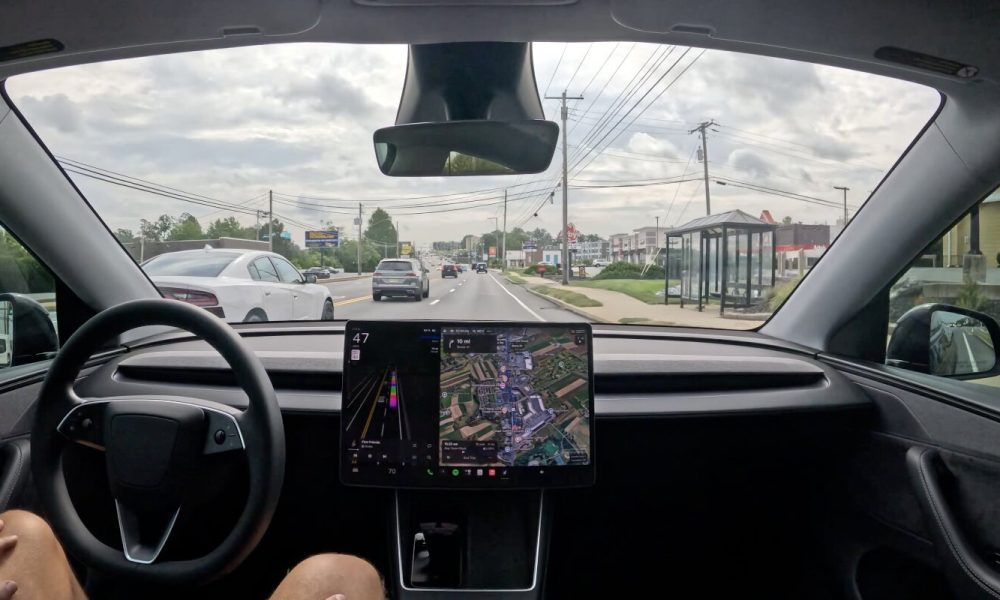
AUSTIN, Texas — Tesla's Full Self-Driving software keeps getting sharper. The company has begun rolling out FSD (Supervised) v14.3.7 to customer vehicles as part of the 2026.21.5 update, and early reviews suggest the release delivers some of the most noticeable gains drivers have seen in months.
Smoother, More Confident Driving
The update targets the rough edges that showed up in the prior v14.3.6 build. Testers report that the abrupt braking, sudden steering corrections and hesitant movements that occasionally crept into earlier versions are gone, replaced by calmer, more decisive behavior at stop signs and in parking lots. One early Teslarati review recounted the system swerving to avoid a driver who cut into the reviewer's lane within the first 40 minutes of testing — a real-world save that captured how far the software has come.
Under the hood, Tesla says it upgraded the reinforcement-learning stage used to train the FSD neural network, producing improvements across a wide range of driving scenarios. The company also strengthened the vision encoder, sharpening the system's understanding of rare and low-visibility situations, 3D geometry and traffic signs. Perhaps most notably, engineers rewrote the AI compiler and runtime from the ground up using MLIR, yielding a 20% faster reaction time and quicker model iteration.
Building on a Strong Month
The release continues a rapid cadence for Tesla's autonomy team. Just days ago the company brought V14-generation smarts to older HW3 vehicles with FSD v14.1 Lite, extending its newest capabilities to a broader slice of the fleet. Momentum among owners has been building too, with one driver recently logging a 25,000-mile Full Self-Driving streak, a first for the fleet and a testament to how much confidence the software now inspires.
Faster reaction times matter well beyond the daily commute. The same neural networks powering customer cars underpin Tesla's Robotaxi ambitions, and every incremental gain in vision and responsiveness feeds directly into the driverless service now expanding across Austin and beyond. Wall Street has taken note of the strong Full Self-Driving adoption, with Morgan Stanley recently pegging the attach rate on North American deliveries at about 55%, well above its earlier expectations.
Where It Goes Next
Reviewers flagged a few areas still on the to-do list, including better handling of sharp bumps and potholes and smarter automatic wipers — the kind of refinements Tesla has historically addressed through over-the-air updates. But the direction of travel is clear. With v14.3.7, Tesla has delivered a build that testers describe as a genuine step forward, and with the software improving on a near-weekly basis, the path toward broad unsupervised driving looks steadier than ever.