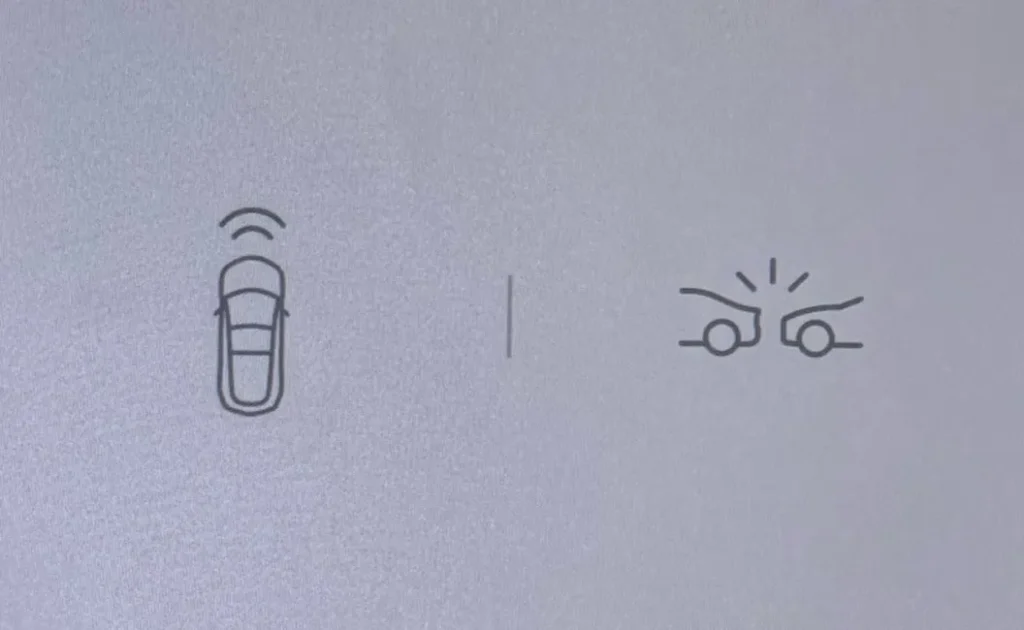
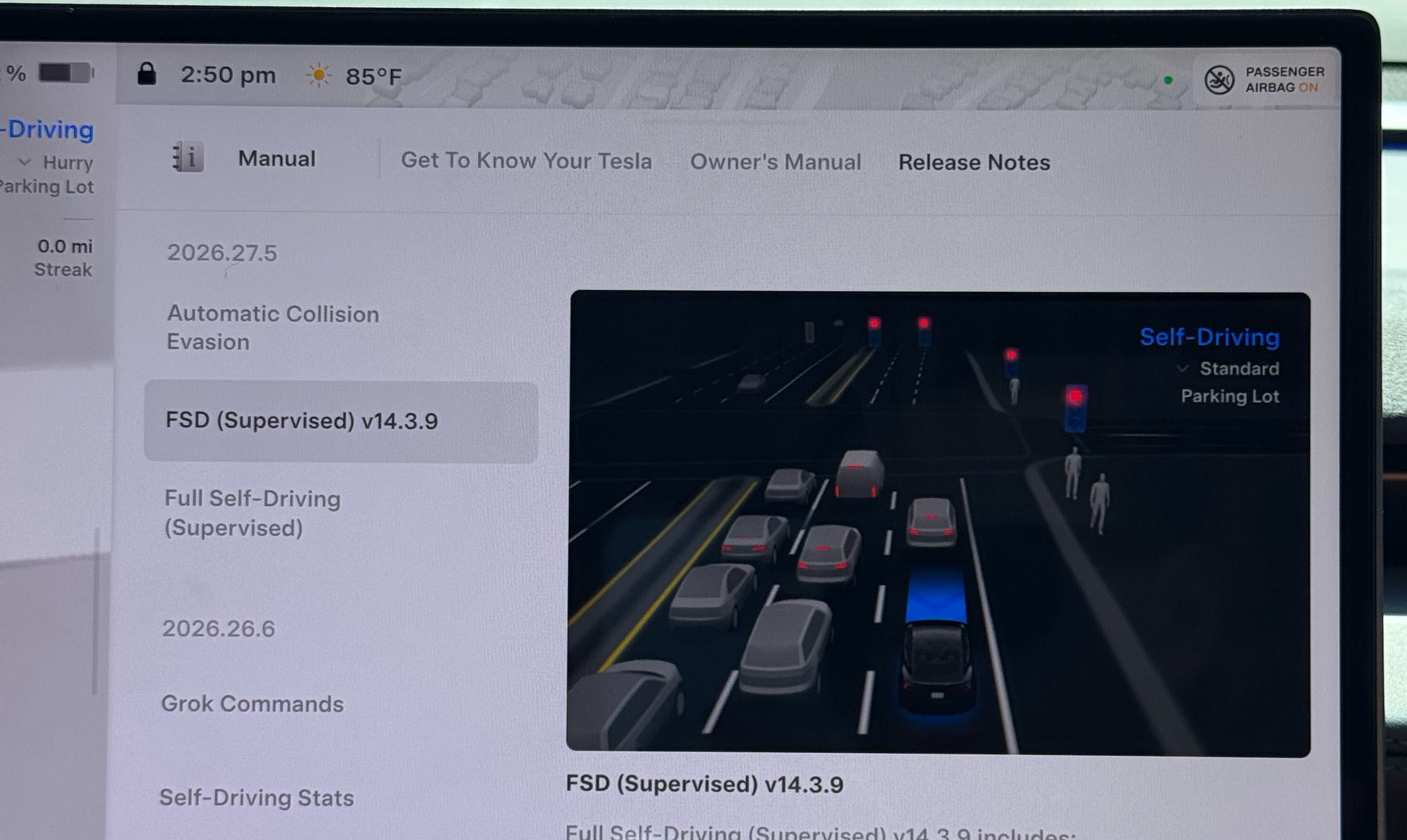
AUSTIN, Texas — Tesla has begun rolling out Full Self-Driving v14.3.9, and its headline feature is one aimed squarely at safety: Automatic Collision Evasion, a system that can actively steer a car around an imminent hazard rather than simply braking for it.
Delivered in software build 2026.27.6 for Hardware 4 vehicles, the update pushes FSD's safety envelope beyond reacting to add anticipating. Automatic Collision Evasion works even when the driver is in control, watching the road for developing threats and intervening with evasive steering when a collision looks unavoidable through braking alone. It is the kind of quietly consequential upgrade that compounds as Tesla's fleet keeps adding a billion Full Self-Driving miles roughly every 24 days.
From braking to steering around danger
Most collision-avoidance systems on the market stop at automatic emergency braking. Tesla's approach adds a lateral dimension: if the space exists to swerve safely, the car can take it. That matters in real-world scenarios where a hard stop is not enough, such as a vehicle drifting into a lane, debris appearing suddenly, or a pedestrian stepping out with little warning. By pairing vision-based prediction with the car's control stack, Tesla turns FSD's perception advantage into an active safety net for every trip.
Built on Tesla's vision-first stack
Automatic Collision Evasion leans on the same neural networks that power Tesla's autonomy effort, which is what lets it generalize across situations rather than reacting only to pre-programmed cases. The v14 branch has been maturing quickly across the lineup, from newer Hardware 4 cars to legacy vehicles receiving distilled builds, and this release folds a flagship safety capability into that momentum. It arrives alongside Tesla's broader safety roadmap, including the collision-avoidance leap the company previewed for FSD v15.