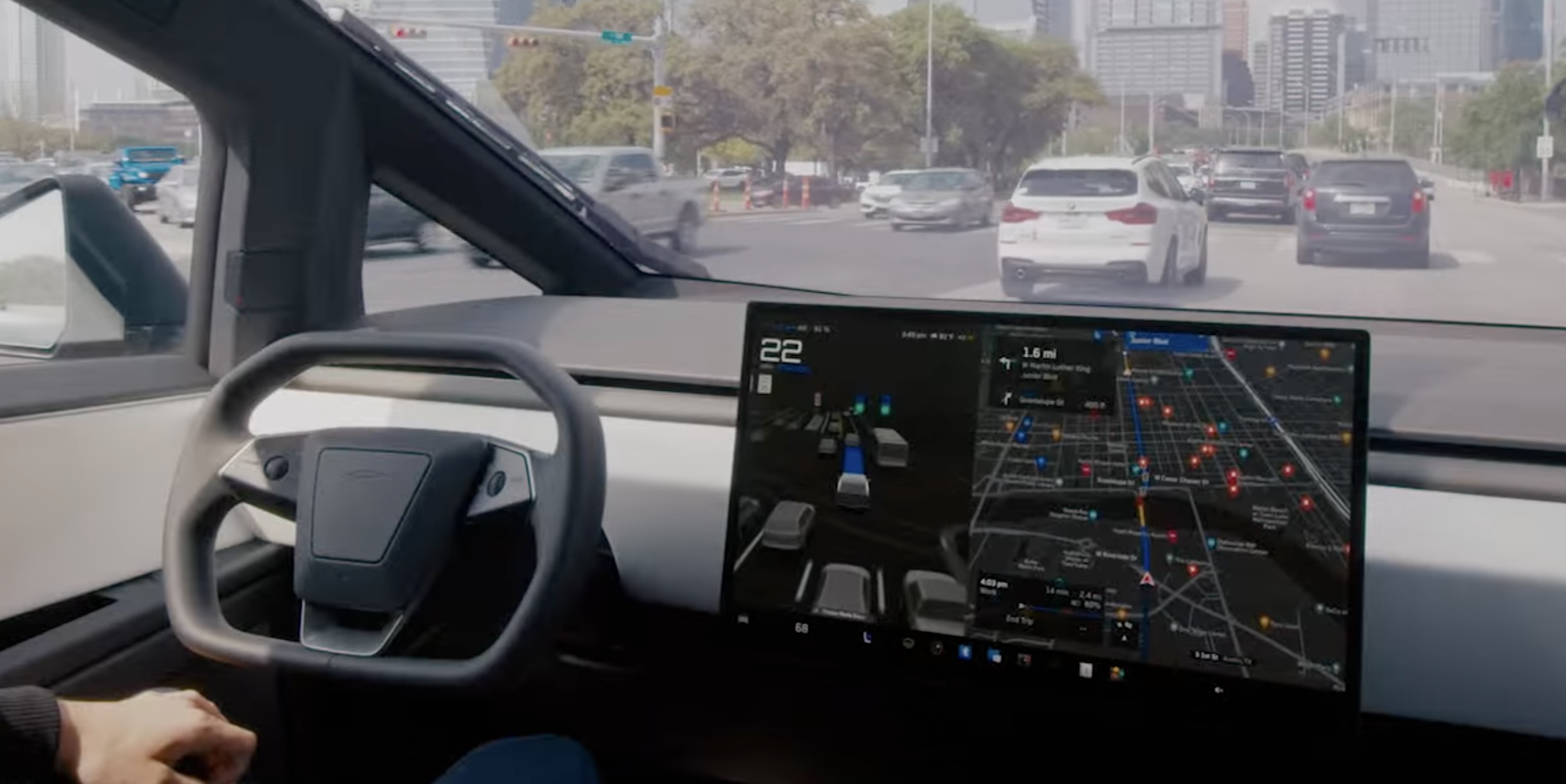
AUSTIN, Texas — A new owner video is putting a spotlight on one of Tesla's most important safety features: Automatic Collision Evasion, which briefly hands control to Full Self-Driving to steer a car away from an imminent crash. Tesla's AI chief, Ashok Elluswamy, calls it a "guardian angel."
The feature arrives as Tesla's autonomy program hits new milestones, including doubling the Austin Cybercab fleet to 125 robotaxis.
Caught on Camera
Tesla owner Spencer (@scotsrule08) shared footage showing the system stepping in to prevent what could have been a collision with a curb. He said it "worked flawlessly," and Elluswamy reposted the clip.
Unlike basic automatic emergency braking, which can only stop the car, Collision Evasion can brake, accelerate or steer around a hazard, choosing whichever action best avoids the impact.
How It Works
The system activates in two situations. The first is an imminent frontal collision at speeds below 85 mph, on dry roads, when no pedestrians or cyclists are detected in the escape path. The second is when the car detects an inattentive driver. Once engaged, the accelerator is muted and the driver must apply firm steering input to take back control.
The feature first shipped with FSD v14.3.9 in software update 2026.27.6 and was refined in v14.3.10 on Sept. 19. It is now rolling out more widely in build 2026.27.11, as Teslarati detailed. It requires HW4 hardware; HW3 cars run FSD v14.2 Lite without it.
Safety as the Foundation
Features like this show how the same neural networks driving Tesla's robotaxis also protect everyday owners. Every intervention the system makes is a crash that never happens, and every recorded event feeds back into training.
Rolling Out Worldwide
As FSD approvals expand, more drivers could soon benefit. European regulators are working through their own review, with an EU-wide FSD vote now slated for December as individual nations sign on.