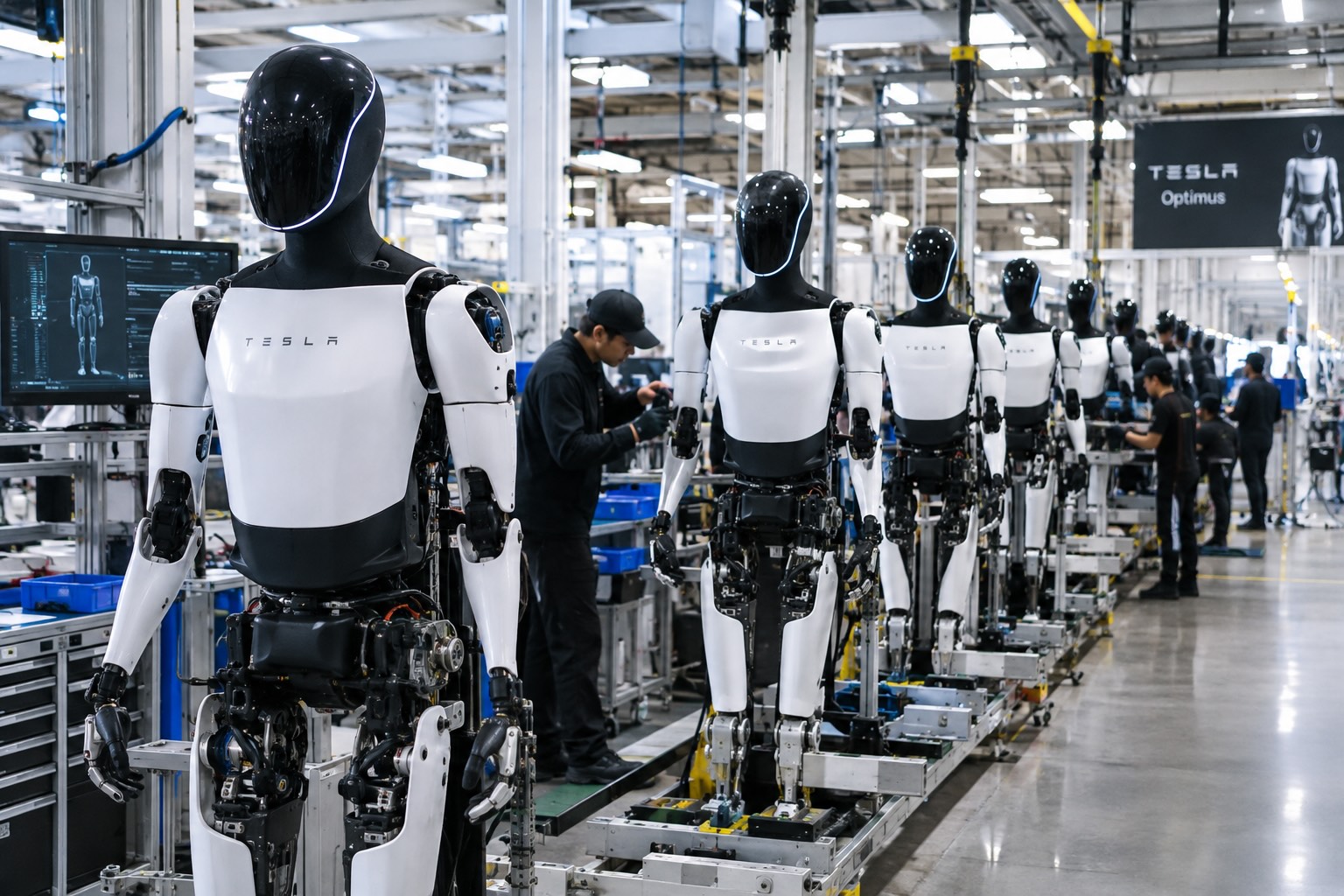
Musk Targets Late 2027 for Optimus Robot's Public Debut

Elon Musk says he wants Tesla's Optimus humanoid robot available to the public by late 2027, while being candid that building dexterous hands and a robot supply chain is the hard part.

3 min read
Musk Targets Late 2027 for Optimus Robot's Public Debut

AUSTIN, Texas — Elon Musk has put a timeline on one of Tesla's most anticipated products, saying he wants the Optimus humanoid robot available to the public by late 2027. Speaking at the X Takeover event at Giga Texas on October 10, Musk paired the ambition with unusual candor about how difficult the ramp will be, a mix of confidence and realism that frames the next two years for Tesla's robotics bet.

A Slow Start by Design

Musk was blunt that Optimus will not scale like a car. Because there is no existing supply chain for humanoid robots, Tesla has to build one from scratch, and he warned that the early part of the production curve will be "very slow at the beginning." A reported internal goal calls for more than 1,000 units a week by the end of 2026, though Tesla has not published updated figures. That measured tone is consistent with the company's hands-on approach we saw when Tesla put Optimus to work on the Model Y line in Austin.

The Hands Are the Hard Part

Pressed on the engineering, Musk singled out the robot's hands as the toughest challenge, calling them "shockingly difficult." The problem is combining precision with force while packing in touch sensors durable enough to survive a high number of cycles, all within an actuator small enough to fit a humanlike arm. New patent filings covering the Optimus V3 hand and arm hint at how seriously Tesla is attacking the problem. He also took a swipe at rivals, describing elaborate robot demonstrations as "canned" and arguing that real artificial intelligence means handling tasks a robot has never encountered before.

Musk Targets Late 2027 for Optimus Robot's Public Debut — additional image

Untangling the Supply Chain

One concrete hurdle has been China's export curbs on the magnets used in electric motors, which Musk said set the Optimus program back by roughly two to three months. Tesla's answer is vertical integration: "You've got to be able to make all the parts domestically," he said, while the company also works to certify supply partners for Optimus components. It is the same build-it-ourselves philosophy that has defined Tesla since its earliest days, now applied to robotics, and it mirrors the groundwork laid when Tesla started its Optimus pilot production line at Giga Texas.

Why the Timeline Matters

A late-2027 consumer target would make Optimus one of the first general-purpose humanoid robots a member of the public could actually buy, a milestone Musk has argued could eventually dwarf Tesla's car business. The honest talk about slow ramps and stubborn hardware is, in its own way, reassuring: it suggests the targets are grounded in the real work rather than hype. If Tesla hits even a fraction of its ambition, the robot it is quietly refining in Texas could redefine what the company is. Musk's remarks were reported by Teslarati.

Stay Up to Date on All Things Elon

Get the most interesting Elon Musk stories straight to your inbox, once a day. Short, interesting and relevant!